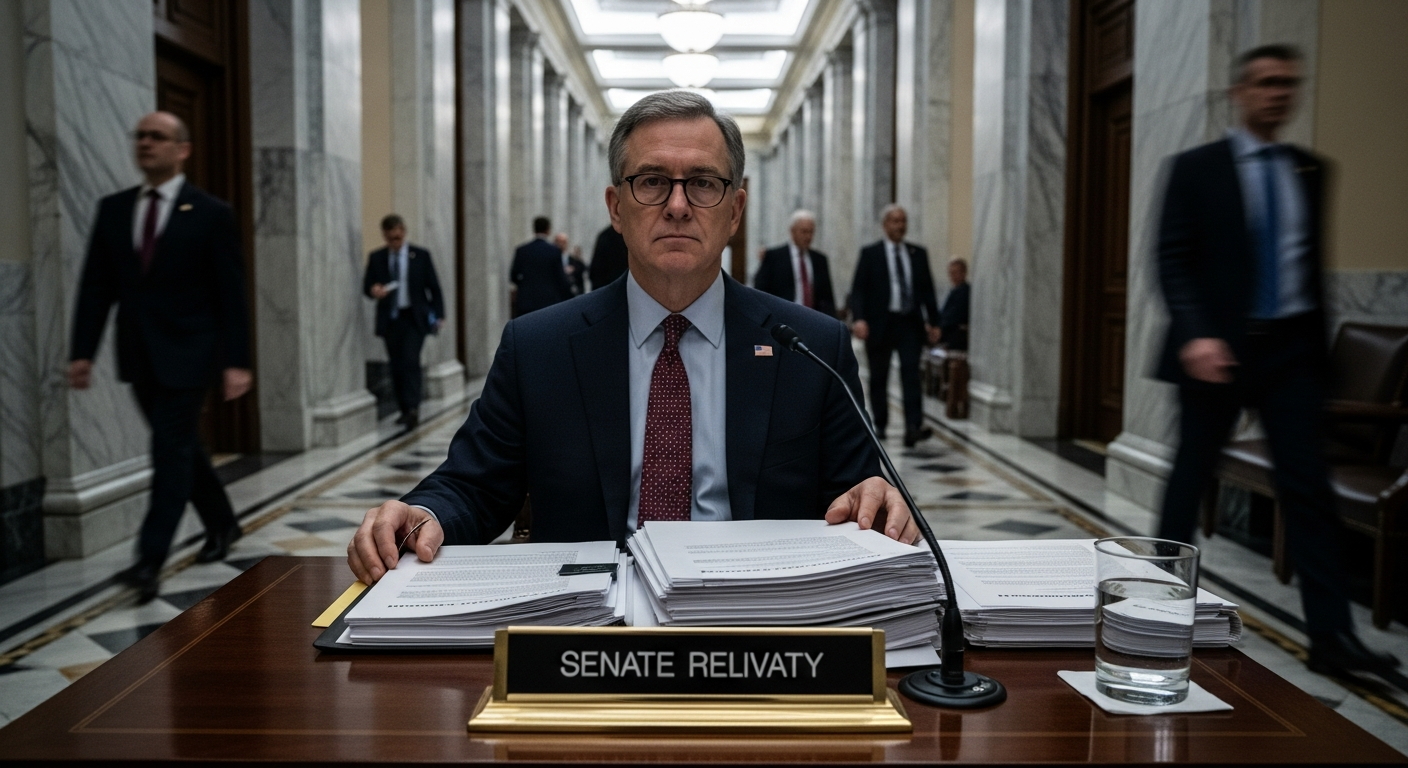
Sen. Steve Daines says the Senate Finance Committee has a crypto tax framework ready and could hold a markup by fall 2026, the clearest timeline signal yet from the upper chamber's tax-writing shop. The framework's contents remain undisclosed.
Sen. Steve Daines says the Senate Finance Committee has drafted a crypto tax framework and could hold a markup by fall 2026, but no one outside that committee has seen what's in it.
Key takeaways
Senate Finance Committee member Steve Daines (R-MT) told Bloomberg Tax on June 23, 2026 that the Senate has a crypto tax framework ready and could move to markup "sooner rather than later," possibly this fall. That is the most concrete timeline signal the upper chamber's tax-writing committee has produced on digital asset taxation, and it lands while the CLARITY Act is already consuming Senate floor bandwidth on the market structure side.
The two tracks are now running in parallel. That is either a rare legislative opportunity or a scheduling collision waiting to happen.
"We've gotten a framework put together," Daines said, per Bloomberg Tax, which first reported the interview. He described the Senate approach as "more similar than not" to the House Ways and Means Committee's work and added, "If we can, I'd love to" hold a markup this year.
A markup is the formal committee session where members debate, amend, and vote on draft legislation before it goes to the full Senate floor. A Finance Committee markup on crypto tax rules would be the first time Congress has formally voted on how Bitcoin and digital assets are taxed at the statutory level, moving the issue from IRS guidance (which can be reversed overnight) to law.
The House side has been moving. Ways and Means Chairman Jason Smith advanced a package of digital asset tax bills at a June 9, 2026 hearing. Smith's framing from that hearing: "the status quo of unclear tax rules is untenable" with more than 67 million Americans holding cryptocurrency. Early bicameral alignment between Ways and Means and Senate Finance is a genuine accelerant. It removes one of the most common failure modes for tax legislation.
Daines stopped short of committing to a firm date. The Senate framework is not yet a public document. He declined to detail its provisions.
Tax treatment is the sleeper variable shaping every self-custody and mining decision. The CLARITY Act determines who regulates Bitcoin. The tax bill determines how every transaction, every mined block, and every UTXO spend is treated by the IRS from here forward.
Right now the IRS operates on a 2014 property ruling and a patchwork of notices. Miners and self-custody holders operate in perpetual ambiguity. Statutory rules could cut either direction.
The favorable version: de minimis exemptions that make everyday Bitcoin spending legally practical, clearer cost-basis accounting methods, and income treatment for mining that does not create instant taxable events on every block reward. That is a real tailwind for circular economy adoption and mining economics.
The unfavorable version: mandatory broker reporting requirements extended to self-custody transactions, wash-sale rules applied to Bitcoin that eliminate tax-loss harvesting, or mark-to-market treatment for treasury holders. A framework that codifies any of those is not clarity. It is a compliance dragnet wearing clarity's clothes.
The Senate Finance Committee has published nothing. Until Crapo's committee releases draft text, the framework is a black box. That unknown is the actual story, not the timeline.
The CLARITY Act's commodity-pool provisions already demonstrated how language that sounds neutral on first read can carry serious structural consequences for Bitcoin holders. The same scrutiny applies here, doubled.
The CLARITY Act faces a 60-vote cloture bar and floor scheduling pressure before August recess. A Senate Finance markup competing for floor time in the same fall session is a real test. If CLARITY stalls, it could crowd out the tax legislation. If both advance, that is a rare double dose of statutory finality for an industry that has had neither.
Watch for Senate Finance to release draft text. That is the moment the framework stops being a signal and becomes something that can be evaluated. Until then, Daines' comments are evidence that the committee is serious about moving, not evidence of what they intend to move.
A markup is the formal session where committee members debate, amend, and vote on draft legislation before it advances to the full Senate floor. A Finance Committee markup on crypto tax rules would be the first time Congress has voted on how Bitcoin transactions, mining income, and on-chain activity are taxed at the statutory level. That shifts the legal foundation from IRS guidance, which the agency can revise or reverse, to law, which requires an act of Congress to change.
The CLARITY Act (H.R. 3633) addresses market structure: which agency regulates Bitcoin and digital assets, how exchanges register, and what qualifies as a digital commodity. The Senate Finance tax bill addresses the IRS side: how gains, mining income, staking rewards, and on-chain transactions are taxed. Two different committees, two different tracks, potentially two very different outcomes for Bitcoin holders.
Under current IRS treatment, every on-chain Bitcoin spend is technically a taxable disposal event requiring gain and loss calculation. De minimis relief would exempt small transactions below a set threshold from capital gains reporting requirements, making everyday Bitcoin spending legally practical under U.S. tax law for the first time.