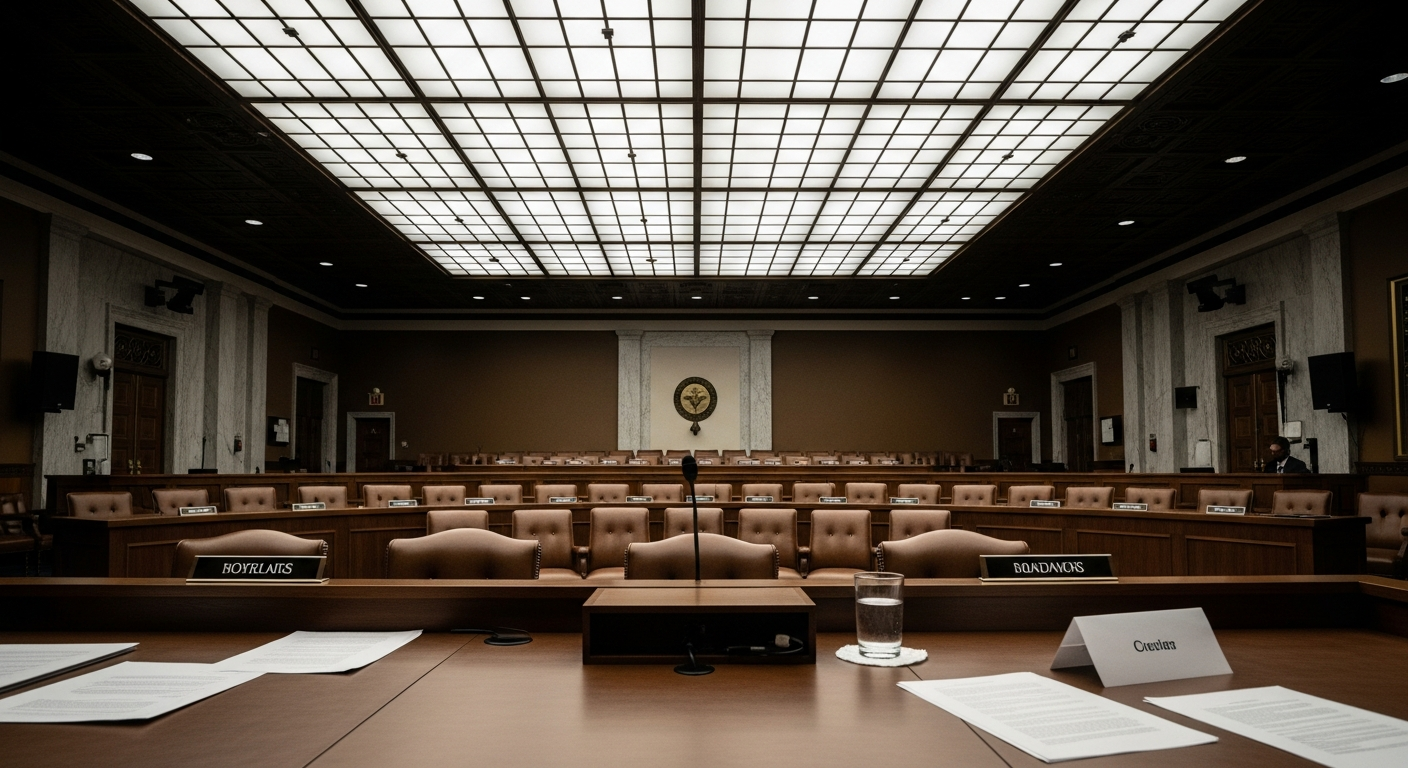
The Federal Reserve's proposed 'payment account' would let legally eligible fintechs settle directly through the Fed. Congress is now debating the access terms, the moral hazard, and who actually qualifies, and the comment clock is running.
The Fed wants to open direct settlement access to eligible fintechs and crypto firms. Congress wants to debate who gets in and at what cost.
Key takeaways
The Federal Reserve's proposed "payment account," published as a Notice of Proposed Rulemaking on May 20, 2026, would let legally eligible non-bank institutions settle payments directly through the Fed without a full bank charter. Congress is now pushing back in real time on how much access those firms should actually receive and what systemic risks come with it, first reported by The Block.
The stakes are real. Direct Fed settlement access would reduce the leverage that large correspondent banks hold over crypto and fintech firms. But the terms of that access, stripped down as they are, raise a harder question: who actually benefits, and who ends up more exposed?
The payment account is deliberately narrow. Per the Fed's own statement, holders get no borrowing from the discount window, no interest on reserves, no intraday credit, and automated overdraft prevention controls. The balance cap in the proposed rule was raised from the December 2025 Request for Information ceiling of $500 million or 10% of the account holder's total assets, with the maximum closing balance limit set at $1 billion per the NPR.
Critically, the proposal does not expand legal eligibility. Only institutions already eligible under the Federal Reserve Act can apply. A non-bank fintech without a state or federal charter cannot simply show up and request one. Fed Governor Christopher Waller has stated publicly that only eligible depository institutions can apply for a payment account, not fintechs without the requisite charter.
The 60-day public comment period closes July 27, 2026, per Freshfields citing the Federal Register.
Congressional concern centers on moral hazard. If a firm holds a Fed payment account but remains uninsured and lightly supervised, and then fails, the political pressure to backstop depositors (as happened with SVB's uninsured accounts) creates real systemic exposure. That concern is legitimate.
But there is a second problem that the moral hazard debate obscures. A Fed payment account does not reduce surveillance exposure. It concentrates it. The Fed has supervisory authority, subpoena power, and a direct line to FinCEN that no correspondent bank possesses. Trading a private-bank chokepoint for a Federal Reserve chokepoint means the entity holding the kill switch has more tools to use it, not fewer. The Samourai Wallet prosecution illustrated how aggressively federal agencies pursue financial privacy cases when they have the infrastructure to do so.
The Financial Technology Association, whose members include eBay, Klarna, and Amazon Pay, filed comments on February 6, 2026, acknowledging the tension. CEO Penny Lee wrote: "While we support the intent of the prototype, the current proposed design includes certain restrictions that would inadvertently undercut key policy objectives and instead could be addressed through more tailored risk management measures."
The primary beneficiaries here are stablecoin issuers and payments fintechs, not Bitcoin-native businesses. Stablecoins get direct Fed rails; that accelerates dollar-denominated payments infrastructure and, per Brookings, creates new demand for Treasury bills as stablecoin reserves. That is a dollar-strengthening, dollar-surveillance feedback loop. The PARITY Act dynamic is visible here too: the regulatory architecture being built around stablecoins keeps getting more favorable, while Bitcoin-native operators remain exposed to the same debanking risks as before.
The falsifiable thesis: if the final rule, expected by Q4 2026, includes mandatory real-time transaction reporting or enhanced Bank Secrecy Act obligations tied directly to the Fed account beyond what a standard state-chartered depository faces, these accounts become the most comprehensive financial surveillance instrument ever issued to the payments industry. If the final rule omits those conditions and account holders retain operational privacy comparable to a normal depository, the surveillance concern fails.
While the access debate runs in Congress and in the comment docket, the Fed simultaneously instructed regional Reserve Banks to pause all pending Tier 3 master account applications through December 31, 2026. Tier 3 covers the most novel, highest-risk applicants, which describes most Bitcoin-native firms that have tried to obtain master account access.
Every firm in that queue is frozen through year-end, regardless of how the payment account debate resolves. The proposal that is being sold as opening a door just extended the wait for the firms that needed it most.
President Trump's Executive Order 14405, signed May 19, 2026 (91 Fed. Reg. 30475), directed the Fed to review how it handles uninsured depository institutions' access to payment accounts and asked the 12 regional Reserve Banks whether they can independently grant payment accounts. That 90-day clock runs to mid-August 2026. The 180-day clock hits mid-November. Whether those deadlines move anything before the Tier 3 freeze lifts is the practical question.
The July 27 comment deadline is the next hard date. How the Fed responds to Congressional pressure on eligibility and conditions will determine whether the final rule looks like genuine debanking relief or a new supervision perimeter dressed up as access. Watch for any explicit BSA reporting requirements added in the final rule, and watch whether Congress attempts to legislate eligibility standards directly through the CLARITY Act, which passed the Senate Banking Committee 15-9 on May 14, 2026, and was placed on the Senate Legislative Calendar June 1.
A standard master account lets a bank hold reserves, borrow from the discount window, earn interest on reserves, and use the full Fedwire and FedACH stack. The payment account strips all of that away: no borrowing, no interest, no overdraft, just cleared and settled payments with a hard overnight balance cap. It is plumbing access, not banking access.
The Fed wants a consistent payment account framework in place before individual regional Reserve Banks make independent decisions on the most novel applicants. Without one, different Reserve Banks could apply wildly different standards, exactly the inconsistency that litigation like the Custodia case exposed. The freeze holds until the framework is finalized.
No. Bitcoin settles on a permissionless network with no Fed required. The payment account debate is a stablecoin and payments-fintech story. Bitcoin-native businesses face the same debanking exposure they always have. A Fed account for a stablecoin issuer does not reduce that exposure and may concentrate surveillance infrastructure in ways that make the broader regulatory environment harder to navigate.