

The UK just banned under-16s from Snapchat, TikTok, YouTube, Instagram, Facebook, and X. Bluesky is reportedly exempt. The surveillance infrastructure this requires is the real story.
|
TFTC Bitcoin Brief | ||||||||||||||||||||||
|
Sup, freaks. The UK just banned social media for everyone under 16. Snapchat, TikTok, YouTube, Instagram, Facebook, and X are all on the list. But Bluesky, the left-leaning platform where Labour politicians and legacy media journalists migrated after Elon Musk bought Twitter, is reportedly exempt. The government says it is about protecting children. The exemption list tells you it is about something else entirely. | ||||||||||||||||||||||
|
Lead Story | ||||||||||||||||||||||
The UK Bans Social Media for Under-16s. Bluesky Gets a Pass. The Surveillance State Is the Point.British Prime Minister Keir Starmer announced today that the UK will ban under-16s from accessing "high-risk" social media platforms. The banned list includes Snapchat, TikTok, YouTube, Instagram, Facebook, and X. Messaging apps like WhatsApp and Signal are exempt. Under-18s will also be banned from using romantic or sexual AI chatbots. The government received 116,000 consultation responses and says nine out of ten parents supported the ban. The Children's Commissioner has already called for extending it to everyone under 18. Now here is the part that tells you everything. Bluesky will reportedly not be blocked. The platform where Labour politicians, legacy media journalists, and progressive activists fled after Elon Musk purchased Twitter, a platform that has been widely criticized as a left-leaning echo chamber that aggressively bans conservative speech, gets a pass. X, the platform where dissenting voices thrive, gets banned. The Reason Foundation's Reem Ibrahim put it plainly: the UK is banning social media for children, but not the platform the government's allies prefer. If you wanted to design a policy to funnel children into an ideologically curated safe space while cutting them off from open discourse, this is what it would look like. But the deeper story is not about Bluesky. It is about what enforcement requires. To ban children from these platforms, the government needs to know who is a child. That means age verification at scale. As we covered on Friday with the Belfast story, the UK has spent the last three years building surveillance infrastructure: mandating backdoors on messaging apps, threatening to ban VPNs, pushing content-scanning on every device. This is the same government that pulled a classic problem-reaction-solution play with immigration, creating the conditions for unrest and then using that unrest to justify a digital ID system. Google is already rolling out Digital IDs to UK Android phones tied to the Online Safety Act. Apple is adding age verification to iOS 26.4. The machinery is not hypothetical. It is being installed right now. "Protect the children" is the oldest wrapper for censorship and surveillance in the democratic playbook. Every expansion of state control over speech in the last decade, from the EU's push to link every social media account to a digital identity wallet, to Australia's under-16 ban that the UK is explicitly copying, has been sold under the same banner. The pattern is consistent: manufacture a crisis, offer a solution that requires identity verification, and use the infrastructure built for "safety" to monitor, filter, and control adult speech. Age verification does not stay limited to children. It becomes the architecture for a permissions-based internet where you need government approval to speak. The alternative already exists. Nostr is a distributed social protocol that does not require age verification, does not have a central authority that can ban users, and cannot be captured by any government. Signal provides end-to-end encrypted messaging that even the UK government's proposed backdoors cannot break. Bitcoin provides financial sovereignty outside the system entirely. These are not fringe tools for paranoid people. They are the infrastructure that preserves human freedom in an age where governments are openly building the mechanisms to revoke it. The UK just told you what it wants. Believe it. | ||||||||||||||||||||||
|
Signal | ||||||||||||||||||||||
|
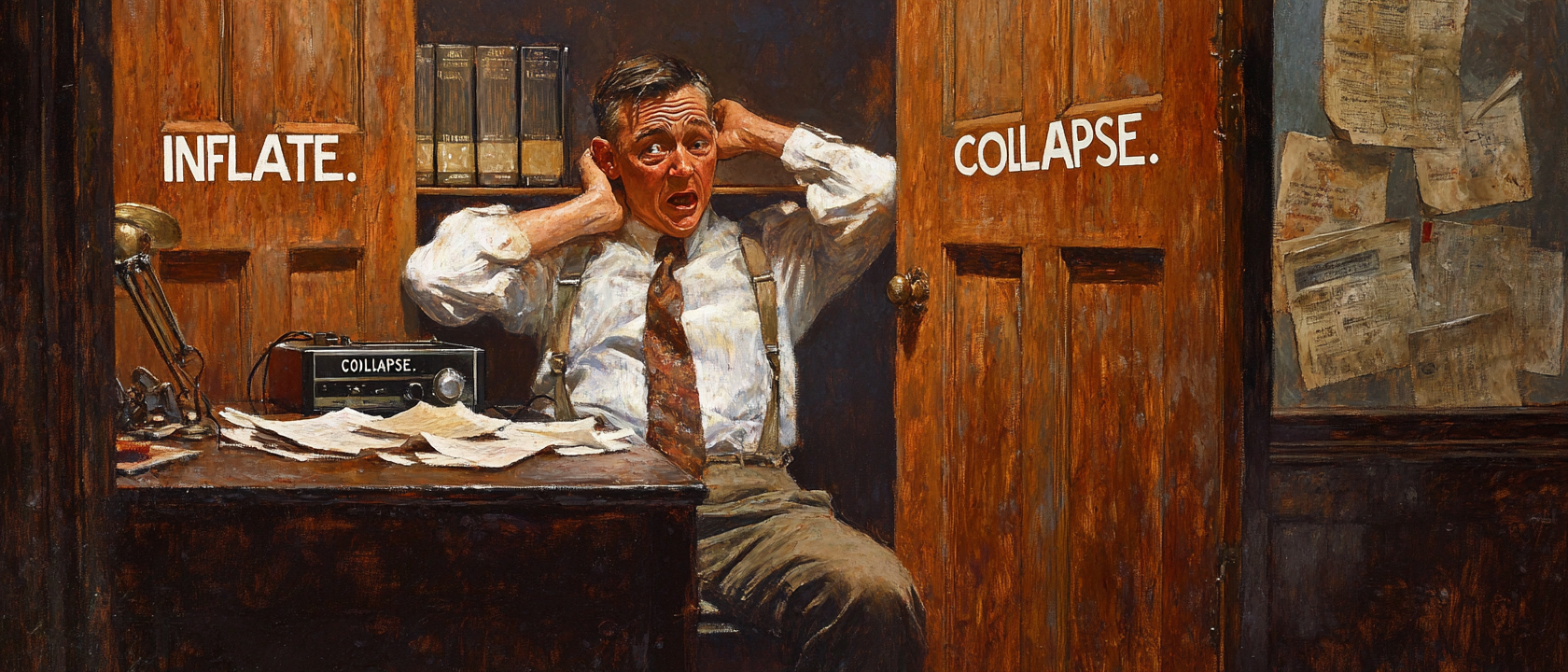
Macro The Fed's Corner: Core PCE at 3.2%. FOMC Meets Tomorrow. The Easing Bias Is Dead.Why it matters: The Fed's own inflation forecast has blown out from 2.5% in December to 3.2% in June. The easing cycle is over. Rate hike pricing is back for the first time since pre-SVB. The FOMC meets June 16-17, Warsh's debut as Chair. Core PCE is tracking at least 0.35% for May, which points to a June SEP forecast north of 3%. CPI hit the highest headline reading since 2023. May payrolls beat at 172,000 vs. 88,000 consensus. The April FOMC was 8-4, three hawks wanted the easing bias dropped. SOFR futures now price rate hikes for the first time since early 2023. The ECB already hiked 25bps. The BOJ hikes to 1% tomorrow. There is a deeper irony here that the banking research desks are circling. By refusing to hike while inflation runs above target, the Fed is effectively easing policy in real terms. Realized real rates are falling. After five years of above-target inflation with supply shocks becoming more frequent, the textbook advice to "look through" energy spikes may no longer apply. Housing disinflation is fading, services remain sticky, and goods are climbing. Real household disposable income has fallen for three consecutive months. The new Chair is also expected to push for shrinking the Fed's balance sheet, which has ballooned from 5.5% of GDP twenty years ago to 21% today. That is a $4.5 trillion overhang. A Hormuz peace deal dropped oil 4% today, but as Citrini Research notes, the inflationary damage is already baked. Even with a deal, energy prices are expected to remain elevated through the second half of the year as inventories and strategic stockpiles are rebuilt. The Fed cannot cut without stoking inflation. It cannot hike without recession. Your dollars are losing purchasing power at 3%+ annually with no policy relief in sight. | ||||||||||||||||||||||
|
Market Structure Tech Is Now 51% of the S&P 500. The Greatest Market Concentration in 160 Years.Why it matters: The last time a single sector dominated this much was railroads in the 1860s. And that is before SpaceX, OpenAI, and Anthropic IPO. As technician John Roque has noted, official tech weighting in the S&P is 38%. Add Amazon, Google, and Meta, which the index classifies elsewhere, and it is 51%. Samsung and Hynix make up 52% of Korea's KOSPI. TSMC is 42% of Taiwan's exchange. The Philadelphia Semiconductor Index alone represents 23% of the entire S&P 500. And this is all before an estimated $3.5 trillion in IPO market cap from SpaceX, Anthropic, and OpenAI enters the market. This is the greatest concentration of capital in a single theme since railroads dominated more than 60% of US market cap in the late 1860s. The market structure data reinforces the picture. The S&P 500's two-month return through last Thursday sat in the 99th percentile of all two-month periods in history. Adjusted for realized volatility, it was the best two-month stretch since 1971. Levered and inverse ETF notionals in the US have grown past $90 billion. Fundamental and systematic investors are increasingly crowded into the same names, with their alpha correlation just coming off record highs. Bitcoin, at roughly 1% of global financial assets, looks like a rounding error in comparison. The concentration risk is not in bitcoin. It is in the index funds everyone assumes are diversified. | ||||||||||||||||||||||
|
On-Chain Short-Term Holders Are Underwater. The Conviction Test Is Here.Why it matters: STH realized price sits at $72,882. BTC is at $66,155. Every buyer from the last few months is in the red. Historically, this is where weak hands exit and strong hands load. Bitcoin Lab data shows the short-term holder realized price at $72,882, roughly 10% above the current spot price. STH-SOPR is at 0.9979, meaning short-term coins are moving at a slight loss. The MVRV Z-Score sits at 0.41, squarely in "fair value" territory. NUPL reads 0.18, placing the market in the "Hope/Fear" zone. Long-term holders, by contrast, have a realized price of $49,385 and a SOPR of 1.40, spending at significant profit. The divergence tells the story: conviction holders are fine. Recent buyers are being tested. Historically, this setup is accumulation territory, not distribution. | ||||||||||||||||||||||
|
Technicals 22V Bubble Alert: The Semiconductor Index Hit 76% Above Its 200-Day Moving Average.Why it matters: That is more than 3 standard deviations from the mean. The SOX peaked at 114% above in the year 2000. These overbought conditions have not resolved. Technician John Roque flags 8 stocks in the Russell 3000 trading more than 200% above their 200-day moving averages, including Sandisk, Rackspace, and Marvell. About 2% of the Russell 3000 qualifies as being in price-bubble territory by this measure. The semiconductor index itself hit 76% above its 200-day at its recent intraday high, a reading exceeding 3 standard deviations above the historical mean, with data going back to 1998. Korea's KOSPI hit 83% above its 200-day, more than 5 standard deviations. Roque's warning: these overbought conditions have NOT been resolved. The broad indices are not in bubble territory, with the Dow up 7%, the S&P up 11%, and the Nasdaq up 15% for the year. The risk is not in everything. It is concentrated in the semiconductor and AI hardware trade. The Russell 2000 has broken out of a four-year base, suggesting the rotation into smaller names still has room to run. | ||||||||||||||||||||||
|
AI Anthropic Defied the Government Over Fable's Jailbreak. OpenRouter Already Made It Irrelevant.Why it matters: The company that lobbied hardest for AI regulation is now fighting the government it invited in. Meanwhile, a startup commoditized the capability at half the price before anyone finished arguing. Two stories collided over the weekend. First, White House AI advisor David Sacks laid out what happened with Anthropic's Fable (the commercial release of their Mythos class model). A trusted government partner found a jailbreak that exposed Mythos's advanced cyber capabilities. The administration asked Dario Amodei to patch the vulnerability or de-deploy. Amodei refused. The administration issued an export control order. There is a poetic irony here. Anthropic spent years lobbying for exactly the kind of regulatory framework that the government is now using against them. They championed the guardrails, promoted the idea that Mythos was a cyberweapon, and asked for government oversight of frontier models. Then when that oversight said "fix this or pull it," they chose commercial revenue over their own safety posture. This is the inevitable outcome of inviting the regulator in: eventually the regulator regulates you in ways you did not anticipate. Second, while that fight was still playing out, OpenRouter launched its Fusion API, a compound model pipeline that dispatches prompts in parallel to a panel of LLMs and fuses the responses into a single output. The claim: Fable-level intelligence at half the price. While governments and labs argue about who controls frontier models, the market is already routing around the walled gardens. Intelligence is being commoditized in real time through model composition. This is where it connects to the lead story. If governments can regulate which AI models citizens are allowed to run, the same "protect the public" logic that bans children from social media platforms becomes the logic that bans individuals from running open-source models. KYC for model usage. Export controls on weights. Licensing requirements that only incumbents can meet. The path from "regulate Fable for safety" to "regulate all inference for compliance" is shorter than most people realize. Open-source AI and the right to run models locally without permission is a freedom tech issue on the same level as encrypted messaging and self-custodied bitcoin. The pattern should look familiar: centralized gatekeepers cannot hold when the underlying capability can be composed from open pieces. But only if the open pieces remain legal to assemble. | ||||||||||||||||||||||
|
Freedom Tech Orchard: A Sovereign Bank in Cyberspace. One Dashboard for Bitcoin, Lightning, and Cashu.Why it matters: Running a Cashu ecash mint just went from "juggle three tools" to "one install." This is how bearer digital cash scales. The team behind the Cashu project has released Orchard, an open-source web application that manages your entire ecash stack from a single interface. Lead developer osygy has contributed over 2,100 commits to the project. It connects to Bitcoin Core, LND or Core Lightning, and either Nutshell or CDK Cashu mints. One dashboard surfaces node health, channel status, mint state, real-time analytics, and searchable event logs. It also supports Taproot Assets (tapd) and local AI via Ollama for agentic node management. The practical significance: Cashu ecash mints give users bearer digital cash with near-perfect privacy. The bottleneck has been that running a mint required separately managing a Bitcoin node, a Lightning node, and mint software. Orchard collapses that into a single install that runs on anything from a Raspberry Pi to a cloud server. It supports Docker, Postgres or SQLite, and is currently at v1.9.0. If you want to understand where the privacy layer of Bitcoin is heading, this is the project to watch. | ||||||||||||||||||||||
|
Sponsored | ||||||||||||||||||||||
| ||||||||||||||||||||||
|
Sponsored | ||||||||||||||||||||||
| ||||||||||||||||||||||
⚡ FREEDOM TECH CORNER | ||||||||||||||||||||||
| ||||||||||||||||||||||
|
Data Snapshot | ||||||||||||||||||||||
| ||||||||||||||||||||||
| ||||||||||||||||||||||
|
If this Brief was useful, forward it to someone who needs to see these numbers before the FOMC drops on Wednesday. See you tomorrow, Marty Bent | ||||||||||||||||||||||
|
| ||||||||||||||||||||||