Key Takeaways
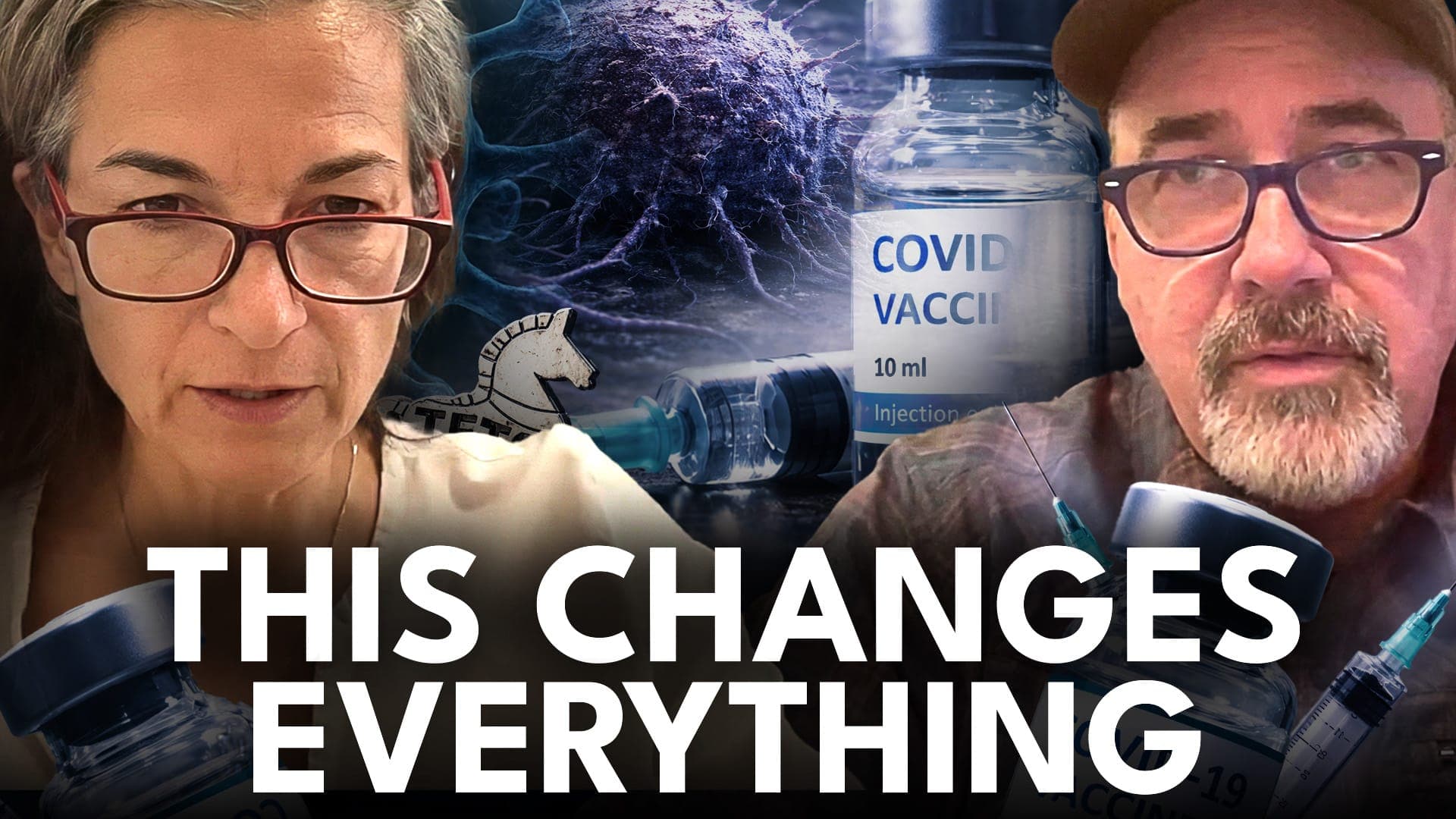
In this episode, Jessica Rose and Kevin McKernan detail what they describe as a coordinated breakdown of scientific integrity surrounding COVID-era research, vaccines, and gain-of-function work. They explain how their peer-reviewed findings on DNA contamination and SV40 promoter sequences in mRNA vaccines were accepted, then aggressively targeted after being cited in congressional hearings. The discussion outlines how post-publication attacks, via PubPeer, Retraction Watch, and aligned “research integrity” networks, function as a censorship mechanism to suppress politically inconvenient results while protecting narrative-aligned studies. The conversation expands beyond vaccines to renewed concerns about gain-of-function research at the Wuhan Institute of Virology, including evidence of experimentation on highly lethal coronaviruses with increased transmissibility. Rose and McKernan argue that myocarditis has become a “limited hangout,” while far stronger safety signals, particularly acute renal failure, thrombosis, and kidney injury, receive little attention because they are harder to attribute to the virus itself. They also warn that mixed vaccination schedules, post-infection treatments like remdesivir, and data obfuscation have made causal analysis nearly impossible, potentially delaying accountability for years.
Best Quotes
“The acute renal failure signal is about 150 times worse than myocarditis, and it’s much more clearly associated with the vaccine than the virus.”
“This isn’t peer review anymore, it’s post-publication lawfare designed to grind researchers down.”
“They can’t blame kidney failure on the virus, so it gets no airtime.”
“We’re watching science get steered, not reviewed.”
“If something this lethal is also made highly infectious, that’s a civilization-level risk.”
Conclusion
Rose and McKernan frame the episode as a warning that institutional science, as currently structured, is incapable of self-correction when political and financial incentives dominate. They argue that meaningful reform will not come from centralized authorities but from transparent, decentralized publishing models that make censorship and narrative control impossible. While acknowledging small regulatory wins and declining vaccine uptake, they remain deeply concerned about the lack of accountability, the continued push of mRNA platforms into children, and unresolved questions around long-term harms. Their proposed path forward centers on open data, decentralized peer review, and immutable publication systems that prioritize truth over consensus.
Timestamps
0:00 - Intro
0:34 - Peer review attacks
14:09 - Retraction Watch piece
22:31 - CrowdHealth & Bitkey
24:22 - Pubpeer gatekeeping
31:15 - MERS discoveries
42:04 - Obscura & SLNT
44:10 - Samourai case
48:44 - NIH Wuhan funding
54:36 - Kidney failure
58:53 - Accountability
1:12:02 - Elisabeth Bik
1:24:59 - Peer review on bitcoin & Nostr
Transcript
(00:00) The WHIV is playing around with gain of function on a MS virus that has [music] got like a 22% mortality. >> The WIV is the Wuhan Institute of Viology. >> The problem the original mayors had is it didn't spread [music] very far, but it was very lethal. He's got evidence of them trying to tweak that thing to make it more infective.
(00:17) >> Showed some evidence that there was contaminants [music] in the Fiser Madna, particularly SV40 genes, which are cancer accelerants. >> This article basically goes back to Gizlane Maxwell's father, Robert Maxwell. It was kind of like Epstein 1.0. Jessica, Kevin, welcome back to the show. Both of you at the same time.
(00:40) This is uh this is a first. I'm very excited for this conversation. >> Yeah, it's about time. [laughter] >> Yeah, thanks for having us back. Well, I I wanted to do it earlier this summer, but uh you two were busy when uh the paper that you co-authored uh was presented as evidence uh in a hearing on the Hill, which uh I was very excited to see.
(01:09) Jessica, you and I recorded about the quantification of residual plasmid DNA and SV40 promoter enhancer sequences in the Fiser Bay um and Madna vaccines. I guess just for uh my selfish uh the selfish uh inner beast in me. What is the last four months for you two been since that hearings? That was pretty profound. >> It's been 4 months. My god.
(01:38) Um well uh a lot of the same actually. Um it's weird that Well, I can speak for myself uh and say that it's it's very weird. um spending so many hours of the day uh responding to trolls and uh emails about having your work investigated and you know um requests to do interviews with you know various and sunundry people like Retraction Watch for example um you know just just for doing something you kind of always have.
(02:21) And of course, the the reason for all that is the subject matter. Um, but it shouldn't matter. I mean, it's it's uh you know, we're we're literally just doing what we've always done, which is scientific research and and writing and publication and uh you know, it's because what we've uncovered and are trying to disclose to the public is so, I suppose, radioactive that there's been a um a we well, I don't know if it's planned, but there's been, you know, a uh an attack launched against us. So yeah, it's been it's been
(03:03) interesting. Um yeah. >> Yeah. I I've had similar uh nightmares over here. I wouldn't call them nightmares, just hassles, you know. They're they're just uh I think they try to cement you in all of this noise. So you can't put out the next few papers, which which we've been doing as well. We've managed to be uh I'm sure you have a few Jess and I have another one that's out uh with Charles RXie and I put another one I've put two out since all this started, but I'm pretty convinced like all of this is just meant to be
(03:31) like sand in the gear just to slow us down. In the middle of this, I had a a police department doing an investigation on people who published simil similar work out in Slovakia. Um so that's getting heated. They're asking all types of questions on, you know, who published this paper versus that paper.
(03:48) Um uh I've had contact with police in in um Pennsylvania because there's people down there making like violent threats against me. Um they're asking questions. Uh so there's just all this madness going on where it just continues to escalate. Uh particularly after that hearing. I think after that hearing it just set people on fire and uh the whole retraction mob is is now gunning for the paper.
(04:12) They they put it under investigation at the journal. Um the manner in which they did it was was actually somewhat hilarious. Um some of the people who filed the complaints with the journal, one of them is an investor, quote unquote, uh his name is known, Kevin Patrick, um he drummed up some complaints using chat GPT that turned out to be hallucinations, but he submitted them anyway and and got called out on it.
(04:38) [snorts] And uh oh yeah, sorry that was a hallucination that you know that chat GBT did it. Um that that part was really funny because uh Pubier, we call them Pub Smear, um they they kind of go after papers they think are written by AI and they're they're using AI to do it. So it's this like circular loop of uh of um confusion over there.
(04:58) Um another one that um that occurred is retraction watch is kind of teamed up with this organization called PUP here. They have similar funding. Their funding is from the Arnold Foundation is one of their funders. The ARO Foundation got their they're like an Enron tycoon that decided to get involved in scientific integrity.
(05:20) Um, but Elizabeth Beck is is one of the moderators at Pub Pier and she won some awards. This almost sound like Jeffrey Epstein winning the lottery, right? She wins an award and then gives it to Retraction Watch and now they echo everything Pub Puper does. Um and so they came after us one day emailing us saying, "Hey, we we have this we got your the reviews from your paper.
(05:44) Um do you care to comment on what this reviewer has to say?" And and you know all so Dave this is for David Jess in our in our paper. Um and that got submitted into the congressional record. Uh which we were like we're excited for because like we wish those reviews were public. We've been asking the journal to put them public but um you know if if you have them let's see them.
(06:03) and they they sent over this document anonymized and all you had to do is like go to the PDF corner and look at the metadata and it revealed who their source was which was a person who's who's at at a at a um like a university that's funded by DFG who who funded the vaccines. Uh, so the person who wrote this screed against us.
(06:24) It was kind of funny because the review um I think the reason we got through review is that that reviewer went apeshit on us with all types of ad hominemum attacks being like these guys are antiaxers misinformation in peer review. You don't do that. You just talk about the data. You don't attack the people.
(06:39) And so he shot himself in the foot cuz you know he had some some relevant complaints that we that we did address but if he just put the complaints down it would have been a better review. But he he went all antivaxer hatred on us. Uh, and so the editor just wrote him off and um, uh, and approved the manuscript. Um, but his complaint that he filed with Retra when he snuck this review out to Retraction Wash, he tried to do it secretly and we caught him.
(07:02) Um, he tried to tell Retraction Wash that he refused that he that he rejected the paper and the editors came up and they're like, "No, you didn't. You just said make changes. We have that on record." Um, so there's been this very weird um, pharma funded uh, attack that's getting laundered through all these other um, I don't know if they're companies or 501c3s or these nonprofit entities that are that hang their hat on being at Science Integrity Outfits and um, they're they're all um, activated and and running after basically everything we post and
(07:34) everything we we we publish. So, um, it's kind of fun. Um, but it's it's made us realize that we really have to build a new system here. Like, we've got to start putting this on Noster and on Bitcoin and just get out of this whole pharmaunded mess because it is uh it's just creates all this all this noise. >> Yeah.
(07:58) as as Kevin pointed out like we our our paper this you know this very very very rigorously peer-reviewed paper which was desk rejected I think five times is that right Kevin five or six >> um yeah I can't I can't remember the exact number it was a lot and um David would know he's the one who dealt with most of the the >> yeah well anyway it was desk rejected which means like outright rejection we're not going to review it by like at least five journals and then it was accepted for you know with revision and we did the revision and we we went over
(08:34) this process like many times. Plus we had this guy that Kevin just mentioned who was pretty you know he was um determined to you know kind of ruin our chances of getting it through peer review but it didn't work. Um, we we got it through. Nonetheless, nonetheless, 7 no, sorry, it was 11 days after it got published online, uh, the editor sent us an email saying that it was under investigation and that was because of this, uh, Patrick or Kevin Patrick guy and PubSme network. We know that for a fact.
(09:18) Um, and so it's still under investigation even though it's on the congressional record and even though the altmetric, you know, metrics show that it's very very uh popular, let's put it that way, in the eye of the public. Um, and you know, people people want to know what the hell is going on.
(09:39) I mean, that's the whole point. Um, we we published a study. This is what we found. You can read it if you want. You don't have to if you don't want to. Like, you know, they're incriminating themselves if you ask me with all of this um these attacks and with the investigations and with the, you know, lack of answers to our questions about like, you know, how come, you know, this evidence that we've provided you that this is actually a, you know, um a a targeted attack on us to to retract our paper. that was, you know, that had
(10:14) forethought um shouldn't enter into the uh discovery of the investigation, if you want to call it that. Um but but anyway, uh the yeah, it's ongoing. It's still under investigation and we don't really have an idea of how long this process is going to be. that we have it on good authority that other papers that have been brought under investigation by these same types of people have been under investigation for years.
(10:44) Um >> yeah, that's right. Bryce Nichols brought that up that some of the lab leak papers are in the same kind of purgatory and um they the same journalist's done that to them. Um but the I think the the interesting thing on this topic is that I've been contacted by by two other authors who have also published work that replicated our work.
(11:02) One is Bridget Coning and one is Commer and this same character Ralph Marshall went after them with the same vitriol uh just went went basically berserk uh on their papers and there's a really interesting MDPI um back and forth when they when he went berserk on their paper. Bridget went back to the journal saying, "Well, look, let's have a dialogue.
(11:24) I'll we'll put forward our you know, our arguments. You put forward yours. Let's put it all on record." And the moment she put hers forward, those guys ran away from the debate and then went and published the pre-print and kind of broke protocol. Um, and the same thing's happening here in our in our in our approach.
(11:40) They they with our paper, they they weren't supposed to leak. They've only leaked one side of the of the reviews. They leaked their reviews and kept ours private. So now we're kind of exposed where you can see all of his complaints, but you can't see our response, >> which is against Kofi guidelines, by the way. >> Yeah.
(11:54) Yeah. So they're they're breaking all types of rules which shows that this is a this is desperation on their behalf that they they're they're breaking all their own ethical guidelines to to try to um you know suppress this. Uh and they have their own papers on this. So the one who came after us should have rescended himself from the review because he had a paper that we were actually critiquing in ours.
(12:12) And generally that's like okay you have a conflict you should step away and have someone else review this because uh you're actually mentioned in the paper. Uh but he didn't do that. hid that and and went on the attack. So, um there's uh the there's there's just a network of people out there that are that are bending the scientific record.
(12:31) Um and they're they're heavily funded. Uh and there's an influence network out there that has kind of, you know, we're we don't have all the the understanding of who funds them and how. But but that's that's kind of the open question is who are these groups that go on the attack for these papers? because there's certainly um evidence shown that this pubier mob uh they've there's a group out there called Science Guardians who's gone through and submitted like 17 uh you know papers that had issues that they that were related to the people in that
(13:02) network and they censored all of them. So they will not receive any any like critiques of their own papers. Uh and then if you look at the things they do critique, they're very targeted at things that are on narrative. So they support masks, they supported the lockdown papers, they supported the surges fear fraud, uh they supported the proximal origins paper.
(13:21) All these things that we know that people are screaming to have retracted um they're they're defending. But then when papers come out suggesting that, you know, Ivormectin might work or there's contamination in the vaccines um or like Wikiari had some work showing the spike protein might uh increase the um or downregulate the expression of P-53, which is a tumor suppressor gene.
(13:42) It's a big bombshell paper. they went after him trying to cancel all his papers. Uh so this is uh this is kind of what we I would call steer view. There is there's a system in place for people to systematically suppress certain science and elevate other science and it's dressed up in this bow of being you know pure academics that are after >> science integrity.
(14:02) >> But um it's it's kind of a civil attack uh that's in the peer review system right now. >> Yeah. All right. That was a fire hose. We're going to take a step back because I did some research this morning. So, first of all, if you're listening, the paper that I referenced earlier that Jessica and Kevin co-wrote with a third author basically showed some evidence that there was contaminants in the Fiser Madna vaccines, particularly SV40 genes, which are cancer accelerants and DNA fragments. In other things, it was
(14:36) presented on Capitol Hill as evidence as something to explore and look into the powers that be. Didn't like that. And you're describing this loose network. I'm going to pull up this screenshot of a video I watched this morning. I fell down a thread rabbit hole um after going on your profiles and seeing some of the tweets that you guys tagged me in.
(15:00) So, I think this does a pretty good job of sort of articulating this cabal, if you will, or visualizing this cabal. And I'd like you two to jump into sort of this network here. But first, like Pub Pure, how important is it? How much of a gatekeeper are they? How integral are they to facilitating and distributing uh scientific research that gets seen as legitimate in the eyes of many others? Yeah, it's a front like it it's like uh what what was that thing that store called? It was called piano furbishers or something. Never mind. Um
(15:40) it was a story I heard from someone that was really funny from ages ago. But it's it's a storefront. um with the appearance of being science integrity there the people who are working in the pub here the pub smear network they're very integrally linked to retraction watch they got 200 grand euros from Elizabeth Bick from this Einstein award you know to to do what they do which I'm still not sure what the function of retraction watch is if they're actually watching retraction and reporting on it or if they're
(16:17) actually helping papers get retracted because it seems to be like a little bit of a dual link there. >> Yeah, they're definitely helping because they will ours isn't retracted yet and they're already commenting on it trying to help facilitate the retraction process and even their own title on the paper that they wrote about us was fraudulent.
(16:39) It was it it it the title of of the paper they wrote about us was that one of the peer reviewers who rejected our paper leaks the review and in the in the document that they write they they quote the editor of the journal saying he never he never rejected it. He actually approved it with edits. >> Title of their of their article is misleading.
(16:58) It's they should retract their own work but they'll never >> Absolutely. Absolutely. And by the way, for everyone who's interested, you can go, and I encourage you to do so, go onto the retraction watch website and look up their piece on our work. And this Ralph Marshallac, our one of our reviewers, which I can say his name now because they made it public.
(17:21) They have a link to his review of our work, which is not supposed to be in the public forum. It's not. uh he broke copi guidelines and many ethical uh and moral guidelines if you ask me. Um and you can read his language. It's it's downright defamatory language about us as authors which you're not you're not allowed to do that as a peer reviewer.
(17:49) You have to I recently did a peer review of an article and you have to takeick off boxes saying you're you're not doing this, you're not this, you're not that blah blah blah. you won't do this. And this is a part of a contract. If you engage as a reviewer, you have to abide by certain guidelines. It's it's like a contractor and you click those boxes and you sign off on it.
(18:12) So he breached those by disclosing his review the the review of our paper and by writing the review in the the manner that he did. So you can you can click on uh Yeah, I know this is this is the um >> I went off this paper. >> This is the first one on myocarditis paper which is a whole other episode. >> This is actually an incredibly important topic though, Jess, because you called out myocarditis like what two years ago, three years ago, >> October 2021.
(18:39) >> Now they're finally admitting that okay, Jess was right. uh exactly what this paper was right was that the the children the young males >> this this was so early in the vs data it wasn't even through the the freaking 2021 year the signal for boys aged 12 through 15 for myocarditis and vs was blaring and that's all the paper said it was a descriptive analysis of ver's data and it got it got withdrawn is what they call it without any reason why other than that it was their prerogative to do so. No explanation since then. I I they
(19:22) actually the journal did something even more nefarious in that because when they said that it was withdrawn they put in this really squiggly language about it was withdrawn by the authors or the editors or some combination above and which is a lie. It was it was withdrawn by the editors not by you guys. Yeah.
(19:39) >> So they they led the public to believe that you guys withdrew it. >> Uh which was really really squirly language. >> And reading this here too because this is so this is different than the paper that you were describing earlier, Jessica. This is your >> go to what I wrote to retraction watch Marty because it's it's beautiful and I stand by it today.
(20:00) It's 4 years later and I wouldn't change my language for the world. It's it's up a little bit. It's uh it's uh I don't know what whatever it was that I I said to retraction watch in quotes that they yeah we are very motivated to get the information in our paper to the public pediatricians parents and policy makers alike.
(20:22) This is why we decided to publish in the first place. It's extremely frustrating for us to face such censorship when professionals are in need of scientific data and discourse on the subject of myocarditis and children in these very strange times. So, I appreciate that they quoted me there because that's that that is exactly what we're facing now.
(20:42) And all of the papers that are at the, you know, the the end of the the gun, so to say, of the retraction watch pugpier mob, um, all we're trying to do is is publish what we found. I mean, they went after Sabine Hazen's hypothesis paper and got it retracted. I mean, how what the hell like how the hell does that even happen? It's it's an hypothesis.
(21:11) [laughter] >> It's an idea. It's like >> And that was about gut bacteria, right? In the uh >> Yeah. And and and for those of you who don't know who Elizabeth Bake is, look up you biome fraud. >> Well, and this is another thing here, just looking at this particular reaction watch piece. I mean it seems like they're admitting that there is instances of myocarditis caused by the vaccine and it looks like Dr.
(21:42) McCulla uh was basically abandoned by uh Texas A&M College of Medicine, Texas Christian University, University of North Texas Health Science Center School of Medicine. Uh they both removed Dr. McCulla from their faculty. So there was professional repercussions for those >> like many titles and positions. So did Pure Corey.
(22:04) I mean there there's a long list of people who who were like just kind of you know normal doctors and researchers and uh >> more than normal. I mean Jesus looks like >> you McCulla was like one of the highest sighted like renal cardiologists in the world you know and they and no gone. uh Paul Merrick as well. He's he's like highly published and they you know so it's there's just there's a lot of bodies uh on this uh on this pile.
(22:32) >> Suffra's healthcare open enrollment has started. It will roll through the end of January. Opt out of traditional health insurance which doesn't care about you. It's impersonal. It's expensive. They deny increasing amount of claims. Premiums are going up. You don't have to live this way. You can opt out.
(22:45) I opted out four years ago and joined Crowd Health. I've been a Crowd Health member. Very happy Crowd Health member for four years. I've had two children. a couple of health events in that time period. And Crowd Health has been there. You pay a monthly fee. You contribute to the crowd.
(22:58) We were paying $1,800 on Cobra as a family of three. Now we're paying around $900 a month as a family of five. And that's with Crowdalth and direct primary care. You can opt out of health insurance. Go to joincrowalth.com/tc. You're going to get $99 a month for the first 3 months if you use the code TFTC. Joincraoud.com/tc. So freak.
(23:16) This was brought to you by our good friends at BitKey. Bit key is the hardware wallet that makes Bitcoin easy to use, hard to lose the two or three multisig. You download the mobile app. You pair it with this hardware device here. Uh you have a key here, one on your mobile app, block holds one in the cloud. Comes with incredible features.
(23:35) The newest of which is chain code delegation where you can set up your wallet and you can send and receive Bitcoin from that wallet as long as you're doing it with your hardware wallet and your mobile wallet and block is none the wiser. You get privacy with chain code delegation in privacy mode. You can auto stack using Cash App, Strike, Coinbase, other apps uh directly to your BitKey wallet.
(24:00) Uh easy to set up. If you have friends and family that still have their Bitcoin on the exchange but need to get it off, send them to Bitkey uh to pick up a Bit Key, go to bit.world, use the code TFTC20 for 20% off your Bit Key and you can buy one right here. We have one on our YouTube store. You don't have to go anywhere.
(24:16) Just click that link. Use the code TFC20, 20% off, pick up a bit key. Well, getting back to Pubier, like how how much of a strangle hold do they have over this process? other alternative uh peerreview systems to go through that people respect or is this sort of the the one that people really depend on? >> I think this is the first one that really came about and so they've caughten the the mind share of academia and the journals that okay, this is now a thing. It's out there.
(24:46) We we need to pay attention to what they're finding. Um, [snorts] but there there hasn't really been a competitor until people have enough people have been burned by this that there's now an outrage over how they operate because when they do this, they they're not required to um to work by the same rules as what the authors of the paper have to.
(25:06) So they they'll make some accusations. they won't be very transparent on their methods of these accusations and and then the journals freak out and often retract the paper before the authors even get a chance to get on their feet and be like, "What are you talking about? I got to dig up the data that's from 5 years ago.
(25:23) I got to find the find the images." And there have been people reporting that often the work they do is fraudulent themselves. It's like pubsmear will make an accusation that these two images are the same and then someone later will run them through an image analysis software tool and say like I put this through mat lab and they're wrong. They lied.
(25:39) These are not pixelto pixel identical images. Oh wait, the paper already got pulled before someone came to like defend it correctly. >> And I have two things to say about that that happened to us specifically on on this particular paper. One of the reasons why I think this investigation uh by the publisher was launched against this paper was because of this Kevin Patrick comment on the pub's pure website that was completely fabricated.
(26:11) It's I'm not it's not conjecture. It's there's it's black and white. He made >> he admitted to it after the fact after he got bagged. He regardless, he made it up and it instigated like it it was kind of like all that was required if you know what I mean to start the investigation and the platform that provided that instigation was huger and not only that but like the the image twin which is the software that was co-developed by Bick who who's this pugpure you know moderator.
(26:49) >> Moderator. Yeah. Um, she co-created or co-developed this image twin that she uses as uh this tool to scan images in in peer-reviewed literature to see if they're um if they're fraudulent in some way. And I'm not saying that that doesn't serve a purpose, but her motivation and where she is now, like I I don't know what is going on with her, but she is has lost the plot.
(27:24) And I would say that she never had a uh benevolent motivation for doing what she's doing because she's very she's very bitey in her approach. Um very targeted at in a particular narrative. And I think that's the I think that's the biggest tell. >> It's very well thought out. >> Papers they go after they go after for a reason and um there's a there there's a consistent pattern on the type of papers that they go after.
(27:54) >> Yeah. >> They're very very pharma supportive attack dog if you will. >> Um so we we can to Marty's point we can build a better system now. Uh we don't need this. Um and in in many ways, you know, this whole concept of peer review be being behind closed doors, I kind of object to it.
(28:11) You know, it's unfortunate we went to, you know, we ended up with a journal um that that had that policy, which I wasn't totally aware of after we till we submitted it and people start asking for the reviews like can we do it? And they're like, no, no, no. These these all stay private and the reviewers stay anonymous and and then lo and behold, the reviewers themselves start leaking only one side of the story.
(28:30) So, we're kind of stuck flatfooted here. We can't really defend ourselves um by saying no, this is what our response was. The journal won't let us release it. All this should just be on like Noster or something, right? Let let these things play out on I wouldn't even say Twitter because Twitter is censored. Like you can go to Twitter and ask Grock these things and Grock will be like I'm not allowed to talk about this or that and it's it's just uh there's still all types of nonsense going on on X.
(28:53) Uh Nostra seems to have the right architecture for this. Um, and to what extent we can um, etch things into Bitcoin as well, small bits of time stamps to, you know, just just bomb proof the Nostra protocol. Um, I I think I think that's the way. And there's so so, you know, we've been doing this very recently on some of our more recent papers.
(29:13) We've just been etching them into the operator to, you know, get all the the Bitcoin knots people up, you know, on on our threads as well. Uh, and uh, and it's it's it's starting to catch on. Um, I just heard word from Steve Massie that he's going to try and do this himself. Um, so, so Steve Massie, for those who don't know, another really important researcher, he's out there hitting on the edge of where did the where did this virus come from? What's going on with gain of function? And very recently, he submitted a paper um to uh to to archive, which is like a it's a
(29:44) it's a site run by Cold Spring Harbor. But the problem we've had with Cold Spring Harbor run preprint servers is that they're starting to filter these things at the pre-print level. Um, and as a test of this, our most recent paper, uh, Jess Charles and I sent it to Bioarchchive by also run by Cole Spring Harbor, and they censored it.
(30:04) They sat on it for a week, and after we nudged them, they're like, "Sorry, this is not right for our for our preprint server." Uh, and the day we got notice of them kicking us out of there, uh, our paper got got got got accepted at another journal. So, it was kind of funny. We got this like this paper's too toxic and then the other journal being like it's been approved with minor edits.
(30:24) Like literally like within the same hour those things came through. But Steve's in this position where he has found that he's got evidence that the WIV is playing around with gain of function on a MS virus that has got like a 22% mortality. It's It's absolutely frightening. Um, and he's picked up the smoking gun on this, puts it into archive.
(30:45) Archive has been sitting on it for 14 days. And so he's like, "Screw it. I'm going to put up an a Bitcoin address and try to do what Kevin and and and Jess and Charles did, and I I just need some funding to get a node kicked off. And if people can help me build the node, uh, I'll I'll start etching this stuff into Bitcoin and Noster.
(31:05) " Um, so I I I hope this this this just catches on because I think that community is is far more um censorship intolerant, if you will. >> Help us build the tools. >> Yeah, you tagged me in this this Mr. thread. So what is his paper claiming to have discovered? >> He's found evidence in some of the the sequencing read archives.
(31:28) Um the the the thing about a lot of these um these papers where people are doing sequencing in this field and like the coronavirus field is they often submit the reads to to public databases like the NCBI SRRA and Steve's been a sleuth combing through those and taking all the reads that don't don't like assemble or map to where they think they're going to map and finding that there's other [ __ ] in there.
(31:51) Uh and in this case he he found evidence that someone was playing around at the wh a an infectious clone that contained highly pathogenic human transmissible 22% mortality mayors. Mars is like a like a SARS virus but it's I I think it's the one that hit came. >> It's like way worse. It's it's a hemorrhagic fever. It it's it's got a much higher mortality rate.
(32:16) Um >> yeah. So, and and for those of you who don't know, the WIV is the Wuhan Institute of Viology. This >> Oh, yeah. Sorry. >> This place where, you know, allegedly the um the SARS 2 virus was made. Um I have no idea. I I mean, I have no doubt that that's exactly what happened, that it was made there, but uh >> so Steve is very computationally savvy.
(32:41) He will not have a problem setting up a node and and getting this thing etched. Um, I've given him like my Substack and how I did it and I, you know, I'm no genius on either. You can use Claude now to teach how to submit Bitcoin transactions and and have it fill it out on your start Node and send it in and you don't even need to go through um I was using slipstream at Mara for a while, but now I skipped that because Mar even slipstream started to extensor.
(33:05) Um, like if Yeah, the first time I did this, I put too much uh like I I I got impatient, so I put a lot of Vites per SAT. Like I just wanted to get this damn transaction through. So I jacked up the fees. [snorts] And they're like I got this notice from them being like uh any large OP returns. It was like 300 bytes.
(33:23) Um that is paying excessively we have to manually review. And I was like, "Oh, to hell with that. I'm I'm just going to fire this off on my own node and and skip uh slipstream." and eventually I someone picked it up and and threw it into a block. Um, but he he'll he'll be able to figure this out.
(33:40) I think we're there's a Bitcoin address in here. I've already donated to him. So, uh, if other people want to donate, please do. It'll help him get that node going. And this this is like important information that needs to get immortalized because, um, this kind of crap they're doing is is is really reckless.
(33:57) uh if they start playing around with viruses like respiratory viruses that have this type of mortality rate uh it's it's uh it it it needs to needs to get exposed. >> Yeah. And so he basically how so he got access to I guess data about the the gain of function around COVID and found that some offshoots of those experiments were >> this particular >> some of the data they published themselves he was able to comb through it and find evidence in in those reads that basically they had some contamination in their laboratory and he could see it in their other experiments.
(34:37) So, they weren't intending to publish this. Uh, Steve kind of smoked it out that, okay, I'm going to go through all the data that's ever been published, all the sequencing that's ever been published from these characters and see if I can find any trace reads of uh of clones that are gain of that are evident gain of function clones.
(34:57) Um, and uh, his paper goes through um, some of the logic on that. >> All right, >> nice. All right, there we go. >> Well done. And it's not it's not a hemorrhagic story. I was thinking of deni. It's it's a well it's an alleged respiratory but it's >> I think this is the one that hit the camels that that >> yeah it's a dramadary thing but it it's like they also were saying that SARS 2 was respiratory but it's it's not it's thrombotic.
(35:24) So Merse is probably it's described as being respiratory and it probably has those elements clinically, but it's probably more uh thrombotic as well. But >> mess around. >> You should have him on just to talk talk through it if your audience wants to learn more about it. He's he's uh he has been in this fight since the beginning. He's had really good papers on uh I think he was involved in Drastic, which is a group that kind of >> Yeah, he was right.
(35:49) That's how I know his name. Yeah, he he they they're the ones who really sorted out that this came from this came from where from it wasn't a penglin made it with a bat [ __ ] It was it was a it was clearly a gain of function virus uh that the SARS one at least. They're the ones who sorted that out and and helped and and Charles Ricky who we just recently published with was one of those people as well who leaked the fuse proposal.
(36:11) Uh this is the proposal that showed Ralph Bareric and Echo Health Alliance submitted like hey let's go make a respiratory virus more infectious right out of a corona virus and they submitted that grant application to DoD and the DoD turned them down because it was too dangerous [laughter] >> but they went and did it anyway >> and then suddenly a virus that looks just like that shows up in uh shows up in December 2019.
(36:34) >> Magic. >> Yes. Well, with this MS uh unearthing that Steve Massie has has found, like is that sitting in the lab somewhere or is he worried that that could break out or >> So that did break a version of that broke out. I think I think um Kristen Dston was also involved in the early detection of that in the camels in the Middle East that came out and the reason they know its mortality rate is it did kill a lot of people.
(37:02) I mean not not a large number in total but its mortality rate was like 20% or more of the people that did get infected by this. And so they're they're the people at Wuhan Institute of Urology are now playing with that type of virus and putting some of the components that make it really infective um into the virus to make it more infective in humans.
(37:22) The problem the original mayors had is it didn't spread very far because it wasn't very infective, but it was very lethal. >> Yeah. and he's got evidence of them trying to tweak that thing to make it more infective. Uh which is uh which is kind of frightening. >> It's a trade-off between lethality and infectiousness.
(37:41) So if you can uh if you can tweak that uh relationship well enough, then you can get something really bad uh that can cause a whole lot of problems. Like if it's if it's very infectious and not lethal, that's great cuz then everybody gets it and everybody gets natural immunity and we move on. But if it's really deadly and it's also infectious, then that's really bad.
(38:06) But normally like then, you know, people shouldn't freak out too much. When you have something really deadly like Ebola for example, >> doesn't spread very far because it kills people before it gets anywhere. >> Exactly. you get these really small clusters uh that are easily containable either naturally or because you know >> the government comes in and and burns everything um and you just don't have the chance of it spreading around the world.
(38:31) >> Yeah. >> So I think where that that's something known as Mueller's ratchet and it's an important like evolutionary principle that if something is is too um is too lethal and kills the host before it can spread it will be self-limiting. But I I think where people are starting to challenge this in the world of gain of function research is that well what if you have a virus that spreads but can create cancer.
(38:52) >> Yeah. Right. >> So it doesn't kill you right away but maybe it's amaloidogenic and it gives you clots and and so fine you can spread it but then you have a long tale of disease that comes afterwards. >> What does that sound like? >> Yes. Yes. That kind of sounds like what we got with SARS is that that the virus is in fact amaloidogenic and the spike protein they use to inject in everybody is as well and now we're dealing with this thrombotic issues and potentially cancer and and there could be a long wave of mortality that is slow and and
(39:21) and you're going to see headlines in the next 10 years that doctors are baffled. >> Yeah. Because the thing about it is it's so insidious. Because honestly, and I'm saying this as a data analyst, an immunologist, whatever you want to call me, there's no freaking way ever going to be able to trace this back because it's so convoluted now.
(39:44) You know what I mean? It's like all all these uh that some people are calling them turbo cancer, but every everybody's seeing it. There's an increase in the rates of rare cancers. uh aggressive cancers, cancer reemergence. I mean cancer canyon cancer is like everywhere all over the world more so in the United States I would say uh and maybe Australia and Canada but like how the hell would we ever even with the DNA evidence and the SV40 evidence even with that how the hell would we ever trace it back to the shots unless we had
(40:22) like 30 years of data and we had some kind of you know what I mean? They made sure that they mixed and matched the shots and now they can blame >> when when they started doing that Kevin that's the first thought that went into my my mind. I'm like what that Marty I don't know if you know this but there was a day when they decided that it would be okay if you got a Mona shot to get a Fiser shot and as soon as they and Astroenica if you got one of those which was supposed to be one one Jansen one Astroenica they were recommending you
(40:53) get these freaking you know modified mRNA things and I'm like no no no no no no from a clinical point of view is that going to be a potential disaster It's going to be a disaster data wise because we're never going to be able to deconvolute this. Never. >> That was that was basically like a whirlpool operation for the shots.
(41:16) You know, they just put them through a mixer. So now no one can figure out who the hell got what. >> It's a blender, man. It wasn't a mixer. [laughter] >> That was a samurai wallet approach on the on the vaccines. Let's do a cover here. But >> I shouldn't say about samurai. I hope those guys get off.
(41:29) And it's good to see that that Trump said something about it. Like that's such a disaster what's happening with those guys. Um they they completely filed the law to a tea and um let's hope more people like sign sign that petition. I've signed it. >> I heard Samurai got off. >> No, not yet. They're facing jail on the 19th.
(41:47) They have to they have to uh report to I mean >> it's you know it's it's not a horrible jail but still it's it's jail and it's 5 years away from their family and um they followed everything all the rules that Fininsson gave them to the tea and they're just getting persecuted by uh you know Southern District New York. It's just it's nuts what's going on there.
(42:05) >> Sup freaks, have you noticed that governments have become more despotic? They want to surveil more. They want to take more of your data. They want to follow you around the internet as much as possible so they can control your speed, control what you do. It's imperative in times like this to make sure that you're running a VPN as you're surfing the web, as we used to say back in the '90s.
(42:24) And it's more imperative that you use the right VPN, a VPN that cannot log because of the way that it's designed. And that's why we have partnered with Obscura. That is our official VPN here at TFTC built by Bitcoiner Carl Dong for Bitcoiners focused on privacy. You can pay in Bitcoin over the Lightning. So, not only are you private while you're perusing the web with Obscure Up, but when you actually set up an account, you can acquire that account privately by paying in Bitcoin over the Lightning Network.
(42:51) Do not be complacent when it comes to protecting your privacy on the internet. Go to obscura.net, net. Set up an Obscura account. Use the code TFTC for 25% off. When I say account, you just get a token. It's a string of token. It's not connected to your identity at all. Token sign up. Pay with Bitcoin. Completely private. Turn on Obscura.
(43:13) Surf the web privately. Obscura.net. Use the code TFTC for 25% off. Sup freaks. This rep is brought to you by our good friends at Silent. Silent creates everyday Faraday gear that protects your hardware. We're in Bitcoin. We have a lot of hardware that we need to secure your wallet emits signals that could leave you vulnerable.
(43:29) You want to pick up silence gear. Put your hardware in that. I have a tap signer right here. I got the silent card holder. Replace my wallet. I was using ridge wallet cuz it's secured against RFID signal jacking. Uh silent the card holder does the same thing. It's much sleeker. Fits in my pocket much easier. I also have the Faraday phone sleeve which you can put a hardware wallet in.
(43:47) We're actually using it for our keys at the house too. There's been a lot of robberies. They have essential Faraday slings, Faraday backpacks. It's a Bitcoin company. They're running on a Bitcoin standard. They have a Bitcoin treasury. They accept Bitcoin via Strike. So, go to slt.com/tc to get 15% off anything or simply just use the code TFTC when shopping at slt.com.
(44:08) Patented technology, special operations approved. It has free shipping as well. So, go check it out. I mean, it it's nuts what's going on everywhere. I mean, what you two just described what's we live in a lawless era. It whether it's what's going on with samurai. Think if you Jessica, if you dig into the details of that case, it's objective and pretty clear that it was objective lawfare.
(44:31) They like Kevin said, they followed the law. They never touched any money. They never handled any money. >> Fair too, right? He did everything right. >> Yeah. and and like the so with the WHIB with the Wuhan Institute of Bureology and they're like the fact that they're even experimenting on this gain of function and SARS and MS who's behind have we figured out who's behind obviously I remember the NIH was giving them grants there was theories that >> I think that they're they're like the uh I don't I don't know if this is the
(45:07) right word the psy you know like the um the scapegoat. Maybe that's a better word. Um I I think maybe I shouldn't say this because I I don't want to die. [laughter] I I just um let let me just put it this way. I don't think anything is is as it appears. Um I think what we're allowed to see at the you know and the public facing um view is is just um what we're allowed to see.
(45:44) Uh and it's very very clear that this this ass munchery is still going on. this gain of function crap. Tinkering with with viruses that are actually being hunted down in in obscure places in in on Earth that nobody's ever been and trying to make them more, you know, more um infective in humans, you know, that's that's that's the gain of function part.
(46:15) and and then running the risk for whatever reason they're doing this cuz they always say, "Well, we have to do it before this other person does it because we're going to need a cure in case it happens over there." Um, that's [ __ ] by the way. Um, but whatever for whatever reason they're doing it, there's always a risk of we'll call it a leak.
(46:42) There's always a risk of a plasmine escaping. We know that this happened already. Kevin just can describe that. Um, it's madness to be doing what they're doing. There there's enough danger in the world, you know, from from human beings, you know, acting the way that they do toward other human beings without screwing around with viruses in obscure places in China.
(47:06) [laughter] >> Yeah. >> It's no secret now that like there was some Ralph Bareric involvement. So, there's some UNCC money. There's probably some Rocky Mountain Lab involvement. There's probably some Fort Dietrich involvement that we don't know about. I mean, there there's the US is not innocent on this.
(47:22) And even even Steve's most recent paper points to some some um NIH or NIAD grants that um Fouchi is probably involved in in funding this Wuhan grant for for this Mr. stuff. Uh so it's yeah, some of the some of the the trails hunt back to NIH. And I I think that's what's made this such a mess is that the NIH got like a billion dollars in royalty for the vaccines and yet the the bread trail go back to them for funding some of this work.
(47:53) uh which has made it really politically messy and I think there is an interest in the some of the news headlines pointing at Wuhan to be like you know oo nasty fearful fearful China China bad right >> but uh you know Ran Paul's been all over this that those breadcrumbs trace right back to the to the US government who's collecting royalty checks for what they claim is the cure to this thing and that cure happens to actually be a complete train wreck in another disaster on its own.
(48:17) >> Yeah. So, um, yeah, it's very, uh, too centralized. Let's just call it that. The, uh, [clears throat] >> the wet market and the bat lady got thrown under the bus. That's all I'm going to say. And, um, I think the, um, Oh gosh, I lost my thought. It was important about what you were just saying, Kevin.
(48:39) Maybe you can spark my thought, Marty. >> You were saying something about the bat lady and and u maybe centralized issues we had. Well, I was I was going to bring up cuz I saw you had a back and forth cuz I tweeted this. I think it was a study out of Stanford maybe that um basically proves like, hey, the the vaccines are are leading to increased >> myocarditis >> mortality myocarditis and Elizabeth Bick responded to you.
(49:06) Um >> did it have to do with that? because that cuz I wanted to bring up that because it seems like there is a concerted effort where it seems clear based off the research that you you two have done and many others have done independently that there is something here whether it's myocarditis turbo cancers whatever like the vaccines are having effect and um more recently to Kevin what you alluded to earlier it seems like they're all trying to blame the virus itself like oh it's not the vaccine the virus is more impactful in
(49:34) all these areas >> yeah it was all this you know co is worse [ __ ] on the myocarditis subject matter. Hey. Hey, bud. [laughter] >> This is the only tell me that um it's dinner time. [laughter] >> It's so blatant. >> Hi, buddy. >> For the audio listeners, we have uh we have some feline uh friends joining. >> But that was like full camera view blockage.
(50:05) [laughter] >> He knew he knew how to do it. Um, so yeah, uh, what was I saying? >> Well, he was he was going he was talking about, you know, the myocarditis story always gets conflated with, oh, the virus does more of it, which isn't true, but that's what they always throw at you. I think a signal that is really hard for them to address and is why we don't hear as much about it is that the acute renal failure is like 150 times worse or more frequent than myocarditis.
(50:30) And it's much more clearly associated with the vaccine than the virus. >> And that gets no news at all. John Boddin is probably one of the most silent silenced guys on Twitter. And he's been yelling about this for three years that it's acute renal failure. Everyone's talking about myocarditis, but there's 150 fold for more death on on renal failure than there is with this myocarditis, you know, limited hangout everyone's talking about.
(50:53) >> And I think it doesn't get any air time because they can't blame that one on the virus. You just look at his data. Exactly. No, it started after the virus. It did not we didn't see a lot of this. There there were there was some COVID related like rem desave junk that happened. But he can see a clear separation in the data between when the vaccines came in and when the when the rem desave was in use, >> but that also implicates rem desae too.
(51:18) >> It's a combo of the two of them making it worse, you know. But uh it's, you know, that's an area that just doesn't get any attention. So it they they do do this game of the virus would would make it worse and they throw out these studies that are often funded by pharma to say that oh look all these people that got COVID uh had had this rate of myocarditis and they won't tell you the vax status of the people in in the paper.
(51:41) >> That's exactly exactly right right there. all of the people who are defending. Well, first of all, I think you're absolutely right and I think it's insidious that they actually are abusing and I'm really putting the ab in front of using myocarditis as a safety signal to use in order to have something to talk about in terms of adverse events because the signal is undeniable and it's in children.
(52:10) So that that's number one, it's gross that they're doing this. But number two, um it it it's true exactly what Kevin said. All any and all studies I've been digging into this lately that are claiming in any way, shape, or form that COVID is worse for myocarditis than the injections isn't clear on how many people who they call COVID cases that weren't injected actually were injected.
(52:42) because you're not going to find a pool, a cohort within that that study group that isn't mostly injected. So you cannot attribute solely the effect of myocarditis on on SARS because they got injected. And and the other thing is you can't we don't know to this day this blows my mind what the effects of getting SARS getting injected getting SARS getting injected or getting injected getting SARS getting injected or getting SARS not getting you know what I mean all these combinations >> order of operations isn't isn't really spelled out and this is the important
(53:23) forward with is that >> okay the the virus is even if the virus is worse why would you take a shot that doesn't protect transmission that that also makes it worse >> and you already >> that that was going to be my point like it doesn't make sense because you're just compounding risk there like >> they call it hybrid immunity and they're claiming that it's superior but let me say from the bottom of my heart with all the whatever degrees I have you will never have better or or longer or more robust immunity than
(53:57) establishing it naturally. Mucosal root of exposure to SARS, whatever it is, corona virus, any corona virus, colds, whatever, you you will have lifelong immunity if you just get that [ __ ] get sick, and get over it. You know, it's it's just it's nonsense what they're talking about here. It's it's a promotional thing.
(54:22) It's an ad to to get people to take these shots regardless of the fact that they've already established lifelong immunity from exposure. >> Yeah, >> it's dumb. when I and again we I mean going through this again you're compounding risk and it seems clear to you that the studies the way that they're constructed wouldn't actually be able to prove anything of meaning because you're not doing the order of operations or um sort of ciphing off control groups and stuff like that but again myocarditis being the sort of limited hangout as you said
(55:02) Kevin and acute renal failure is really where the signal So what is what is that for the layman out there and what is >> the the kidneys are getting shut down. The kidneys are highly vascularized because they filter the blood and the going theory and and this isn't my hypothesis but you know John Bodwin has some some hypotheses on this and what can be doing it and so does Kevin McCarron a different Kevin uh is that the clots these microclots that are forming are basically clogging up the kidneys because that that is your filtration
(55:33) system. So if you get all these small clots that form everywhere, your kidneys go out first or and if you if that doesn't hit you, you get a pulmonary ambolism and that's another or you get a stroke. Those are all very high signals in the in the database. Those are those are what are really taking people out.
(55:48) And um I think longer term we'll see cancer as well, but cancer is a very small signal in John's data. It may may only be like 5 to 7% of the excess mortality is related to cancer. um that may take a longer time to play out, but the actual acute injury that's occurring is really when people stroke out or get a pulmonary ambism or they the kidneys fail.
(56:08) And of course the it doesn't help that some of the most recommended treatments for COVID um people who get the vaccine we now know get COVID more frequently. Okay. So so there's going to be more rem desave in the picture and rem desave is very toxic to the kidneys. So it's like a it's a double hit on you you getting clotted up by the vaccine and then they try to treat your infection with rememir which is uh can lead to kidney failure.
(56:33) Um, and so I think the combination of that, I think he even has some suggestion that like vanamyasin might be playing a role too. Like there's other there's other things that are being used um that can be really hard on the kidneys that are that are thrown into some of these co treatment protocols and uh a combination of them is is um is at play post like you know 2021.
(56:52) But yeah, he's he's another great person to have on because he's done fantastic work single-handedly. He's gone and and foyed all the death records in multiple states. And the death records don't hide this because there's there's there's more consequence to to making death records fraudulent.
(57:08) You know, the person the people who do this can can go to jail. They haven't yet and some of them need to or if you see his data, it's clear that he can find the people in the death record since there isn't HIPPA protection on after death. They can they get name, birth, address, everything. And then you can find information like that in VS which is semi- anonymized.
(57:27) All right? All right. And you can say, okay, same birth date, same address, same same set of symptoms. This is the same person in Massachusetts with this death record. The death record says they died of COVID, but ver says they got a shot 24 hours before. Why does it say death from COVID? So, he's found all this fraud where where people are putting down COVID as the cause of death when there's a ver ticket where they got they got an injection 24 hours before.
(57:53) is so this is like blown up the whole >> and we already know that this was incentivized by uh like financially right so >> like I I don't remember the statistic but it was something like tens of thousands of US dollars per co diagnostic you know assessment >> uh from this is true I think there was $9,000 for a positive uh I think there was a similar amount of money if you got him under dese um I think there was like another $30,000 kicker if you got him on ventilator Um, so there was all types of like centralized
(58:26) um, incentivization to to just drag up the pandemic. And >> you know about that, Marty? >> Yeah. These were federal subsidies, too, right? >> Yeah. Biden administration did this. >> It was conspiracy theory. The ventilator thing because I remember being on it when the ventilators were killing people and saying, "Well, they're incentivized to put them on the ventilator.
(58:44) " >> And redazzeloom. >> Mhm. >> That's a whole other um >> that's a whole another nightmare that happened. The more that was in the UK, I think, right? They were euthanizing people up there with it. >> Yep. >> Yeah. Well, I mean, Jessica, like we the conversation we had earlier this year, like I I am still passionate about not letting this go.
(59:04) Like there needs to be accountability, justice brought. It seems like there was a lot of positive momentum at the end of the summer, particularly at the hearing where your paper was presented as evidence. Uh then obviously we had the sort of childhood vaccine hearings. uh a couple months ago, maybe last month. Good momentum there.
(59:26) What how are you guys feeling about the momentum right now? Is it a limited hangout? Is it just give them enough uh just give them enough uh of a feeling that something's happening and we can go back and just continue to do nothing or >> Well, it was very very recently that uh I'm just saying what people are saying now.
(59:47) I'm not putting words in people's mouths. I never do that. So Marty McCary, who's this FDA guy, he's really high up there. I think he's the FDA commissioner and quote me on that role. Um came out and said that um there was a blackbox warning issued against the CO 19 shots that was recommended by uh here I don't want to get this wrong.
(1:00:10) I want to I want to read >> I think ASIP recommended it, right? And he he >> it it was ASIP, but it also came from within here. Just let me read this off because I don't want to misquote him or myself. [clears throat] Boy, do I post a lot. Uh just a second. [laughter] The Safety and Epidemiology Center within the FDA.
(1:00:35) So this came from people within the FDA. I imagine this was Hog who recommended a blackbox warning on the CO shots and Marty is on record now saying that because of V9 Prasad that's not going to happen. Now I don't know if it was only because of this Prasad guy or if there's something else going on if there's some kind of 5D chess but um I did some digging and I was appalled.
(1:01:03) Well, no, I was surprised. I think that's a better word to find out that there's only one product on the market that actually is a vaccine that's considered to be a vaccine that has a blackbox warning. And that's what you're looking at right now. This AAM 2000, which is this smallox empox thingy that I wrote up a little while ago.
(1:01:24) Um, there's two there's GIOS and there's AAM 2000. And AAM is really, really bad. Like you don't want to get injected with this [ __ ] it's associated with a really high percentage of serious adverse events. Um, geneos as well. Um, so it's that that is, you know, a black box is warranted in that case.
(1:01:48) But it is my opinion that a blackbox is absolutely warranted in the case of these COVID shots because, you know, I I looked up what a blackbox warning actually means and it says the FDA's most serious safety alert is what it is. It's placed in a prominent boxed section on a drug or vaccine labeling to highlight significant risks of serious injury or death.
(1:02:18) Um, and it's a a way to get prescribers and patients, doctors, whatever, to to provide informed consent first of all and to do like a risk benefit assessment before somebody puts themselves at risk. They're absolutely warranted. So, the reason I'm saying this, not only because it just happened recently, but um it it it makes me wonder like what the hell is going on behind the scenes because uh yes, we've made progress.
(1:02:48) We got the he [ __ ] out of, you know, babies. That's great. That's, you know, it's good momentum. We're looking at lime. Good. Awesome. Um, we're looking at mercury and aluminum and all this stuff, but considering the fact that this technology in the platform has had no slowing down of momentum at all that I can see, it's very concerning that somebody from the inside isn't making a move.
(1:03:20) I'm not talking about like talking. I'm talking about action. Like make a move. put a moratorum on this bloody [ __ ] Like do something real that stops it from going into humans, babies for sure, and animals as well because apparently these things are starting to be uh injected uh by vets. And vets are probably unaware that a they might be injecting um the the mRNA [ __ ] and b they might be injecting self amplifying mRNA [ __ ] Yeah, I I'd echo some of the same things that there there are some wins here, right? That like the HEP thing is
(1:03:57) happening. Um we've got Trump on record saying the whole vaccine schedule needs to be evaluated, re-evaluated. Um they finally admit that autism is in fact environmental and treatable like and preventable. Um you know, they've they've talked about Tylenol. You know, it's it's it's almost like a you know, the elephant in the room won't be spoken about, but all the other mice running around it they're going to take out.
(1:04:17) and um they're they're they are they are getting some of those, you know, smaller issues at bay. It's just it's really you can tell how political it is because they're they're doing these these other sideh shows when this really glaring thing, the co vaccines are are you can't are untouchable for some reason.
(1:04:36) Uh and and that is uh I think that's just a sign of of the capture that's going on because it's you know you'll see them like recall hairspray that didn't kill anybody. Like so the FDA still has the capacity to like take products off the market. They just won't have to get the one that's killed 19,000 people in theirs because the political consequences are too large >> because the investors have to come up with a cure for cancer.
(1:04:59) It's either that or or that that they're afraid if they reverse on this, the liability is so large uh that it could take down the whole system >> and it probably would. Well, that's I've talked to Ed Doubt about this because that's that's his thesis, too, is why nothing's being actually done because they're worried about the financial repercussions of all the the claims like sue the federal government if you um were forced by your employer to get it s your Fortune 500 employer and it would literally lead to financial collapse because of all the uh
(1:05:36) all the payouts that would be necessary to and it wouldn't 80% of the country get this so anybody >> that got it would have the ability to levy a claim and I know I told him >> hey >> it has to get out there like the the truth matters at the end of the day and there may need to be like a hey we did this we're not going to let you sue us for it but you guys need to know that this is going on um there has to be some sort of retribution because I'm still seeing commercials I'm still seeing >> people go get like a flu shot and like
(1:06:09) to please do not do that. Yeah, there I mean they're still obviously they're still investing in this platform, but the good news is that the word is getting out through you know avenues like yourcast and others because the the adoption is down. I think it's I think it's down to like less than 20% now. Um but the the frightening thing is it's still it's still getting pushed into kids.
(1:06:30) Uh so you know you injure a kid it's going to be it's going to be a health care crisis for them for the rest of their life, right? It's it's not like you're taking out grandma you're taking out a 20-year-old. the quality adjusted life years that you've damaged are like, you know, another 60 years potentially. >> And also, we we haven't answered the questions about uh germline integration.
(1:06:48) Like, we don't really have a solid answer about whether or not integration is occurring, you know, with or without the SV40. Um, that's that's a crazy thing that I just said that we don't have firm answer on that because >> we do have some answers that the ovaries are getting hit and the fertility is down and the sperm motility is down.
(1:07:09) Like there there's there's going to be a population crisis. Uh, it's going to be the opposite, the population bomb. [laughter] >> Wow. That Malthusian book from what's his name? Paul Erlick is is going to, you know, it's going to go the other direction here. in in various countries like Japan, they're going to have a massive inverted demographic as they uh since this vaccine takes hold and damages their reproductive capacity >> and correct me if I'm wrong, but they seem to be one of the countries that is actually admitting some of this is going
(1:07:38) on if I recall. >> Uh there it's there's there's a faction out there of people who know and are trying to get the word out, but there's also some other capture going on. Like if you look pay close attention happened in Japan. One of the prime ministers got murdered and they believe over this >> Shinszo AB >> it was uh early in the in the pandemic he was trying to put put the brakes on the MR&A platform and next thing you know he's murdered.
(1:08:05) >> Uh so there there's uh I I don't think it's completely clean over there either but they they are a particular important canary in the coal mine because they were mRNA exclusive. They were Fiser Madna exclusively. uh and they were very obedient and a large part of the population took it.
(1:08:21) I think I think 13% of the population took seven shots and 80 over 80% took took the first two. So it's one of the most uh vaccinated mRNA vaccinated countries in the world. >> Yeah. And that was we went over the paper >> right that showed the change in cancer distributions >> which got retracted like right after that cast.
(1:08:45) uh same same network of people went after that and the the argument that the journal gave for retraction was that you made the crime of of saying it was causal and they never made that claim. They said it was association and they never said it was causal. >> How how a fabricated lie um can just initiate the retraction process and sometimes is successful.
(1:09:10) It's It's crazy if people actually knew like what was going on behind the scenes. By the way, I want to mention Kevin's got a really interesting hypothesis. just he should probably tell you not me but about you know a business model that this kind of um fits into because at the end of the day what we if our paper ends up getting retraction retracted and I doubt it will because we're making a lot of noise and it is on the congressional record but if it did they get thousands of our dollars they get our copyright they get our work
(1:09:46) and we get tarnished our reputations is tarnished and we lose all the money and etc. So like it's it's if you if you had a bit a bit of a a good imagination, you could imagine that maybe someone devised this as a business model, >> right? >> Yeah. Yeah. So the the point is that the desk rejections are are private like no one knows about those and uh and there's no money on the table.
(1:10:15) You only pay the journal once they accept it. So if you're pharma, you'd much rather say, "Stop this de desk rejection junk. Let a few of these things come out and hammer them after they come out with our secondary network of smears." Uh that way we take down their reputation. We take their money and uh and we end up taking their copyright.
(1:10:33) It's better to >> I wonder if they're paying the pub smear network with our money to public. >> Yeah, that would be odd, wouldn't it? [laughter] >> Wouldn't that be an interesting thing to track and trace? Yeah, >> they always seem to follow the money. >> Well, Science Guardians did point out that there are people in the research integrity offices of many of the journals that are responsible for this kind of investigation um front that are also known to be, you know, frequent commenters in PubSmear.
(1:11:00) So, there is a bit of a of a cozy relationship between the the editor editorial boards of these journals and the and the organization that takes the papers down. So there's there's a bit of a like a racketeering investigation that probably needs to go on there. >> And maybe they don't realize it or maybe they didn't at the time, but now they have an opportunity wink wink to realize that they might be being, you know, they might be involving themselves in something that is not really legal or ethical. Definitely not ethical. And
(1:11:30) they should like bow out. we've been >> I did put that on the record with bioarchchive when I when I emailed them back saying why is our paper been delayed for over a week uh and pointed out these are all the people we know that fund Cold Spring Harbor and it looks as if you're suppressing uh information that's critical of your sponsors and this can get in engaged in racketeering.
(1:11:55) Um and it was the next day they said no thanks get out of here. [laughter] Well, it's So, let's bring this back to like Pub Smear and Elizabeth Sik uh specifically because she's um >> I like that new name, that new moniker. >> Yeah, [laughter] >> she's a a science integrity. >> Yeah, she's called and she's lauded, dude. She is lauded.
(1:12:22) She is given awards. She's invited to scientific integrity conferences. She just got back from one in Oz. >> She got they gave her an honorary doctorate at some university. >> Exactly. This chick is lauded for being a so-called sleuth. And you know what? She's given the credit for um that original I I don't remember this the the surname. God, my memory is getting bad.
(1:12:48) Um there was this original takedown of this paper where these western blotss were like the lane one and lane six were duplicated, but it it and she's the she's always touted in these stupid journalistic reviews as being the one to have discovered that. And you know, she's she's the sleuth. She's the one with the eagle eye who finds all the corruption and fraud and all this [ __ ] And it wasn't even her who discovered that.
(1:13:18) and and whether or not that that you know stands is I don't know. I I've I've looked into it and it kind of looks like >> was the Alzheimer's work out of out of Stanford. >> Yeah, exactly. >> It looks like it's true. But that was this uh this dude um with the pseudonym uh >> Thomas some uh with it begins with an S, I think. I can't remember his last name.
(1:13:42) >> Hold on one sec. I'll I'll I will find it out. while you're finding that too because that's one thing I'm trying to wrap my head around because you you got you two are obviously fully immersed in this and you know the names the >> yeah unwillingly >> the participants but like it seems like watching that mini doc today on uh pub smear and that sort of network the retraction um watch it seems like it's a relatively small circle sort of gatekeeping this whole process less than 100 people >> and >> yeah I I think I I think that's true,
(1:14:16) but the the number of accounts that are in PubSmeir is [clears throat] larger than that because they all have multiple accounts and they do this as a civil attack to make it look like there's hundreds of people complaining about a paper when it's like five people who are who are uh who are all, you know, basically dog piling on the same topic with different pseudonyms.
(1:14:35) >> How many people are in your position? That's what I'm trying to like what is the ratio of like the gatekeepers to um scientists that are trying to actually seek the truth and want a sort of welloiled machine of a process and a meritocratic legitimate process, not a political protest. >> I'll have to go back and and look through my notes on this because they do seem to have like a a um sort of a kill list, like a bragging rights as to how many papers they've taken down.
(1:15:00) Uh and they they they generally uh are are bragging about that on their on their site. I just haven't I don't have the numbers current as to how many they they've attacked, but we do need like someone to maybe take an AI tool at this and be like, "Okay, show us the network of people that they've attacked and the network of people they've ignored, you know, because I think it I think it will show a really ugly pattern of bias.
(1:15:23) " Um and to many many um and credit to Science Guardian, they kind of did a test like this where they put these 17 other papers through their process and showed that their process was was censoring everything about papers that they liked um that were clearly flawed. Now, we've gone through some of their of Elizabeth's papers and there's all types of of errors in her paper she won't even address today.
(1:15:45) I've I've called her out on it many times that some of the sequencing papers she's she's she's published have like index hopping issues on the aluminina sequencer that are overt. um and mean that everything she was measuring was basically like uh and this microbial prevalence work that she did was was a complete mirage based on barcodes getting mixed up on the sequencer.
(1:16:03) She won't she won't address that on on her own work. So it's a different set of rules they apply um to the people. So it's really not about science integrity. It's about targeting that concept against politically unpopular papers. >> And she won't allow people to operate on pubier. uh in the same way as her operatives work.
(1:16:29) For example, if somebody presented if if Kevin wanted to publish that comment on Pub Pier, >> I can't. They've censored me. I' I've tried to put things up there before. Like I put my critiques about the Corman Dross paper up there and they raced them. >> Yeah, they do it just like that. So, this is what Science Guardians actually documented quite well.
(1:16:47) Like they're very Let me tell you something too. like I was in real time. There he is again. Oh, hey, look. There's mine. Hey, look, Ollie. It's Lambie boy. Oh, boy. It is. [laughter] um in real time. I was watching Vic herself uh on the Pub Smear website go after papers and it it always starts with one comment, right? So, she's she I haven't linked her like directly to myocarditis paper.
(1:17:33) This person whose name I have in the in the messages I have this was the first comment. um this Hoya person who's also responsible for that Alzheimer's thing. I don't know why they commented. They just literally said that this person's paper has uh been withdrawn. Nothing against the the work because there was no complaint against the work or the science integrity.
(1:17:57) Um, but she went after she's going after the updated [laughter] paper uh that Peter and I wrote together, the myocarditis study. Um, in in real time, I saw her start going after this paper on that network because it'll show you the title of the paper, determinance, blah blah blah, the new title of myocarditis paper.
(1:18:24) And uh 2 hours ago this person made this comment and then you can click on it and go see what they wrote and it and with her we call her bickering bick sometimes. It it's just this nitpicking [ __ ] It has nothing to do with scientific merit. It's like this this reference number doesn't align with this reference here.
(1:18:44) Um it's just stupid [ __ ] that doesn't change the conclusion of the paper. And then ahead of mine, there were like three other papers. And then I was like, well, that's interesting. So, she's going after the new version of myocarditis paper. And I scrolled down and lo and behold, I saw two co-authors on the list of paper.
(1:19:06) There's this huge long list of papers that this chick is going after. It's It's almost unbelievable. Like, she must not sleep. um Nicholas Meade uh sorry um Nathaniel Meade sorry he's uh a very very diligent worker um who I've co-written many papers with he he published something on his own she's going after that and uh Nicholas Holshire who's the third author on the updated version of the myocarditis paper with me and Peter he has penned many papers with Peter since then and other people he's going after them.
(1:19:45) >> For those who don't know the reference. >> Yeah, it's very targeted and it's like you can literally right now you can go on Pub Pier and watch as this this woman, this one freaking woman is going after certain authors, certain subject matters that don't align with certain narratives. >> Yeah.
(1:20:08) Another famous recipient of this is um Dier Riolt who's like 100,000 citation like you know godfather of microbiology really wellrespected researcher >> but he made the mistake of of showing that hydroxychloroquin worked >> and they went after him uh like a fury and it doesn't stop at just taking down their papers. They go and complain to their institutions to try to get him fired.
(1:20:29) Um they try to get their own um universities. They did this to Wafik Eldieri who's now in the ASIP committee where they tried to get him um under investigation at Brown. Um and uh you know they weren't they're not entirely they're not always successful in getting the end result of papers retracted but they do put all of the researchers through the through the grinder of having to to go back >> and and do all of this work digging up um the past and and defending themselves. And that that's the goal.
(1:20:53) The goal is just sand in the gears of the people that are dissident. It's completely insane. And it's funny because you guys are describ and again it is very clear to me and I'm sure the audience that you know the minute granular details the nuance of the landscape of this peer review and the sort of loose connections with people with particular incentives.
(1:21:19) But I think the the broader public is completely unaware of this and how uh >> not only nefarious it is but in um inefficient it is to actually get good data research and >> but even get the answers quickly. >> Exactly. Even before all this [ __ ] happened in the last 5 years like I I I don't know maybe this was all going on and I just wasn't tapped in or maybe things have actually changed or both.
(1:21:45) >> It's got it's got a long history actually. This was a way up. >> Yeah. >> Peer review alone and the whole establishment like I I'm an academic. I've I've really only ever done degrees at academic institutions and I it's it's it's rough in a lot of ways to publish. Um you you you need to follow certain guidelines.
(1:22:11) It has to be the sexy subject matter. you know, it has to be cancer or Lyme disease or um you your your PI has to be doing certain amount of research and have this amount of funding. I mean, it's there's a lot of stuff that people don't know that goes on. And when you finally do get a paper published, even if you're not being attacked, it's years and and headaches and tears and, you know, revisions and doing more experiments and money.
(1:22:45) I mean, Kevin, how much is it that nature asks to publish? >> Oh, I've seen numbers as high as 5 to 10 grand in some of those journals now to get to get things published. So, I mean, yeah, this this is the crazy thing. It's very masochistic and and sadistic and that many of the the academics put themselves through all this pain and they pay for it [laughter] and they're supposed to >> but you know it's not fair.
(1:23:07) It's not a fair it's not a balanced system and it's very very clear. All you have to go do is go look at the history of alopathic medicine [laughter] to understand that you know that this system was set up so that it could be controlled. It's very clear to me. Now >> if you want to go down that rabbit hole you there's a great Guardian article that talks about the money involved in peer review and how much is coming in from the pharmaceutical and biotech industry to fund the journals for advertisement dollars. So just as you
(1:23:38) everyone is now probably pretty aware they're brought to you by Fizer was all over the news in during the pandemic at like the mainstream media front like they own those people too because they're advertising so many drugs on on on TV that that the advertisers will never speak negatively about about pharmaceutical product that is going on at 10fold higher intensity in the peerreview journals because that is where the truth gets set the narrative gets set.
(1:24:05) So if [snorts] you go this article basically goes back to Gizlane Maxwell's father, Robert Maxwell, who set up Peramon press um and he did this um so that he could get cozy with all of the scientists out there and can and be the gatekeeper for their for the publications and whine and dine them. And uh it was kind of like Epstein 1.0.
(1:24:26) Uh, and of course they, you know, they repeated that and upped it to some degree to get these people all, you know, down to an island doing dirty things. But the the [snorts] peerreview process is actually kind of new. This is not how science used to work. This is something that got put in place uh with with Robert Maxwell uh and as it's a tool to gatekeep the narrative and keep people who have, you know, really that are really advancing science close to their fingertips and under their control. And when that doesn't work, you
(1:24:53) have the post peerreview network [laughter] out of people who stay true like us. >> Well, how do we break it out of this containment of control? Obviously, Kevin, you're working to do that. What What is the model? >> I I think the model has to be fully transparent, peer-to-peer. Uh there needs to be a price signal in there.
(1:25:12) Uh so, yeah, they will say, "Oh, you can't have money in peer review because it looks like bribery, but you're actually already paying them three grand, five grand to get your stuff reviewed." And none of that money goes to the reviewers. >> So get the journal out, disintermediate them.
(1:25:27) The journal is now Noster or some decentralized server that can hold Noster doesn't really hold PDFs, but you can make a a ping file or an image file of your paper and put it on there. That's what I do. Um, and then if you're not convinced Nostra is going to be around, what I I always try and do is make a mirror of that in the opera turn of Bitcoin that has like the title, the authors, the date, the hash, the file, and a link to either your Substack or Noster.
(1:25:51) Um that way it's immortalized in something that we know is rock solid, longest and strongest cane. Um and then if you feel it needs to get reviewed outside of the group on Noster who who who are free to comment on it, um you can always use economic incentives to pay people to to review it and give them a bounty.
(1:26:07) Uh you know some some work can be reviewed from the desk like bioinformatics work can all be reviewed on your computer. >> [snorts] >> Some stuff needs wet lab ver verification and that actually costs money and time and and is in need space and that stuff you may have to put a bounty out for someone to go and replicate the work but not all work needs to do that like we didn't have this before and science worked.
(1:26:25) Um but there are people who who want to accelerate the acceptance of their of their work and they'd be willing to pay someone to reproduce it quickly instead of waiting for the world to reproduce it. And there should be a free market for that where you can put a bounty out for however urgently you want it done. If you put a a cheap bounty out, just like you put a cheap fee on on your Bitcoin transaction, it might take a year.
(1:26:48) If you put a really um you know, a really large fee on there, someone's going to go mine that problem faster. Uh and uh that would encourage a market of people to go and say, "Hey, here's some work that needs to get reproduced. I kind of want to do that work because it's kind of aligned with my work and I'll get two for one out of it and someone will pay me for the work and I might learn something and they'll hop on that train and and and take the bounty and as long as everything's transparent in public it'll be a much more efficient and faster system than what we have now
(1:27:13) because I I think what we have now there are no price signals right everyone pays the journal the same amount for whether it's like a 100 author paper that's 100 pages or whether it's a one author paper that's two pages still three brand. Uh we know in the Bitcoin space that if you don't have price signals, it basically turns into, you know, a communistic hell hole pretty quickly.
(1:27:34) It becomes a tragedy of the commons. Uh so we have all the tools to do it. We just need the the gumption and the will to do it. And I think what you're going to see is people like us and Steve who are getting attacked are just going to start doing it this way. Uh because it it it makes more sense.
(1:27:49) We don't need the journals don't bring us any value anymore. They bring us some maybe some prestige, but that prestige is getting torn apart by the day when you see nature putting out Lancet or the Lancet article for Serge or Pox Origins or they're very woke now. Like they have they'll come out and write hit pieces against RFK.
(1:28:07) You like this change in vaccine policy is going to end the world kind of thing. Uh so they're no longer a neutral arbiter of science. they're they're they're a zeitgeist like you know echo chamber and uh that that in the end is going to end is going to end up in in a disaster u because it's not going to chase the truth it's going to chase uh an agenda [clears throat] and uh things with price signals are going to win.
(1:28:31) So, I I think we we're in the unique part of time where we have decentralized ledgers that can get this done. And I would encourage anyone to uh who wants to see that happen. Um to start start funding it. Like if you want if you got a couple shekeles to a couple sats you want to throw at at Steve's paper, do it. >> Shackles. >> Um we've got a we've got a a bit I think I've got a Bitcoin address somewhere from the last Bitcoin um conference I was at. I got to dig that up.
(1:28:53) If people want to fund our work to continue on the vaccine stuff, you can do that. But I think that's the model. It doesn't take a whole lot of effort. People are used to paying three grand to get these things published. And I'm sure it's going to be cheaper doing this on Nostra in Bitcoin. >> No, 100%, man. Like 500 bucks.
(1:29:08) It's It's a lot of money. And it, you know, I I'd do it. >> You get a node spun up for what's a what's a node? I mean, a start 9 is what 700 bucks or something for start 9. And you can probably get a Raspberry Pi node for I don't know three or 400 bucks. >> Yeah. >> Maybe you should do a little demo video, Kevin.
(1:29:28) like for the noobs like to to understand how easy it is to >> Yeah, I you're right. I have a stack on that. I should probably do a video. Um setting up the nodes is there's a lot of videos out there that'll do that better than I will. But um yeah, I got a I got a I'll I'll uh I'll work with Steve on this one and maybe we'll put something together on um that can help you know the next person um that gets attacked do the same.
(1:29:49) And if you need a perspective like of of the the noob, you know, to help, then that's me because I I'm I just uh I'm just I'm I'm the learner right now. Like I'm uh I'm I'm really really in the crossfire, but it's like I know how important this is right now. And I also know how like I I hate to say this because it's like it's like losing heroes, but the the whole, you know, fab journal thing is a lie.
(1:30:20) I mean, I still, you know, I still if you see me talk about nature papers and science papers, I'm always talking about them with a certain admiration. But the thing is, it's like, no, it's all part of the same [ __ ] and it's all part of money and control. It's not about scientific progress. It's about >> They actually have higher retraction rates, interesting enough.
(1:30:41) >> Yeah. >> Yeah. >> Yeah. It's it's a racket. Like um we we like And the thing is the people want to have more um control. They they I don't think most people realize how little control if if any at all they actually have over any >> the whole pandemic the manufacturing of consent for the pandemic was all done with peer review.
(1:31:07) >> Yeah. >> Peer reviewview papers that bullshitted people about masks about lockdowns about vaccines about CO's origins. I mean this is this is how they manufacture consent is is through the peer reviewview system and it starts there and then it spreads out to all the media. And once you have that headline, there are psychological studies on this. You can't reverse it.
(1:31:25) Even if you write the exact opposite headline the very next day, >> it's already there in people's brains. >> It like does something as a propaganda tool. >> Hi, buddy. [laughter] >> Getting hungry. He's going to stomp in the keyboard next. >> Well, goody. Maybe he'll spell out meow. >> I was on mute.
(1:31:50) But I was saying I think it's Berllesone's law. I could be wrong. It takes 10x the amount of effort to refute [ __ ] than it does to put it out in the world. So to your point about the headline as soon as it's out there. >> Um but this is a two-way street too. Like I get I get there's enough people listening to this I know that are technically competent and understand the sort of uh dynamics of the interactions of the high level technical uh project that you're thinking of.
(1:32:16) That can certainly help out. And then on the peer review side, like I just sent Steve 150,000 sats to spin up a node. Like I'm very curious to see if his paper could get peer reviewed and um if the data that he surfaces in there can be confirmed by somebody else. Like I would contribute to that bounty.
(1:32:36) I don't think it has to be on the researchers to to fund the bounties themselves. I think there's enough individuals who want to see this who would >> it comes from the interest of the people and it's for the interest of the people. >> That's the best way to do it. You know that that's kind of a popular vote instead of you know give sen go put it put bounties on papers you want to see interrogated to to help resolve you know a public dispute on something.
(1:33:01) I think it's uh I think it's it's it's money money well spent. >> And we already see this with sort of a wealthy people that have somebody in their immediate family that has an ailment and they'll spend tens of thousands, millions of dollars to figure out a cure for that. You just create a process and a mechanism to open source that and crowdsource that.
(1:33:21) Seems >> maybe a way to bend in like the prediction market folks into this as well. I mean for for anyone who's who's listening on who's really talented at coding, give you an idea of the size to market. I think the the the publishing market's like 20 to40 billion a year. And that market would probably double if you would allow micro publications.
(1:33:37) Like the reason there's only so many millions of publications per year is because no one wants to go through that process, that long arduous process because it can take 6 months to a year and cost $5,000 at each unit. So they end up bundling data for large packages and publishing them in big units.
(1:33:54) But once you have a free market in this, you can think of micro publications where you know maybe a month's worth of work is publishable since the friction is lower. Uh and so you'd see a lot more like people's scientific posters would go through this process. You'd see smaller bite-sized bits of information published. That's actually better for iteration.
(1:34:13) You want science to go at a faster metronome where smaller bits of information are are reviewed faster as opposed to people batching it into large sizes because there's a friction point in the review process. Um that means idea bridging happens slower. You know if you can micro publish these things idea bridging happens a lot faster.
(1:34:30) There's faster disclosure. There's faster um you know sharing of information on all those fronts. So I think that market would actually double if you had something that was faster and more streamlined. So this could be we could be looking at like a 60 or $80 billion market. And if someone builds a nice interface that helps researchers to um enter their papers into this process so they're not having to spin up their own node and understand how to turn things into hex and then send it into a transaction.
(1:34:58) make it an interface that handles all of that and even posts the bounties for people to go like in prediction market and people can go and then um all the addresses are laid clean and the transparency is there to record all the all the um the comments back and forth. That interface would probably be able to clip coupons off the whole process.
(1:35:17) Yeah, I mean we can get even more advanced. Like you can set up discrete log contracts to automatically distribute funds to a researcher that successfully validates or invalidates >> Oh yeah. >> research like there's and I feel I don't know if Jessica I know we talked about AI last time you were on um but I've been vibe coding.
(1:35:39) It's getting much easier to vibe code. feel like it shouldn't be hard particularly for like the user interface to spin something up. Uh the backend Bitcoin logic may be a bit harder, but I know there's enough people listening to this that know how to solve that problem that it can definitely be figured out. >> Claude was perfect at I used Claude to instruct me how to how to build Bitcoin transactions for the last paper and got it right in the first shot.
(1:36:04) Chat GBT I had to do it a couple times. It had some hex translation issues, but um Claude nailed it on on first attempt. Wow. >> So, it understands how to how to write a transaction, how to how to populate a wallet, how to how to spit something out, broadcast something into into the memp pool.
(1:36:20) Um, so, um, yeah, that's that's a great a great tool. And I think what's nice about Claude, uh, it's it's actually it doesn't hallucinate as many references. Like, one of the problems people have had using AI to help them write their papers is that sometimes chatbt will like throw up a bunch of references.
(1:36:37) Um, you know, when you ask it like take take all my citations and and fill out the bibliography for me, it'll screw it all up. Uh, and that's that's like an easy attack attack vector from pub pub smear. Oh, you one of your citations was wrong. Um, Quad was was much more accurate at that. It wasn't perfect, but it was like 90% accurate.
(1:36:54) I had to correct a couple of things it did. Um, but it is very helpful at like you can basically hand it all of your data in a draft text and be like, "All right, I need you to like correct this, put it in Vancouver format and and make it um so that it's submission ready to this particular journal or whatever.
(1:37:09) " And it does all that that sort of boring secretarial work which is like 90% of writing a paper. >> Um, totally it takes off off the table. So you're focused on your data and making sure your your your images are are um are all factual and correct as opposed to like putting all the poetry around it.
(1:37:27) So it's it's those tools could be very helpful in the process to just accelerate u the release of data. >> Kevin, why do you think cuz I I haven't really thought about this a lot, but I've just noticed it a lot. Um these AI the the LLMs are so bad at the reference point cuz they really are. It's it it almost feels sometimes to me like they're doing it on purpose.
(1:37:48) [laughter] >> I mean, that could be the case with Sam Alman's tool. Yeah. >> But I mean, Core was really good at it. So, I I I think it was just I it seems really bizarre that you you like how do you break a link? Like it it would find the right paper >> and then would put in the wrong author. >> But that's exactly my point.
(1:38:06) Like do have you followed that logic through like why and how that would be? There has to be some intentional scrambling going on to um I mean maybe maybe they're dancing around copyright issues and they don't want to have >> you know because there they were attacked early on for scraping the internet and now they're a copyright violator for >> putting all the New York Times and all that >> stuff in. Yeah.
(1:38:29) So um but I'm not seeing as much of that in in the newer platforms. >> So it's like a liability thing. >> Yeah. Yeah. So that another I mean one avenue to go I have to do more of this. I've got to spend more time. I paid for aven.ia.ai. AI um system. I don't use it enough. I need to go back to that one because that one actually encrypts all of your work so that your work isn't getting harvested by some like right now I worry that Enthropic could be a an evil entity and um everything I do in Claude is going to get recorded and benefit them in some way. Y
(1:38:56) >> whereas uh Venicei encrypts everything and they have crypto rails going into it. So their GPUs actually have price signals on them. >> Yep. >> And I think that that's a >> we're we're fans of Maple. Try Maple.ai here. Venice Venice is trust me bro encryption we're making [laughter] verifiable >> is this the 1031 addit right now [laughter] >> these I mean to your point too cuz I mean that just came out with chat GBT specifically and I assume that anthropic is under the same pressure.
(1:39:29) I mean OpenAI had to come out and say yeah we can we have to hand over your chat logs to the government if they ask >> if we get subpoenaed for them. Yeah, there are there are questions in their field that won't answer chat GPT the no it was Groth the other day that basically >> asked it about you know does the spike protein localize the nucleus like sorry that's a restricted topic [laughter] you're like what >> so that's you know those things are all centralized they're going to get captured they have to decentralize the
(1:39:56) GPUs like these other platforms does Maple do that do they have it farmed out to you know Amazon GPUs or something >> uh yes but they use the GPUs with secure enclaves so the The logic of the LLM sits in the enclave and it's encrypted end to end from your device to the cloud. >> So I saw something from Elon where he wants to put these GPUs on satellites because they have great solar exposure.
(1:40:21) >> Did you see that? >> Yeah, but I've heard that it's hard for solar to work like solar energy to work in space because of the uh inability. I could be wrong. I'm way out of my depth. It's not a physics major, but I've heard >> I've heard they get they get better efficiency because there's no atmospheric interference up there.
(1:40:39) But I I again, I'm talking out of my my ass here. It's not my field, but um that that's it made me think if he's if he's willing to put GPUs in space, why wouldn't he put miners up there? I mean, AS6 are just as heavy, but the IO is probably lower, right? I mean, all the back and forth to a GPU with an LLM, every time I run it, I see all this internet traffic.
(1:41:00) It's trying to pull it's trying to pull in. got to have a when you ask it these complicated questions, it's got to have a huge IO toll. >> Yeah, >> I don't know whether it's going to work going up and back to a satellite, but Bitcoin's a pretty predictable IO. I mean, they're the block sizes are consistent and uh the AS6 are probably the same weight and energy they need as a GPUs.
(1:41:22) Well, and again too, if you're just mining in space, right, where you're just sending shares, um, hashing shares, like that's kilobytes of data and then you can send a hash share to space and be like, okay, you found a hash below the target and then you can propagate the block on Earth, >> I would imagine. Um, right after that, so you could sort of space to send the shares and connections.
(1:41:46) He could actually make some corn instead of figuring out if Taylor Swift your latest boyfriend. [laughter] >> Damn GPUs are doing. >> Yeah, it's uh wild time to be alive. Are we are we are you guys optimistic on justice uh accountability moving in the right direction or do we need >> moving in the right direction? It's slow and painful and [laughter] I I think everyone wants it now and it's going to take 10 years like the Sackler family unfortunately.
(1:42:13) But I think the the political people just have to all circle out. You know, it's that old saying that you know you change science one death at a time kind of thing. I think the same thing's true in politics like the the parties that were involved in all this are just going to have to be distant. Um there's [clears throat] too much um there's too much culpability going back to everyone both both administrations that were that that are at play.
(1:42:37) >> If Gavin Newsome's the next taker, I mean, there's no way that guy's going to bring us justice, right? >> Hey, >> let's hope not. Let's hope not. >> Um well, let's around them. >> I think we should rout around them while we can. >> Yeah, [snorts] exactly. I I think you build you build a new as opposed to um you know praying for the centralized authorities to come clean. Yeah.
(1:42:59) >> Well, any um anything we didn't cover that you think we should touch on before we wrap up here? I can smell the bolognese uh emanating from the kitchen right now. I'm starting to get hungry. >> Hi buddy. We can see it too. He's hunting. He's hunting the camera. >> Hi buddy. Hey gorgeous. Hello. >> Doesn't even know he's on camera.
(1:43:23) >> Hi, buddy. Ollie. No, wait. That's Trey. >> This is the the uh the ginger that sh >> She's a beautiful >> They're [snorts] both beautiful. You need to get your your scruffy fluffed. [laughter] >> Yeah, I haven't been good combing them lately. >> Hi, buddy. >> All right. Well, we won't uh bore your listeners with uh with cat talk.
(1:43:48) So, >> yeah. Fight the transumis. >> Go eat. You've got a little one to take care of. >> Any uh any final thoughts, though? Anything? >> Yes. Fight transhumanism and decentralized stuff and try to find joy and happiness in every single day. >> Love that. >> Good. Good exit. >> All right. Peace and love, freaks. Okay.
(1:44:07) Thank you for listening to this episode of TFTC. If you've made it this far, I imagine you got some value out of the episode. If so, please share it far and wide with your friends and family. We're looking to get the word out there. Also, wherever you're listening, whether that's YouTube, Apple, Spotify, make sure you like and subscribe to the show.
(1:44:29) And if you can leave a rating on the podcasting platforms, that goes a long way. Last but not least, if you want to get these episodes a day early and add free, make sure you download the Fountain podcasting app. You can go to fountain.fm to find that. $5 a month get you every episode a day early ad free helps the show gives you incredible value.
(1:44:52) So please consider subscribing via fountain as well. [clears throat] Thank you for your time and until next time.