



Economics
How Washington Regulation Strangled American Manufacturing
U.S. Steel had been losing market share for decades. It’s now being taken over by a foreign rival—the result of slow strangulation by government.
U.S. Steel had been losing market share for decades. It’s now being taken over by a foreign rival—the result of slow strangulation by government.

A series of purges among top officials, ongoing efforts to stabilize a volatile stock market, and the struggle to maintain a fragile banking system all point toward a government grappling with significant financial turmoil.

In a time when immigration policy and labor shortages are at the forefront of political discourse, the idea that illegal immigrants are the solution to workforce deficits continues to be a divisive topic.

In a recent candid interview with "60 Minutes," Federal Reserve Chairman Jerome Powell provided insight into the Fed's past miscalculations and its future policy direction.

Earlier today the Federal Reserve Bank of New York released a report on the state of consumer credit. Dissecting data across student, auto, mortgage credit card, and other similar types of loans that US consumers have taken out and painting a bleak picture of the state of the average American.

A thought-provoking analysis from Guy Swann debunking the myths surrounding national debt, emphasizing its serious consequences for the economy and urging individuals to reconsider their investment strategies.

A critical analysis of the U.S. jobs report reveals significant discrepancies, questioning the authenticity of employment growth and average hourly earnings increases. Experts suggest manipulation of data and a disparity between government reports and the economic reality faced by Americans.

The crude oil market is showing signs of weakness, with potential to weaken further amid economic slowdowns across the US and Europe and geopolitical tensions.

U.S. Steel had been losing market share for decades. It’s now being taken over by a foreign rival—the result of slow strangulation by government.

A series of purges among top officials, ongoing efforts to stabilize a volatile stock market, and the struggle to maintain a fragile banking system all point toward a government grappling with significant financial turmoil.

In a time when immigration policy and labor shortages are at the forefront of political discourse, the idea that illegal immigrants are the solution to workforce deficits continues to be a divisive topic.

In a recent candid interview with "60 Minutes," Federal Reserve Chairman Jerome Powell provided insight into the Fed's past miscalculations and its future policy direction.

Earlier today the Federal Reserve Bank of New York released a report on the state of consumer credit. Dissecting data across student, auto, mortgage credit card, and other similar types of loans that US consumers have taken out and painting a bleak picture of the state of the average American.

A thought-provoking analysis from Guy Swann debunking the myths surrounding national debt, emphasizing its serious consequences for the economy and urging individuals to reconsider their investment strategies.

A critical analysis of the U.S. jobs report reveals significant discrepancies, questioning the authenticity of employment growth and average hourly earnings increases. Experts suggest manipulation of data and a disparity between government reports and the economic reality faced by Americans.

The crude oil market is showing signs of weakness, with potential to weaken further amid economic slowdowns across the US and Europe and geopolitical tensions.

The Federal Reserve has signaled that there will be no interest rate cuts in the immediate future, particularly not by March. This forecast aligns with the inflation model predictions, which suggest a stall in the declining inflation rate.

Corporate journalism faces unprecedented layoffs as trust plummets among readers. Explore the industry's challenges and the rise of alternative media sources as we delve into the state of American news outlets.

In this episode of The Last Trade, Gary Brode joins Marty, Jesse and Michael to cover a broad range of economic and financial topics, responding critically to Jason Calacanis's optimistic view on the economy, as presented on the All-In podcast.

A recent Intuit study highlights the alarming trend of 'doom spending' among Americans, particularly the youth, as economic stress drives tens of millions to spend beyond their means.
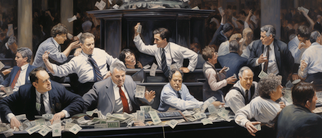
Komal Sri-Kumar forecasts a treasury rally and a decline in the equity market, warning of consumer debt and banking instability potentially leading to Fed rate cuts and recession risks.

The conversation suggests that we are living through an extreme divergence in market signals, reminiscent of the prelude to the 2007 financial crisis, raising questions about potential hidden risks the stock market is overlooking that the bond market might be hinting at.
