Iran's IRGC struck a cargo ship near Oman on June 25, pausing the UN's strait evacuation plan and breaking a week-old ceasefire. OFAC has designated the IRGC's toll-collecting entity and Iran's four largest crypto exchanges as it chases $1/barrel Bitcoin and stablecoin payments that have been
Iran struck a cargo vessel near Oman eight days after signing a ceasefire MOU, while OFAC's designations expose the limits of sanctions against Bitcoin's unseizable rails.
Key takeaways
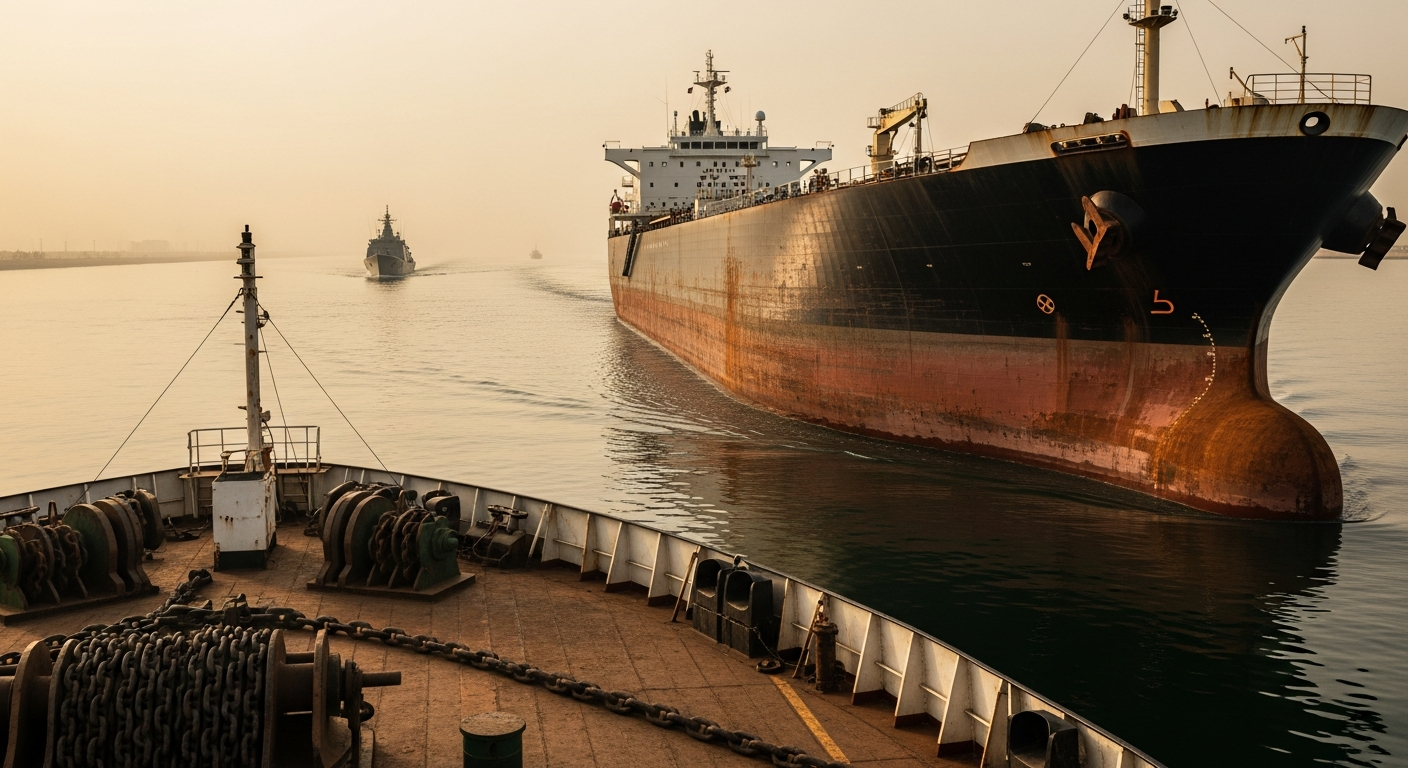
A cargo vessel was struck on its starboard side at approximately 14:10 UTC on June 25, 2026, roughly 7.5 nautical miles southeast of Oman's port of Dahit, per UKMTO. The attack damaged the ship's bridge, with no casualties and no environmental impact reported by the vessel's master. The International Maritime Organization's evacuation plan for vessels still stranded in the Gulf was stopped as a result of the attack.
U.S. officials attributed the attack to the IRGC, per reporting by the Jerusalem Post citing the Wall Street Journal. That attribution has not been confirmed by a CENTCOM or State Department primary statement as of publication. British maritime security firm Ambrey assessed it as an attack on initial review. The IRGC had previously warned that vessels must use only routes authorized by Iran to transit the Strait of Hormuz.
The attack lands while U.S. Treasury is mid-campaign against the financial architecture the IRGC built around the strait. Bloomberg first reported in April 2026 that the IRGC was extracting transit tolls starting at approximately $1 per barrel of oil, payable in yuan or digital assets via IRGC-linked intermediaries. Iran's parliament formally approved the "Strait of Hormuz Management Plan" on March 30-31, codifying a system already running since mid-March, per TRM Labs. At $1 per barrel on a vessel carrying up to two million barrels, a single tanker transit can cost $2 million. TRM Labs estimates the system could generate up to $20 million per day from oil tankers alone, with $600-$800 million per month possible if LNG vessels are included.
An Iranian industry official told the Financial Times that vessels would be given seconds to pay in Bitcoin, specifically because it cannot be traced or confiscated under sanctions. On May 27, OFAC designated the IRGC-created "Persian Gulf Strait Authority" collecting those tolls under counterterrorism authorities. On June 2, OFAC followed with the designation of Nobitex, Iran's largest digital asset exchange (which processed over 50% of all Iranian digital asset inflows in 2025), alongside Wallex, Bitpin, and Ramzinex, under E.O. 13224 and E.O. 13902 as part of the Trump administration's "Economic Fury" campaign. The OFAC press release named four Nobitex executives, including chairman Amir Hossein Rad and CEO Seyed Ali Khoee. Treasury Secretary Scott Bessent stated: "While Iran's economy is in free fall, the regime has chosen to co-opt digital asset technologies for its own corrupt agenda, including evading sanctions and transferring wealth out of the country."
A separate OFAC alert issued May 1 warned that any toll payment to Iran for Hormuz passage, in fiat, digital assets, offsets, or informal swaps, violates U.S. sanctions. OFAC FAQ #1249 makes it explicit: these payments are not authorized. U.S. persons are fully prohibited. Non-U.S. persons face secondary sanctions, including loss of access to U.S. correspondent banking.
The dominant vehicle in Iran's toll scheme has been stablecoins and yuan, not Bitcoin. Tether froze $344 million in USDT linked to Central Bank of Iran-associated wallets in a single action coordinated with OFAC, per Chainalysis. That is the stablecoin reality: a corporate issuer complying with a government request can zero out a balance with one transaction.
Bitcoin is different. During Iran's January 2026 internet blackout, Nobitex rotated specifically into Bitcoin because no issuer can freeze it, then rotated back out when pressure eased. That rotation is the data point. The IRGC cited Bitcoin for toll collection for the same reason. OFAC can designate wallets, exchanges, and intermediaries. It cannot confiscate Bitcoin held in self-custody or prevent a willing counterparty from transacting on the base layer.
This is not an endorsement of the IRGC's toll scheme. It is an accurate description of Bitcoin's properties, which are the same properties that make it useful to a dissident getting wealth out during an internet blackout or a sailor stranded in the Gulf who needs to move money without a correspondent bank. Treasury's war on the escape hatch will not distinguish between those users. Watch for Congressional hearings and expanded OFAC guidance targeting self-custody specifically, as Washington will use Iran as the justification. The prior TFTC coverage on Iran's Bitcoin maritime insurance and the Citrini field report from inside the strait during the war provides additional context on what Iran has been building around the strait since the conflict began.
The falsifiable thesis: OFAC designations, Tether cooperation, and global exchange compliance pressure raise friction costs on Iran's crypto rails but cannot close the Bitcoin layer. The trigger that disproves it is a sustained, verifiable collapse in Iran's total crypto volume in 2026 toward zero, or the full identification and wallet freeze of the PGSA intermediary before toll revenues materialize at scale. Neither has happened yet.
Whether CENTCOM or the State Department formally attributes the June 25 strike to the IRGC, and how the Trump administration responds given a signed agreement, will determine whether the MOU holds. On the financial enforcement side, the next pressure point is whether Tether and other stablecoin issuers receive further guidance to freeze PGSA-linked addresses, and whether the unnamed intermediary administering toll collection is publicly identified.
OFAC can designate wallets and exchanges, impose secondary sanctions on counterparties, and pressure stablecoin issuers to freeze addresses. It cannot seize Bitcoin held in self-custody or prevent two willing parties from transacting on the base layer. Designations raise friction and cost; they do not make Bitcoin confiscatable. That distinction is why Iran's officials specifically cited Bitcoin, rather than stablecoins, as the preferred toll instrument.
The PGSA is an entity created by the IRGC to administer the Strait of Hormuz toll system, collecting $1-per-barrel payments from vessels seeking safe passage since mid-March 2026. OFAC designated it on May 27, 2026 under counterterrorism authorities, making any payment to it a sanctions violation for U.S. persons and a secondary sanctions risk for non-U.S. persons.
Yes, categorically. OFAC FAQ #1249 states these payments are not authorized regardless of the currency or asset used. U.S. persons are fully prohibited. Non-U.S. shipping companies that pay face the loss of access to U.S. correspondent banking under secondary sanctions.