Key Takeaways
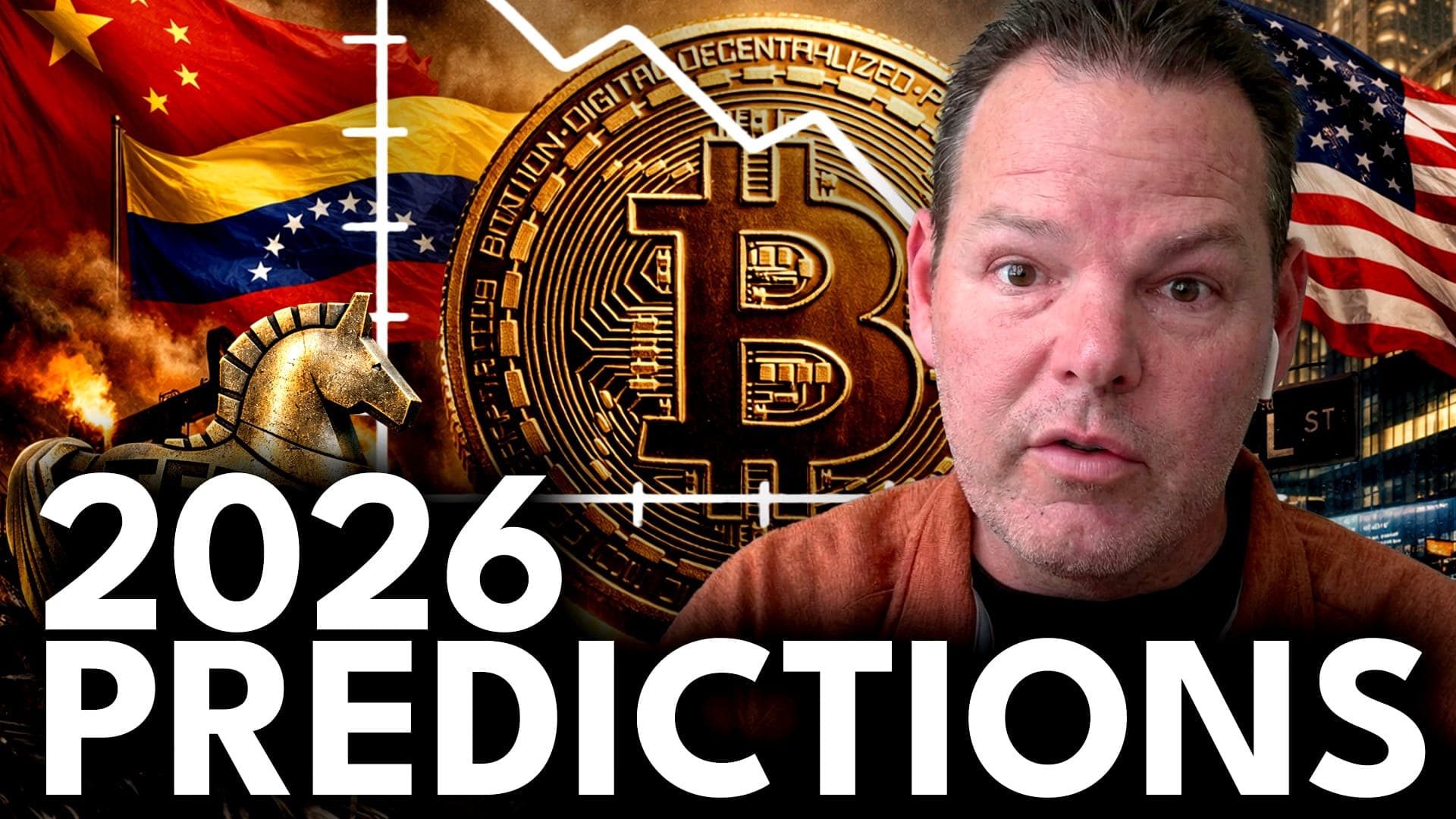
Mel Mattison frames 2026 as a high-volatility year where the “rules-based order” has effectively collapsed into a multipolar world driven by raw national interest, resource security, and financial stability rather than international norms. Using the Venezuela intervention as the centerpiece, he argues the move is best understood as an asymmetrical “resource grab” (heavy crude, gold, critical minerals) meant to prevent Russia/China from tightening control over strategic inputs, while also giving the U.S. leverage over energy prices, an input he sees as key to managing inflation and enabling easier monetary conditions. That energy lever connects to his broader macro thesis: the era of liquidity expansion isn’t ending, it’s just beginning, with the Fed and banking system likely to absorb far more Treasuries over time; he believes AI-driven productivity and lower energy costs can offset inflation fears and allow larger balance-sheet growth without immediate catastrophe. On Bitcoin, he’s explicit that it’s neither “NASDAQ-correlated” nor purely “digital gold,” but primarily a global-liquidity-correlated asset that’s still maturing into its own allocation category; he attributes late-2025 weakness to liquidity drain plus market plumbing (including crypto liquidation events) and especially tax mechanics (tax-loss harvesting via ETF products, and the lack of a wash-sale rule in spot crypto). His forward call: Bitcoin should outperform gold on a percentage basis in 2026, with a key target around $150k in the first half, while warning that the real “sell time” tends to arrive when pessimists capitulate into complacency. The major near-term risk he flags is a Supreme Court decision that could curb tariff powers, potentially triggering a sharp but brief selloff that becomes a buying opportunity; later in the year, he’s more concerned about political cycle dynamics (midterms and 2028 policy expectations) catalyzing a deeper second-half drawdown even if the first half rips. On AI, he’s bullish but says the real bottleneck is human nature, organizations and workers slow-roll adoption to protect incentives, yet market forces will inevitably compress that resistance, expanding margins and productivity across sectors beyond the “hyperscalers,” while creating new speculative opportunities in enabling infrastructure (he highlights memory constraints and small-cap “option-like” plays tied to that theme).
Best Quotes
“The rules-based order was essentially a scam… that started to fall apart. So, we’re no longer enforcing it. So, it basically means nothing.”
“We’re in a multipolar world now with three great powers.”
“I think we’re going to 150 in the first half of the year.”
“Bitcoin is like a global liquidity correlated asset.”
“There’s no reason not to put it in every portfolio in the world. And if you do that, it goes from 1.8 trillion to 18 trillion pretty quickly.”
“In crypto, there’s no wash sale rule.”
“The time to make money is when there’s that wall of worry.”
“I think the bottleneck is human nature right now.”
“Eventually market forces win out.”
“I think the smart bet is to bet that… the band-aid solution they come up with will work for at least another four, five, eight years.”
Conclusion
This episode is essentially a single integrated thesis: geopolitics is reverting to power-and-resources realism, and that shift is feeding directly into the macro regime, more state action, more balance-sheet engineering, and a renewed premium on neutral reserve assets. Mattison’s bet is that policymakers will keep the “shell game” going longer than doom narratives allow, using energy price management and AI-driven productivity as buffers while liquidity expands again; in that environment, gold benefits from central-bank preferences and Bitcoin benefits from portfolio allocation logic as it matures into a distinct, low-correlation liquidity asset. The practical takeaway is less about any one prediction and more about timing psychology: the best entries tend to appear when uncertainty is highest (tariffs, Venezuela fallout, liquidity confusion), while the riskiest moment is when everyone decides the path is “figured out,” which is why he’s optimistic on the first half of 2026, but keeps one eye on a second-half rug-pull driven by politics and complacency.
Timestamps
0:00 - Intro
0:50 - Venezuela
9:50 - Worthwhile for US
16:09 - Reducing risk of global collapse
23:37 - Bitkey & Unchained
25:25 - We don’t need forever wars
30:31 - Bitcoin’s response to unprecedented times
36:29 - Tax loss harvesting
43:02 - SLNT & SOTE
45:11 - Market flips when calendar flips
51:58 - Trump’s tariffs
56:29 - Dropping income taxes
1:02:14 - AI tools
1:13:31 - Post transition looks hopeful
1:17:56 - G/S margin call
Transcript
(00:00) There was still this sense [music] that the post Brenton Woods system could work. The jig is up on that. The market's underestimating how unconventional [music] Trump will be. This guy really sees in his head that he is a historical figure. I think we're going to 150 in the first half of the year.
(00:14) On a [music] percentage basis, Bitcoin is going to outperform gold this year. It's a liquidity correlated asset. There's no reason not to put [music] it in every portfolio in the world. And if you do that, it goes from 1.8 trillion to 18 trillion pretty quickly. I don't think that this is [music] anything to do with international law or fentinol.
(00:28) This is the realization that [music] Venezuela has probably the greatest concentration of natural resources in our hemisphere. Russia and China were worming their way in. It's going to be another year of volatility, a lot of volatility, probably [music] more even than last year. But I think at the end it's going to be a good year unless we meet again for a look forward in the year that is 2026.
(00:58) Great to have you back, sir. >> Great to be back. I've been really looking forward to this one. >> I have as well, especially uh after the weekend. We wanted to record this uh before Christmas or between Christmas and New Year's, but you were uh on a trip and sometimes destiny just works out in certain ways.
(01:18) We have a lot more to talk about today, I would I would imagine, than we did a week ago or two weeks ago even. And that is because of the events happening in Venezuela over uh the weekend and into this week, the Trump administration going in 4-hour mission taking out um Maduro and basically waving the flag.
(01:42) We there is a new Monroe doctrine. We're going to own the Western Hemisphere. And I think my favorite meme that's coming out of this is that what is international or rules-based order? What is international law? doesn't even exist. >> Exactly. I mean, that's absolutely right. Um, I think the rules-based order was essentially a scam put in place, you know, by the United States post World War II to give a structure to enforce what we wanted.
(02:14) Um, that started to fall apart. So, we're no longer enforcing it. So, it basically means nothing. I think even if you go back to a lot of people talking about ddollarization right now and this just incentivizes people. Um my take and and I think the consensus take is like what really accelerated it was the seizing of Russian assets uh post the Ukrainian invasion.
(02:38) My take is that those Russian assets would have never been seized if the powers that be didn't recognize that this whole ddollarization thing was already in play and that the reason it didn't happen before 2022 is because there was still this um sense that the the dollar the the post Bread and Woods you know system could work.
(02:59) I think by 2022 the powers that be realized it couldn't work and so it's like what the hell let's seize the Russian assets uh these countries the bricks everybody there like the game the jig is up on that the trains left the station um you're not going to accelerate dd dollararization by this stuff like that that that kind of modus operandi is in effect at as high of a volume as I think the powers that be in places like China and Russia feel comfortable with because They don't want to scare or flood the market and then,
(03:32) you know, ruin their own asset value. So, I I think they're already moving as quickly as possible. So, I don't think this speeds it up. I don't think the Russia seizure speeded it up. I think it was in place and the reason we seized the Russia assets was because it was the ddollarization play that that was already done and the rules-based order is done. All this is done.
(03:52) We're in a multipolar world now with three great powers and the the decisions that need to be made need to be made based on national security um national interest um economic stability. I mean these are the driving forces and that is to me what led to this weekend's activities. >> Yeah.
(04:15) And it was really interesting to see what happened in Venezuela over the weekend, particularly after the national security strategy was released last month. And the NSS is something that I never really paid attention to, but enough people were making noise about it that I read the whole thing and it it made a lot of sense to me. Let's get away from these forever wars in far away lands across the oceans.
(04:38) that's focused on the Western Hemisphere and create economic partnerships with people throughout Central and South America and then economic partnerships with people abroad where it makes sense, but we really want to bring it home. And I was actually at an event in Dallas last month with a high-ranking ex-military official um who was saying ah he was like handwaving at it like don't worry nobody takes these national security strategies seriously or they're never really implemented in the way in which they're sort of written but here
(05:08) we go less than a month or two months after >> they released their national security strategy and it seems like they're trying to implement it a new >> Monroe doctrine the Donroe doctrine as as Donald Trump was calling earlier this week. >> Yeah. I I think even like taking a step back and looking at it broader, it actually goes back to exactly what we talked about a year ago when we were sitting here post election prior inauguration and I was saying like raise cash, buy puts because I think the market's underestimating how bold and
(05:40) kind of unconventional Trump will be and and he's going to do some things. I called it my sour cream and salsa philosophy that he had some negative things that would cool the economy that he wanted to do. Um, and also that he was going to do things that people that thought Trump 2.0 was going to be more or less a revamp of Trump 1.
(06:02) 0 were not reading the room. That this this guy and and these are not like political things. Like I'm I'm not a big fan of Trump. I'm not a hater of Trump. I just want to read the room and try to see where markets and things are going. And I think what people misread about him was like this guy really sees in his head that he is a historical figure.
(06:26) I mean I think Gingrich uh new Gingrich said something about him being the third greatest president from a historical perspective after Washington and Lincoln and Trump didn't like that. Like that that's the type of ego like we are dealing with. And if you think that somebody with that type of an ego is not willing to push things to places that people don't expect, you're you're not reading the room.
(06:52) You I think this guy is even going to get bolder. Like last year, I said, look, he's going to do some bold things that are going to freak people out and there's going to be market turmoil in the first half, but it's going to be a buying opportunity. I actually think the actually the exact opposite is at play right now. I think we had three months of basically nothing in equity markets.
(07:11) You can go back to October. We're basically where we were on the S&P. Bitcoin's been, you know, disastrous in the last 3 months. I I messed up that call cuz I was totally bullish when it got around 98. I was like, we're going to bounce from here. Um, but I I think what's happened is people have now pulled back and what they're doing is they were a little afraid because of what happened in the last 3 months and they're not seeing what's going to happen in the next 6 months.
(07:40) in that while last year there were people including like Tom Lee who were like very bullish on 2025 great first half but watch out for the second half I was saying actually watch out for the first half we're going to have you know a great second half or and I think the opposite is true this year where a lot of people are like 2026 is going to be a great year but be careful in the first half but then in the second half things are going to do better.
(08:04) I I'm actually worried about the second half as we get closer to the midterms. I think this first half and I think everything that's been happening um in just the first two trading days of the year are supporting this is that this first and second quarter of this year are going to be incredible. I think crypto is going to be amazing.
(08:24) I think Bitcoin is going to be outperform gold this year. I mean, we're getting ahead of ourselves with some of these predictions, but I think there's a foundational basis for it that is rooted in what is happening right now um globally, geopolitically, and and it has to do with the fact that people are starting to realize the rules of the game are being slightly rewritten.
(08:45) And [clears throat] while there's high risk involved in this if it kind of threads the needle and I always talked about there's this needle to thread things can work out in a pretty positive way and so far I think they are. And I think there's a lot of people that are just doom and gloomers out there.
(09:02) I'm always the ex doom and gloomer. I'm like be optimist. At the end of our last call even given everything that happened I I looked at the transcript yesterday. I'm like what did I say at the end of the last call? I'm like, well, we'll probably be sitting here in 3 months and the S&P will be somewhere around 68 6900 and, you know, up, you know, 4 or 5% from where it was when we did our last call and there'll be volatility and sure enough, here we are.
(09:25) You know, exactly where I said we were. So, I I think this is still going to go on and we're climbing this wall of worry. People don't want to believe it. They don't want to think this is going to work. They think we're heading for a disaster. They think a financial crash is coming. And I think once those people start to capitulate and say, "Oh, no.
(09:44) This is all figured out." That is going to be the the big sell time. But I I don't think we're there yet. I don't think we're even close. >> Well, you mentioned a few things there. Threading the needle. He's going to get bolder. And I think building on what you just said, a lot of our ongoing conversation over the last couple years has been, okay, if he's going to thread the needle, let's think of the positives, what can happen.
(10:05) Let's bring it back to Venezuela. and just use this example of what happened over the weekend and what's continuing to unfold now uh and basically paint the picture of how this could be extremely positive >> uh for the US from an economic perspective, from a geopolitical >> strength perspective and and what it means moving forward for the US economy in the Western Hemisphere.
(10:27) >> I mean, I think it makes a lot of sense. I think it's very smart. I think it's um an asymmetrical risk that was worth taking. I and I think it still has yet to play out. So when you take an asymmetrical risk, it's like taking a trade. You're like, you know, buying futures and you're like, "Oh, I think we could go down a percent.
(10:46) I'll put my stop there, but I think we're ready to break out for a 5% move." And you're like, "Okay, I got a 5 to 1x." I think that's the type of trade this was for Trump was like look and and I know there's some conspiracies out there that this was actually all pre-arranged um with Maduro and he wanted a escape uh route that would allow him to kind of deny giving into the US and they're going to come up with a bunch of uh you know legalities that allow him to get out of there and or the case gets dis I I don't know I'm not even getting into
(11:21) all of those. But what I do think is that the move to secure the Venezuelan resources was a great move. I don't think that this is anything to do with international law or fentinol. I I think obviously those are smoke screens. I think this is the realization that Venezuela has probably the greatest concentration of natural resources in our hemisphere and perhaps one of the greatest on the entire planet and that Russia and China were worming their way in to be in control of those resources and that allowing that to happen would
(12:01) be akin to allowing Russia to dominate critical minerals that it's like shame on me once, you know, like fool me once, shame on you. Fool me twice, shame on me. And I think we watched China go around the world and dominate critical minerals and then put us over a barrel when they needed to.
(12:22) And we said they're getting ready to go into Venezuela and get their hands on that. And in, you know, these shell reserves in the Perian, like you can look at them like they just they're they're going down. um the the the ROI you need like like if there's a perian basin uh hole opened up and you put all that money in like the marginal cost to pump it out is like $105 a barrel.
(12:53) So, nobody's going to shut down an open, you know, fracking well right now. But at the price of oil, there's not much incentive to open up a bunch of new fracking uh opportunities because you need like $60 a barrel to break even. So, and and that's been going down. And [clears throat] um you know there was a great piece that got like three and a half million views um from Sky News that basically just spelled out the different types of crude, the light, the medium, the heavy um and talked about how, you know, these fracking wells produce light crude.
(13:27) Light crude comes out of the ground almost clear, almost like a a smoothie in some cases. Um and they have pictures on it on this if you want to see it, but basically it's it's not the heavy crude. And a lot of people they they're talking about two things. Number one, they're saying Venezuela doesn't have the reserves they claim to have.
(13:46) So they're saying that those were jacked up post GFC. I saw an analyst on Bloomberg this morning say Venezuela doesn't really have the reserves they claim to have. They they claim 300 billion barrels. It's more like a only 100 billion. Like 100 billion is nothing. And it's like the US known reserves are like 45 billion. Okay.
(14:06) So even if you go and you cut their estimates by, you know, 2/3, you're still at twice all of the US reserves, even if it's only 100 billion. Then they say it's, well, it's a heavy crude. Well, heavy crude is what used to come from places like California when we actually drilled there. And most of our refineries in the US are set up to manufacture heavy crude.
(14:31) So even though we produce more oil every year than we use, we have a huge amount of exports of oil and a huge amount of imports. And what do we do? We export the light crude and we import the heavy crude. There's only three countries in the world with large reserves of heavy crude. Canada, Russia, and Venezuela. We're kind of tapping out our exports of Canadian heavy crude.
(14:54) We're obviously not importing heavy crude from Russia. So there's only one other source of heavy crude out there and it's Venezuela. And that's what we need for our refineries. And you can't just, you know, flip a switch in a refinery and say, "Okay, so if we need heavy crude, like that's what we need is heavy crude. The exact type of oil that's there.
(15:12) They've got a 100 billion barrels at the lowest estimate I've ever heard. And at the highest, it's over 300 billion barrels, which is six plus times the US reserves. They've got massive amounts of gold. They've got critical minerals that we also need. And so I think what the Trump administration did was they said, "Look, we've got the perfect smoke screen, the fentanyl, uh the Maduro's already indicted.
(15:39) Enough of this stuff of going to the Middle East. Um Venezuela has more reserves than Iran and Iraq combined. We're going to secure these reserves here. This is going to be a total um resource grab. Um not make apologies for it. Um, I don't think Trump made apologies for it. I think then on Sunday when people like Rubio went on the shows, they tried to make apologies for it.
(16:05) But I think Trump was pretty clear on Saturday in that press conference like this is basically about the oil. >> Yeah. And I think people I don't even know if they forget. I don't even think they even understand from first principles before Chavez took over 26 years ago. I mean, what was Exxon, Chevron, BP essentially built the oil and gas infrastructure within Venezuela.
(16:25) And there was this beautiful symbiotic relationship between Western OMG companies and the country of Venezuela. And as you mentioned, we have these refineries in the Gulf of America that can refine this >> heavy crude. And I think it's a win-winwin for everybody around, not only Americans, but Venezuelans as well.
(16:45) are able to get their dictator out of office. And again, like you said, it's early days. Who knows how this is going to play out, but I think we should try to be optimistic. Like hopefully there can be um an incredibly positive outcome from this in terms of Venezuelans getting their freedom back and reinvigorating that market around the oil and gas industry specifically.
(17:10) And then so that's the economic side. Then you have the geopolitical side where you basically show up show up in force and say, "Hey, China, Russia, this is our part of the world. We're we're taking control. We're going to own this relationship with Venezuela." And so you you curb that. You lock down those sea lanes.
(17:32) And then the economics plays into the geopolitical as well because if you're able to refine and and use that crude and keep oil prices relatively low, that's a huge bargaining chip with Russia on the geopolitical stage. >> Yeah, exactly. And I think I mean for me there's like a couple things I I don't like. Like I I I don't like trying to nitpick, you know, international law on these things.
(17:57) I think, you know, as I mentioned in the beginning, we're kind of beyond that. But I I also think like yes, there are some positive side effects of this for the Venezuelan people and different things. But at the end of the day, I think even if there weren't, it still is a good idea because I think you have to kind of look at the world differently than say 2005 when the US was like a dominant unipolar like there's now kind of teams, right? And it's kind of like I think this is a great win for like our team like the kind of Western European Japan certain
(18:33) countries South America like and I think it was important enough that it deserved the risk and I think that [snorts] this amount of resources and and this oil if we can secure it and I think there's still a lot of ifs in there and I think you know it's still to be determined whether or not this big asymmetrical bet is going to pay off.
(18:57) I don't like um rahrrah stuff. I don't like oh the US military is invincible and we're we can do whatever we want. There are limits to military power. Even though I think we have the greatest military, there are limits. So we've seen that in Iraq and Afghanistan. So this is not a faith to come plea done deal that this is going to work out well. It's still extremely early.
(19:17) But I think the broad strategic viewpoint is more of like look, we have adversaries around the world that are clearly grabbing resources. China, the Belt and Road Initiative, what they're doing in Africa, what they've been attempting to do in South America. We also still have an economy that is very dependent on pros.
(19:39) Um, I think in the long run it makes sense to get away from those, not necessarily for environmental reasons, but for independence reasons. It would be great if we could power everything in America from nuclear and solar and wind. Not necessarily to save the planet, although that could be a great side benefit, but just because we don't want to keep having to go into the Middle East or needing to do these things in Venezuela.
(20:02) Like ideally, in an ideal world, this would be it'd be like whatever people want to do in South America, let them do. But unfortunately, we don't live in an ideal world. We live in the real world. And this real world is still very dependent upon energy. And the US shale boom is not likely to continue. It's not likely to continue to grow.
(20:26) And in fact, it might even begin to decline. And we had a kind of regular oil boom um when we with the Rockefeller era and everything and we became dominant in it and then that declined and we wound up in the 1970s. We wound up in uh stagflation. We wound up with [clears throat] gas lines. We wound up in a big heap of trouble basically in a horrible decade and economically.
(20:53) And I think what people are looking at in the deep state, um, and I think Trump might even be like kind of more like about the fentanyl and the drugs things than people realize. But I think there's also people in the CIA and the deep state and the NSA that are saying, "Hey, these resources are important.
(21:08) " Like we we need to, if not, you know, get get control of them, we need to at least stop them falling into the total control of China and Russia, which is what was happening. I mean, that is basically what's been going on. And I didn't mention this before, but like, you know, my wife's family is is originally from Colombia, but a number of her sisters wound up moving to Venezuela in the '60s, and I have my wife has cousins and aunts and people that live in Caracus.
(21:35) My wife's aunt was woken up at 2 a.m. by the bombing. I mean, they're there. They they know what's going on. When my wife heard the news, I mean, she she came downstairs like it was Christmas morning. I mean, Venezuelans and people in that region are very very happy about this. And that's a great side effect.
(21:51) But I don't even think you need to justify it by that. I think you can justify this by what happens if the entire kind of global economic system begins to collapse. And I think you can justify expansion of the Federal Reserve balance sheet to ridiculous amounts to to absorb treasuries.
(22:14) I think you can justify actions like this because we've seen what happens when the world financial system begins to collapse. It it the biggest one happened in recent memory in the 1930s and it led to the rise of Hitler. It read it led to World War II. And I think people that think, oh well, that's being crazy and you're you're making a bunch of leaps here. And I I I honestly don't.
(22:37) I think in a way going into Venezuela might wind up saving millions of lives in Africa. And it's like, well, how does that happen? Because if we if we can keep the economic and the world order going in a way that actually gets gas to pumps and banks don't collapse and the system doesn't collapse, you really drastically lower the chances of a World War II, of regional conflicts in places like Africa because it's always the poorest people who are hit hardest.
(23:04) Then they start starving. Once people start starving, they're will So you want to keep this whole system of like 8 billion people somehow getting food, energy, everything they need to survive, you really want to keep this system going because if if it breaks down, it's going to be a big disaster. And I'm not talking about like, you know, 5,000 people killed.
(23:26) I'm talking about millions, you know, I'm talking about World War II. Uh, I'm talking about like billions of people um on the line if the entire world order just collapses into absolute chaos. So freaks, this rip was brought to you by our good friends at BitKey. Bit key is the hardware wallet that makes Bitcoin easy to use, hard to lose the two or three multisig.
(23:48) You download the mobile app. You pair it with this hardware device here. Uh you have a key here, one on your mobile app, block holds one in the cloud. comes with incredible features. The newest of which is chain code delegation where you can set up your wallet and you can send and receive Bitcoin from that wallet as long as you're doing it with your hardware wallet and your mobile wallet and block is none the wiser.
(24:14) You get privacy with chain code delegation in privacy mode. You can auto stack using Cash App, Strike, Coinbase, other apps uh directly to your BitKey wallet. Uh, easy to set up. If you have friends and family that still have their Bitcoin on the exchange but need to get it off, send them to BitKey uh to pick up a bit key.
(24:31) Go to bit.world. Use the code TFTC20 for 20% off your Bit Key and you can buy one right here. We have one in our YouTube store. You don't have to go anywhere. Just click that link. Use the code TFC 20% off. Pick up a bit key. See was brought to you by our good friends at Unchained who brings you this message. Is Bitcoin risky or is ignoring it the greater risk? On January 7th at 10 a.m.
(24:54) Central, join Unchained and Parker Lewis for Bitcoin is the greatest asymmetry, an exclusive online video premiere exploring the forces behind Bitcoin's riskreward profile. Originally presented at the Old Parkland Debate Chamber in Dallas, Parker breaks down why the probability of its success matters more than short-term price movements, how monetary design shapes outcomes, and what today's market and policy environment may mean for the years ahead.
(25:16) If you want a clear framework for thinking about Bitcoin's opportunity, don't miss this video premiere. Register now at unchained.comTFTC. That's unchained.comTTFTC. No, especially if if we are going to need some monetary stimulus and you're able to lock down more secure and abundant oil supplies like that could help in that environment where it's like, hey, we're able to produce oil cheaply.
(25:40) We're keeping the price of oil down, which is a base input of of the economy um to a great extent. And so you can sort of hedge that that inflation risk or the monetary inflation risk. And then another thing I want to just add on too. I'm uh I'm not a big rah got into Bitcoin cuz I'm very anti-war. I think another thing we can maybe end it on this the Venezuela topic but like another thing that really pleased me was like setting the precedent and I guess this was the second precedent after Iran in the summer of like hey we don't need to boots on the ground be in these
(26:15) places for >> weeks years decades even we can get in and out in four hours and accomplish what we want to which I think is >> an incredibly strong precedent say hey if Trump was able to do this why do we need to going forward if you get another presence like we don't need to get in a forever war if you really want to accomplish this.
(26:35) He was able to do it in 4 hours. Why can't you? >> Yeah. It it's showing the way they're handling it now is really showing that they learned some lessons um and took them to heart. I think you know a lot of people um including my my wife's aunt. She's like why is the US kind of talking to this Deli Rodriguez like she's a total chavista um doesn't like her.
(26:57) she's the vice president who took over and it's like the US doesn't want to go down there, right? I mean, yes, on the one hand, we want to help the Venezuelans. We want to turn this into a free market economy and democracy, but that's not the primary goal. Um, Rubio stated as much directly in the news shows this past Sunday.
(27:13) The primary goal is, you know, I think US national energy security, US national interests. Um, side goals are the narot trafficking stuff. Um, and then tertiary is like, let's help the Venezuelan people. So, I think we want to do that. That's the ultimate goal is like, let's try to get there.
(27:33) But ultimately at this point, it's like, look, if she's willing to keep the military and the uh state security apparatus in line, but also play ball with us. Okay. You know, and I think I think what we're doing is we're giving her some time to decide what she wants to do. Um I think if she doesn't play ball that the US is committed and I think Donald Trump also said this if we have to put boots on the ground we will.
(27:56) So they've learned the lessons. They don't want to do this and and I don't think it's a good idea to do it. But [snorts] again, I like my read on this is that this is such an important strategic move, much more important in my opinion than Iraq or Afghanistan that I think the the decisions has been made at the highest levels that we're willing to take this where we need to take it.
(28:22) And hopefully, and I think this actually is my base case, the people in Venezuela will realize that and realize it's f resistance is futile, you know, to use like a Star Trek term, like like if if if we say, okay, I'm going to be the new Maduro and I'm going to give the finger to the US and like I don't think the US is going to let it die.
(28:39) And and I think if they realize that that there is a chance to once again thread this needle without having to put a bunch of Marines on the ground or do that type of operation. Um which you know is great. And I think one of the things, one of the worries I have going forward for longer term is just if that does work out, like you're starting to get some good results from the Trump administration.
(29:06) And you have to also guard against good results, just like you do if you're a trader, you start having a bunch of wins, you have to be careful not to start thinking, you know, everything that's going on. I did a little bit of that this year. I had such a be great beginning of the year. I I made some bigger bets than I probably should have around the third quarter.
(29:23) Um, you see this in world history. I, you know, where people have successes, they do what people told them is impossible. They get away with it. Hitler did this. People told him, "Don't go into Czechoslovakia, you're going to get killed. Don't go into Austria, you'll get killed. Don't go into Poland, you'll get killed.
(29:39) Don't go into France, you'll get killed." He kept doing everything that his advisers and generals told him not to do, and it kept working out great. Eventually, he said, "I'm going into Russia." Right? Soviet Union was their allies in the beginning of World War II. and he said, "I'm turning on them." He got killed. Napoleon, same type of situation.
(29:56) So, what the Trump administration really needs to guard against is getting too cocky and thinking that, okay, things worked out pretty good in Iran. So far, things working out pretty good here in Venezuela. Uh let's let's do Cuba. Let's do Mexico. Let's do like let's just keep going. And and so I I think there are risks out there.
(30:17) Like I'm not like, "Oh, this is a done deal. markets going to skyrocket. Like there are risks out there and that and that's the wall worry I think markets are going to climb in 2026 is where is this all going and where does Trump, you know, kind of draw the line on on what he's able to accomplish. >> Yeah. Yeah, because on top of all this, you have this tension between domestic and external forces where there's obviously another big headline over the last two weeks was this Medicaid fraud being laid bare not only in Minnesota but across the country and many people
(30:47) asking why are we even paying taxes if it's becoming abundantly clear that billions, tens of billions, potentially hundreds of billions, maybe trillions over the course of many years is simply going to to people who aren't working or contributing to the system at all. And there is a palpable sort of anger and um a a desire for the Trump administration to be more strong willed in terms of their domestic policy, immigration specifically.
(31:18) >> Yeah. I mean, we've we've got this I mean, we've got so many balls in the air right now. I think that that's really what markets are trying to figure out. Like they're looking at all these things. They're looking at how do we make sense of the job market? And we haven't even talked about AI yet, which is obviously huge and and in the background of everything that's going on.
(31:40) So, it's like how is that affecting the job market? How is that affecting the economy? How and we're seeing these huge nominal GDP numbers. I think it was like 8% last quarter. Um we've got, you know, almost no employment growth in GP uh GDP going through the roof, earnings going through the roof, margins going through the roof.
(32:00) Um and and people are like they're looking at this and they're like this is not what we've seen before. And I this this goes I think all the way back like like I said what we talked about last year is the these are not normal times. The we're in an era whether we recognize it or not because maybe we're living through it. It's harder to recognize but we're going through a very historic era.
(32:21) We're going we're going through an area that you know 50 100 years from now people will look back on and they'll be like this was an extremely transformative time for the world for the globe um with a lot of ramifications from technology from geopolitics from just everything that's going on.
(32:43) And so it it's really kind of astounding really when you look at you know market behavior. And I I think it's not surprising to me um to see precious metals have the year that they have. I've I've long been a big precious metals bull. I've always said that's where I started before even I thought about Bitcoin. I was a big precious metal guy.
(33:01) I mean I literally have like you know my 100 ounce bar of silver that I bought for like 1100 bucks which is now like 8,000. You know like precious metals are a big part of my investment philosophy, my core position as well as is Bitcoin. What's happened with Bitcoin in the last quarter has been confounding to me. To me, it it's like this was a great opportunity.
(33:25) But when I look back on it, what I think of is that what Bitcoin has been responding to in the last 3 months is Bitcoin is not a NASDAQ correlated asset. Bitcoin is not a gold correlated access asset. Bitcoin is like a global liquidity uh correlated ac asset and I think there was a pull down in in liquidity in the fourth quarter.
(33:51) I think if you look at the September monthly treasury statement we actually ran a surplus for the US government. Then we went into um the government shutdown which you know kept funds at bay. uh we have had we we were still running QT until December and I I think you had this global liquidity drain that essentially collapsed high momentum things um you know uh you know the quantum names the the nuclear names and it kind of quashed crypto and and Bitcoin and that's just one of three things that happened the other thing was the October 10th liquidation in crypto
(34:32) which hurt market makers And then you you kind of have the digestion of some of the things that were perhaps hoped for in the beginning of the year not coming to fruition. the Clarity Act not getting passed, the strategic uh wealth fund where it was talked about. Um there was a report that was given to the White House, you know, 90 days after Trump signed the executive order and it talked about the difficulty to create this strategic wealth fund without congressional approval and how they were going to do things through these like
(35:05) really shady defense uh investment funds. And that's what they've been doing for things like Intel. So a lot of these things that were expected, you know, kind of collapsed. We had a pull down in global liquidity. And when you look at it through that lens, it actually Bitcoin's response makes sense. Like it it's not like, oh, the the four-ear cycle here and that's what happened or oh, Bitcoin it's not the real deal.
(35:35) It it's it's not uh you know, digital gold after all. And and that story is done. And it's it's not even oh it's you know people don't want to get into it because of quantum. I think there's a lot of those things out there right now about why did Bitcoin not have a good fourth quarter and because it had a great third quarter.
(35:54) I mean it was at alltime highs in October. So like why why the last two or three months it hasn't done good. I think that's why and I think it makes sense and I think a lot of those reasons why are changing and that's why, you know, I'm very bullish on on Bitcoin and I don't think that while it's totally possible I'm wrong and it it makes one more leg lower, I I just see this as like the year to think about it as last year was a consolidation year and this year it's it's going to have a excellent return.
(36:29) >> I completely agree and I was very bullish going into last year too. Obviously with the Trump administration coming in, the ETFs really catching their legs and was a bit disappointed, but I always like to zoom out. And if you zoom out, we did a between November 21 and October >> of last year, we did like an 8x.
(36:49) It's like, okay, we can take >> it's ridiculous. I mean, 23 and 24 were 100% plus years, both of them. I mean, then you have a 6% down year and people are like, "Oh, I'm I'm worried about Bitcoin." It's like I [clears throat] mean, come on. I mean [snorts] I mean, but it's good for everybody. I mean, the markets are this way, too.
(37:07) The markets give people opportunities like they did in April. I mean, you could have bought Nvidia for $89 a share in 2022. You could have bought Meta for $89 a share. Um, markets give opportunities. And the thing is when those times are there to buy is like there's no narrative out there in the zeitgeist that reinforces buying.
(37:32) And the all the narratives out there are negative. And so it's very hard for people to come on especially if they work at like a Morgan Stanley or somewhere or they come on to CNBC or something and because all the accepted narratives around Bitcoin I think were very negative into the I I think frankly Bitcoin wanted to rally in December but it didn't because it was a victim of tax loss harvesting.
(37:58) I mean couple of big things with that. Okay, this was an incredible year for almost all assets. So, if you were looking for what can I sell and take a loss on and you were somebody who maybe said, "Oh, I want to get in and invest in IBIT in my portfolio at, you know, 108,000 and now Bitcoin's at 88.
(38:20) " You're like, "Let me sell my IBIT and let me harvest that loss and let me offset some of these gains." That's real money, especially if you're a wealthy person. Like your net taxes are like 40%. Like you you you could have had a $100,000 loss in your IBIT position and you sell it and you basically make $50,000 in in tax loss harvesting.
(38:40) Like it it was so blatant that you basically saw the calendar flip and crypto and Bitcoin take off like a rocket ship because it was there was so much selling going on at the very end of the year. And then you compound onto that the fact that because Bitcoin is not a stock. So I I just gave the example of somebody that owned IBIT.
(38:59) If you actually own Bitcoin, there's no wash sale rule. So I mean if you own Nvidia and you sell it on December 15th and you buy it back on January 1st, the government says no, you didn't sell it. It's a wash sale. You didn't wait 30 days. In crypto, there's no wash sale rule.
(39:18) people were able to literally sell their Bitcoin on December 31st and buy it back on January 1st and claim that tax loss. Like that's that's a market inefficiency. That's a tax related inefficiency that is real. That was there. And when you look at the crypto moves and we're on January 5th and you look at where a bucket of crypto is at, um, it's up 20 30%.
(39:43) If you bought things like ADA or Virtual or Arbitron or Solana or whatever and Bitcoin's up a lot too, but a lot of these cryptos are up 10, 15, some of them up 30 40% I think. Virtual Protocol, which is like an AI based coin. And I never play in these things, but I was buying them at the end of the year because I'm like, this is the beta.
(40:07) like, you know, these are just short-term trades playing for beta, but like and it's it I I'm shocked at how well they have done. Like, it's it's it's ridiculous. Um, and it I mean, I don't even know. I mean, if I even just take a quick look, I mean, virtual is like ridiculous. This is just a a protocol. Uh, it's it's up a percent today.
(40:32) It's up year to date. uh or the past week. Oh, no. Sorry, that was I was looking at Salana. Uh virtual up 10.58% today. Uh this past week, 62.9%. Okay. Virtual's protocol. Crypto tradable on Robin Hood, whatever. 62%. In 5 days. [laughter] That's insane. >> I mean, it it's insane. I mean, some of these crypto moves are ridiculous.
(41:02) And I'm I'm a total Bitcoin believer. I I don't believe in these coins for long-term trades. Like, right, but I'm also a trader. I want to make money. And I'm like, where where's where's some of the beta? Um, and I mean, people want to talk about silver or gold this year. Virtual is up 60 plus%.
(41:21) Is January 5th? Um, now I is that going to continue? I don't know. I mean, at some point I'm going to take some profits in that thing. But right now, I'm I'm letting this I mean, you look at Salana, this like 120 level on Salana, I mean, you can go back 5 years and every time it gets around 120, it starts to bounce. Um, these are like long-term levels.
(41:43) Um, and what this is going to do when you start seeing returns like 62%. People that are like, "Oh, I was playing all the beta and silver. Wait a minute. I could have been playing this." Then you start getting that Momo going. Then you start getting the activity on the exchanges. This is all financial plumbing, right? Then you start saying, "Oh, then then the trend followers come in and then people of course, you know, you know, there's going to be a moment this year where you know the financial advisors are going to say, you know
(42:12) what, I've kind of wanted to put my clients into Bitcoin, but I was a little scared, but it went down to 80 something. Now it's at 98. you know, maybe now's the time to put a 2% allocation for my clients into it. Let we can maybe even leg into it. I'll put a 1% alloc. And this is going to start to build on it and build on it and build on it.
(42:36) And and that's why I think, you know, what I've been saying since the beginning of last year was my next target price for Bitcoin was 150. When we hit 150, I'll reevaluate it. I think we're going to 150 in the first half of the year. We need to see what what the markets in the world looks like at that point to come up with another thing.
(42:52) But I think on a percentage basis, you know, Bitcoin is going to outperform gold this year. And that was my, you know, number one prediction for 2026 is Bitcoin over gold. Seth Freaks was brought to you by our good friends at Unchained who brings you this message. Is Bitcoin risky or is ignoring it the greater risk? On January 7th at 10 a.m.
(43:12) Central, join Unchained and Parker Lewis for Bitcoin is the greatest asymmetry, an exclusive online video premiere exploring the forces behind Bitcoin's riskreward profile. Originally presented at the Old Parkland Debate Chamber in Dallas, Parker breaks down why the probability of its success matters more than short-term price movements, how monetary design shapes outcomes, and what today's market and policy environment may mean for the years ahead.
(43:33) If you want a clear framework for thinking about Bitcoin's opportunity, don't miss this video premiere. Register now at unchain.com/tc. It's unchained.com/tc. >> What's up, freaks? Been seeing a lot of YouTube comments. Marty, your skin looks so good. You're looking fit these days. How are you doing it? Well, number one, I'm going to the gym more.
(43:53) Trying to get my swell on, trying to be a good example for my young sons, a fit, healthy dad. But part of that is having a good regimen, particularly staying hydrated, making sure I have the right electrolytes and salts in my body. That is why I use salt of the earth. I drink probably three of these a day with one packet of salt the earth.
(44:14) I'm liking the pink lemonade right now. It's my flavor of choice. Uh this is their creatine. I've added this to my regimen. They have it in these packets as well. Uh makes it extremely convenient if you're traveling. You want to work out while you're traveling, but you don't want to be carrying a white bag of powder and going through TSA.
(44:32) It's very very uh nerve-wracking at times. You have to explain, hey, it's it's not what you think it is. It's creatine. I'm trying to get my swell on. Um, make sure you're staying hydrated. I have become addicted to these. It's made my life a lot better. I can supplement this for coffee in the morning and be energized right away.
(44:52) I can supplement I can bring the creatine wherever I need to. Just put a couple packets in here before I head to the gym. Bring this to the gym. Drink out of a glass bottle. Make sure I'm not injecting any microplastics into my body. Go to drinksotay.com. Use the code TFTC and you'll get 15% off anything in the store. That's drinksotay.com code TFTC.
(45:13) Now, it feels feels like and I I looked at I mean I'm not a technical analysis. I'm left side of the bell curve on Bitbo.io just looking at the 5-year zoom out and it looks like we made a higher low um compared to last year. I'm just like, okay, okay, we settled at uh 84 on the monthly and it was 78 last year and we've gone up and down between then, but it feels like we made a very strong base over the last 3 months.
(45:40) And then the fundamentals >> are only getting stronger like what we're talking about with Venezuela, this multipolar world, the rules-based order going out the window and only heightens the demand for the fundamental value prop of Bitcoin as this neutral reserve asset that can't be controlled by anybody. Yeah.
(45:59) And and you know, I'm I I follow technicals a lot, but at the end of the day, I've seen them so much that like even when you get all the signs, sometimes the market just does something else. It just like you can look at it and you you you study the RSIs and there's a divergence here and you know the the the moving averages are here and the trend lines are here and it's like you know I think you have to overlay the technical.
(46:21) I think technicals are very important, but you also have to overlay it with the fundamental story. And I think as I said, I think the fundamental story last year was coming into the year there's all these amazing things that are going to happen. Some of them happened, some of them didn't. when some of the amazing ones didn't happen, then you layered on this basically liquidity rugpool from a September uh fiscal surplus and the government shutdown and um uh basically the uh kind of let's say profit taking ethos that I think came into the market, you know, like a lot of
(46:58) people that had gotten into the markets in in April and May saying, "Hey, you know, I got a great like all these things came in and then all of a sudden you see everything completely flip when the calendar flips. And a lot of people will come on and they'll say there's nothing special about a calendar.
(47:14) Uh you know on the one hand they're completely right. There's nothing special about a calendar but on the other hand there is like it's kind of both. Like there are tax things that happen that there are financial plumbing market inefficiencies that happen. And I think there was a lot of market inefficiencies going on at the end of 2025 that were keeping the Bitcoin price suppressed.
(47:37) I think um people didn't want to see it go higher. I think there was the tax loss selling all these things. I think a lot of those just got lifted when the calendar flipped and that's why you're seeing a completely different reaction. Now a lot of people will say, "Yeah, this is just rebalancing. It's the first few days.
(47:51) Let's see what happens." And I would just say I completely agree. Like it's only been a few days. I'm not going to start you know, saying th this is a long-term trend. Um, and that's why, like I said, for some of these uh crypto plays, I'll probably be, you know, taking profits if we reach some of the levels that I'm looking at.
(48:09) Um, you know, virtual is around a buck right now. I think 114 or something was what I looked at on the technicals where I wanted to take profits. But basically, like the like these are these are things that are happening. Um, and then you look at gold. I put out a post right after Venezuela thing happened on Saturday like this is very bullish gold, equities, Bitcoin, and even bonds.
(48:30) And they're all up today. And I think a lot of people when this first happened wouldn't have thought that. And they might have thought gold would be up um but they might not have thought equities or bonds um or Bitcoin would be up. And I think this is part of the long-term strategic plan that Trump has in his mind around interest rates.
(48:52) And what it has to do with, and this actually is very rooted in modern monetary theory, which is that the key one of the key drivers of inflation is oil and energy prices. And that if you keep oil and energy prices low, you open the door for a lot of money printing, uh, low interest rates, all this stuff. And I think that even though like there's not going to be a bunch of Venezuela oil coming online immediately, from what I've read, it might be possible to get a couple hundred, 2, three, 400,000 barrels a day. Uh like, you know, fix
(49:25) some of the broken uh rigs and different things and you can get a little bit, but Venezuela used to produce 4 million barrels a day. Right now they're at under 500,000. To get them back to 4 million, it's going to take years. But you can get a little bit of supply on the market immediately.
(49:42) And then you put that 4 million coming online overhang over the market. And what you begin to do is you begin to control the energy price. And if you control the energy price, you kind of can control inflation. And if you can control inflation, then you open the door for all these other things that I think are going to be necessary, including [clears throat] massive expansion of the Federal Reserve's balance sheet.
(50:06) I think these $40 billion uh T bill purchases are just the beginning. Um I think the whole idea of like foreign nations buying treasuries and and that's where they go. That's done. And that basically the the government is coming up with a plan to allow banks to store treasuries to allow the Federal Reserve to expand the balance sheet.
(50:28) And really the Federal Reserve balance sheet is extremely extremely low um in regards to their holdings of treasuries historically. If you look at it as percentage of outstanding US treasuries. So if you look at it like oh how many treasuries does the Fed hold? Okay. Well they were at nine then they went down to like seven and now they're increasing again.
(50:50) Well like seven trillion out of a $ 38 trillion Treasury market. That percentage is way low. Way low. uh they could have 10 12 trillion on their balance sheet just to get to like a historical norm of percentage of treasuries outstanding that they hold. So I think if the then the the the consensus opinion is if you do that that's money printing it's massive inflation disaster.
(51:16) The thought process in the Trump administration is no it's not going to be because of AI deflationary forces oil all of this. And then if you look at some of the pundits that are saying, well, Bitcoin is down because it's the greatest smoke detector for liquidity and the liquidity era is over and therefore, you know, you need to get out of it.
(51:38) What I'm saying is the liquidity area is just beginning. And that [clears throat] this this expansion, this isn't going to happen in one month or two months. It's definitely not going to happen under POW, but over time, the next 1 2 3 years, we're going to see liquidity expand massively. And that's what's going to be amazing for gold, amazing for Bitcoin.
(51:55) It's going to be good for equities, too. >> Well, building on this, I think another sort of needle to thread here is what is the average American consumer citizen? How are they handling this as asset prices are screaming and um they're not most aren't participating in it? And what if price inflation does manifest? And a big topic of last year and one >> that you were pretty vocal about was tariffs.
(52:22) And so I think doing a retrospective on >> uh Trump's tariff plan has it been successful? It seems like it has been and has been massively successful. Are they going to lean into it more? And then what does that do to the revenue side of the fiscal >> uh side of the equation and the levers they can pull with income tax specifically? >> Yeah.
(52:44) Well, I do I do think probably in the first quarter that's probably the biggest known risk out there is that the Supreme Court comes out and in some way curtails the tariff policy which introduces uncertainty. I I do think that's holding people back that's part of this wall wall of worry is there's probably a big group of people institutionalized type buyers that want to get more involved in this market but they're holding back because of that ruling.
(53:11) And I think what they're hoping for is that that ruling comes out, it curtails the tariff policies. Um, causes a selloff. I don't think it's going to be a 20% selloff like we had in the first quarter of or actually it was the second quarter of last year. But I don't think that's going to happen. But could it be a 5 or 10% sell-off, which is basically what we had in November? We had a 5 to 10% selloff, especially on the NASDAQ.
(53:34) I think it went down almost 8% from the highs. So, and the NASDAQ's still not at new highs. So I think people what people are hoping for is we're going to get a tariff surprise from the Supreme Court. Not a surprise because actually most but see that's the thing. Most people are expecting it. Like so is it really going to be a surprise if the Supreme Court comes out? I I don't know.
(53:55) I I think it could be almost like a two three-day thing where like the Supreme Court comes out, knocks down tariffs, futures drop 3%. They drop another 3% the next day, they drop another 3% the third day and we're down 9% highs to lows and on that third day it just, you know, hits a bottom. like it's a total hammer wick and goes down somewhere and starts going up and people are like whoa this wasn't really something to flip out about like you know they're going to figure ways to put on tariffs and in the meantime it's going to actually alleviate some of the
(54:32) uncertainty because now Trump can't do what he did last year which is just throw out 50% tariffs on rand actually be a good thing for markets so I I think a lot of these things that people are worried about I think they're real things to be worried about that could really cause some issues. But I think a lot of this is is noise when you look at it through the perspective perspective of a year.
(54:56) If you're a short-term trader and you're like, "Oh, I'm going to buy a bunch of QQQ call options because I think earnings are going to be good and the earnings do do well, but then a week before the the big NASDAQ earning comes out, the Supreme Court comes out and and rips the Trump tariffs and the market, you know, goes down 8%.
(55:16) like that whole play is not going to work. So, I think there's a lot of risk that people want to take right now. They're not taking it because of that overhang. The Venezuelan thing was an overhang. They knew that we had this armada out there in the Caribbean. That seems to be lessening. I think that's a lot of the reason why you're seeing a lift today.
(55:32) The other big overhang, and it's I think bigger than Venezuela, is what the Supreme Court says. My gut's telling me that what they're going to say is they're going to try to walk a fine line and they're going to curtail his powers a little bit, but they're going to within their opinions give him an opening to continue to use tariffs in almost a unilateral way.
(55:55) And that people will recognize, okay, he's going to have to do things maybe a different way, but he's going to be able to do it. And you know it could be like I said a 2 three day hiccup that people get freaked out about and then you know the fundamentals get are the drivers and the fundamentals are strong GDP um earnings going up productivity increasing margins increasing like like that that's what's driving these e equity prices and I think the liquidity is going to come in and that's going to continue to drive gold and the bitcoin
(56:28) prices. Do you think there's an overhang with the fiscal spending again, particularly with this fraud being laid bare? I mean, there's some people throwing out stats that if you were to get rid of 50% of the fraud, you could eliminate income taxes for people making under $200,000. Like that that seems like it could be >> I think would be very stimulative, right? Because what what what you would do then if you got rid of income taxes for people under 200,000 is those are the people that spend the money that they have. And so,
(56:58) you know, like I I just struggle to find a way that this whole card game works out without expansion, right? I mean, I mean, this is essentially the primary basis of Bitcoin, right? It's like the whole world is set up to expand the money supply, to expand it through inflation because the whole economic system is built upon this.
(57:22) And therefore, an asset that has a fixed cap that is what it is, can't be printed, has real value that will over time increase. And and so I think if you're betting that like we're going to put ourselves into a deflationary cycle, um you're you're wrong. And I think I think if we get massive deflationary forces which some people are predicting that the response from the federal government and the federal reserve will be to work their damnest to contradict those deflationary forces which are essentially you know money printing
(57:56) asset purchases all of that. And so look I think it's going to be another year of volatility a lot of volatility probably more even than last year. Um, but I think at the end it's it's going to be a good year unless unless and this is why in my 2026 predictions I didn't give a fullear S&P target. I said my target is we're going to hit 7,700 sometime in the first half of the year.
(58:22) That first half's going to be really good. I want to see where we're at with that. And I'm also a little concerned about like I said the the mid the midterm elections. I think um what's going to happen right after that is presidential candidates um coming out and the market could look at some of these people that might start running on rolling back deregulation uh increasing taxes uh more a more of a socialist agenda and I think the market if it anticipates things 6 to9 months in advance by the time you get to July or August you're
(59:01) going to in 6 to9 nine months from there, you're going to have a slew of Democrats out there talking about, you know, rolling back everything that Trump has tried to do these first two years. And so, I think the general thought process is is like there's a lot of people being held back right now because they're worried about this Supreme Court ruling.
(59:24) Um, but the Republican administration is going to really try to juice things ahead of the midterm. So, the economy is on complete gang busters by November. I think the economy will be on complete gang busters by November. Um, but the market itself is going to start anticipating that, okay, the midterms are going to be over.
(59:41) We've got these Democratic politicians out here talking about socialist ideas. um maybe we want to rein in the risk a little bit and and so therefore you see a a second half uh substantial pullback not just a five or 10 but more of a 10 to 15 or even a 20% pullback in the third or fourth quarters. >> So is that incumbent upon Democrats taking ground in the House and the Senate? Like what if >> um I I think I think if that happens that it's going to probably push the rally even higher.
(1:00:17) I I think I think if if the if things work out really well and even if they don't necessarily um keep the House and the Senate, but let's just say the Republicans lose the House, but they hang on to the Senate somehow. And it seems like, you know, there's there's a good chance that a lot of these policies are doing so well that the far-left wing of the Democratic party becomes marginalized.
(1:00:48) that maybe the Mandami election and inauguration was like a high water mark for far-left policies and that the bulk of the American people are seeing this and the prediction markets start saying most likely president next year in 2029 is is JD Vance um and that these types of policies are can continue then I think you can get things you know rip roaring again and again this is kind of why I'm kind of hesitant to give a full clear prediction because I think number one it doesn't really do any good to give a 12-month prediction if you know right
(1:01:23) now we're looking at what's going to happen in the next 6 months and then we can re-evaluate it when we get there but I think that seeing how these things shape up does the this whole Venezuela thing collapse on itself and turn into a big kurfuffle that is horrible and the economy doesn't do what I think it's going to do and and the Republicans get are going to get killed in November um and it becomes clear that it's almost a guarant guarantee that we're going to have a Democratic president in 2029 and market starts getting worried. Well,
(1:01:51) then I might start getting worried, right? I'm not a permable. I'm not someone that's like there's no way that things can go down. I think they definitely can. I think if they do and they're not going to stay down long. Um but yeah, could there be a 30 40% selloff because of stuff? Absolutely. Um but right now I just don't see that in any sort of base case that I'm looking at.
(1:02:13) >> Yeah. Let's lean into AI, too. I mean, we've mentioned it a couple of times, but I I'm sure you've been using it. We've been leaning into I I've been telling people this behind the scenes. Actually, I said it on air on Rabbit Hole Recap uh last week, too, with Matt Odell. Like I like Claude's Anthropics, Claude, Opus 4.5, and Claude Code.
(1:02:34) It feels like we're getting close to AGI. Like the stuff that we can build with this, the stuff that we're building >> with this at TFTC is insane. It's making us extremely productive, allowing us to do uh much more with very little capex for for lack of a better term, very little overhead investment in it. And it seems like this could be a massive boon particularly for people of high agency who are actually willing to play with this stuff and experiment.
(1:03:01) >> Mhm. >> Yeah. No, I I I I don't I don't think it's all hype. I mean, I think I think it's real. And I think I think actually there's a lot more already done. It's just a matter of it being absorbed in society. I I a lot of people say the bottleneck's energy. No, the bottleneck's memory.
(1:03:21) No, the bottleneck is commu compute. I think the bottleneck is human nature right now that there's already so much potential out there with AI. But when you look at like large organizations like it it you know let's just imagine like your job you work in you know FPNA like financial processes you know and you're you do a monthly report you know closing the books and everything and you you kind of look at it and you're like okay if I really create an agent and I get all the data in there like basically what I spend the last week of every month doing this
(1:03:55) thing's going to do automatically. And then it's kind of like, well, do I want to do that? Yes, I do. Do I want to share that? Do I want to tell people I'm doing like like I I think I think there's a lot of stuff happening just with human nature that like there there's all this productivity going on and companies aren't even completely recognizing it because there's a lot of workers that are just used to work 45 hours a week.
(1:04:17) Now they're working 25 hours a week and they don't want anyone to know about it. And they're like, "Look, I used to spend 25 hours putting this report together. Now I spend 25 minutes and nobody really knows." And so I'm going to protect that. So I I think there's actually so much more potential that's already exists and and then you do have these bottlenecks like the but I think that the these kind of you know speed bumps are good like organizations not fully embracing it as much as they can are good.
(1:04:46) Eventually they're going to have to because other organizations are startups are going to come along embracing it. But the I think there's a lot of speed bumps in the road which is actually a good thing. We talked about this on one of our episodes last year where you know people have talked about how you need AI to come along at just the right pace.
(1:05:04) If it comes around too too fast it creates a collapse. You know too slow it's not enough productivity. I think things are coming along at a good pace. I think it's actually a good like it's not taking things over like overnight even though that potential is there. But what's happening is if it did take good things over overnight, we'd have too high of layoffs.
(1:05:25) Um there's also probably not enough compute out there to really get done everything that would needed to be done if it was embraced as much as its potential now entails. um you have the power cap constraints on it and then you also have you know the memory con constraints on it which is one of the reasons why one of my predictions of like uh sleeper stock was giit uh gsi technologies which is like an SRAM company you know like memory is a big bottleneck on this and you've seen the DRAM companies and the the microns and everything take off and you know um
(1:06:02) there's ways to do a lot of the AI computing with a lot less power, a lot less latency where you have the memory embedded in the chip, which is basically SRAMM. Um, you know, and I'm not a big technical guy, but I I look into this stuff closely enough because I was I started looking into it after Nvidia's deal with Grock, and I was like, why are they doing this? And what does Grock do and what do they have? And I think Nvidia recognizes like the GPUs are great, but there's certain energy with less power um with SRAMM, which is
(1:06:39) static random access memory instead of DRAM dynamic. And you know, I just looked like what's like a SRAMM play with a low market cap. Um, you know, that has a potential for like a really big, you know, 5 10x move basically. And I came up with this GI GSI Technologies, which is like an SRAMM company involved in aerospace.
(1:07:03) It's only like 158 employees. Uh, it's a $250 million market cap. It's trading around six bucks a share. And I'm like thinking about it like a call option. Could definitely go to zero. Could definitely go to 60 bucks in the next like like let's say some company wants to buy for two billion.
(1:07:22) You know that's like a you know an 8x move, right? Like like it's so small it's ridiculous at a $250 million thing. And so far this year it's been doing good. I think it's up 10 or 15% in the first two trading days of the year. But you know so there are these things out there that I think AI gives opportunities for.
(1:07:41) Um, and you know, there's a lot of risk involved in some of these things. Um, but there's also just this amazing opportunity that AI is presenting. And I do think that it's eventually going to become part and parcel of everything that people do. But I don't think it's going to happen so quick that everything's going to just collapse.
(1:08:01) Yeah, I would cosign that. I I think the the point that there's a ton of human potential that's untapped right now cuz human nature is such that you want to protect your your job and not really um shake the cart if you will is definitely out there but there's going to be forces I mean just observing >> having jumped down the rabbit hole myself trying to teach myself and how am I teaching myself and going online and finding zoomers that are just cracked out building a bunch of these agent flows and skill >> markdown down files and just
(1:08:33) highlighting how they're using it to build products and processes. And it seems like there is a portion of the younger generation, particularly Gen Z, that has really latched on to this and see it as a way to actually be successful in the economy since they can't get jobs at at regular companies. And I guess that gets to something I think you've been talking about as well is this sort of changing dynamic in the workforce and who's actually going to be successful moving forward.
(1:09:04) >> Yeah, I mean definitely. I think, you know, a good like corlary example to this would be like, you know, Robin Hood came out and they recognized like off of order flow and different things, we can actually run a profitable brokerage and because of that, we're going to not charge any commissions on equity trades.
(1:09:23) And Schwab and everybody's like, whoa, whoa, whoa, whoa, whoa. This this is our cash cow. Like, we could do it, too, and make money off of it, but they weren't going to rush to do it. Eventually, they had to do it, but they didn't rush to do it. And I think that's a little bit of the situation with AI right now is people [clears throat] are recognizing, corporations are recognizing with AI, I could basically get rid of commissions in this, you know, analogy, but they don't want to do it too quick because it's, you know, either the individual's
(1:09:55) bread or butter or the corporation's bread and butter. And so there's a lot of slow playing going on, but eventually market forces went out and eventually Schwab and all the big ones went to zero commissions on equities. And and so that's what's going on with AI right now.
(1:10:13) Everybody knows that this potential is out there. It's just not happening because there are forces at play that incentivize slow rolling. Yeah. No, it's funny. I've been watching like one of the strategies is kids will just go out, download a massive unicorn B2B SAS app or something like that and [clears throat] just screen record the UX flow and like go in and do everything they can and then feed it to Claude and say, "All right, I want you to make make this app for me and I'm just going to go out there and undercut >> the B2B SAS company while Claude builds
(1:10:48) this for me in a few days." It's insane what's what's happening out there right now. >> It's it's insane. I mean all this the the visual stuff the nano banana the the the the coding I mean claw code I mean to be honest with you like if I could invest in either anthropic or open AI right now I'd do anthropic probably you know I'm a little nervous about them and that's probably another risk out there is that I almost I think I said in one of my posts maybe Brad Gestner when uh Alman said do you want to sell your
(1:11:21) shares right now like maybe he should have said Yes, because like I mean these hyperscalers are a little bit like and and this is part of like where I think the market's seeing is like it's now time for AI is helping out like okay we've got this commodity bull run going on.
(1:11:39) we've got all this other stuff going on and then we're starting to see this disseminator out this this type of margin increasing potential for the other 493 um different areas of the e of the global economy and some of these massive hyperscalers have not been doing too well. I actually think they're going to have a good year because a lot of them are not at good places in the charts like Meta is not at a good place in the charts as it comes into the year.
(1:12:05) Microsoft isn't. And so I think that in a way because of where their their starting position, the Mag 7's probably going to outperform the spy this year. But like to me that's not where the beta is. That's not where the big gains are going to be. It's not in buying Meta or Microsoft, although I think they're going to have great years because of how they're coming into the year.
(1:12:28) I think there's these other plays out there. I mentioned GSI Tech, but that's a small one. But I think when you look at some of the bigger companies um like a Capital One financial um one of their biggest cost items is call centers or customer service like are they ever going to need to hire anybody again for customer service and that's one of their biggest expenses.
(1:12:53) I mean the these things are going to really improve uh profit margins. So, I mean, all this stuff that's out there, like I said, I think it's just it it it could be happening quicker if there was enough commu compute, enough power, and not this organizational uh speed bumps and and and and individual speed bumps.
(1:13:12) And it's just it's going to play out and it's going to be, I think, very beneficial um in the long run. But it it seems to be now playing out at pretty good speed. Actually, speed the market likes. after some technical difficulties, you may notice by Mel's new headphones here. Beautiful headphones.
(1:13:32) No, but I think I was uh I was just asking, it seems like we're in this inflection point where you have all these things intersecting at once, whether it's the reshuffleling of the geopolitical order, Bitcoin rising even though it had a bad year, AI really taking off, and feels like we'll be in a transitionary period for at least the next two to three years, but like what's it look like after that? what does what does the economy look like after that? And I think you've been very optimistic in the past and I'm becoming more optimistic personally by the day. I
(1:14:00) think it's going to look really good on the other side of all this if we can thread these needles. >> Yeah. I mean, it's it's [clears throat] definitely sometimes kind of hard to see the light be, you know, [snorts] before the dawn. And I think a lot of times when you kind of look out on that horizon and you see all of the massive issues that are out there and you can make a very compellitive narrative, a very compelling case for why, you know, market should collapse or, you know, the banking system can no longer continue
(1:14:31) the way it is. But one thing I've noticed over the last 25 years is you've always been able to make that case. You you you were able to make that case in 2000. You were able to make that case in 2009. You were able to make that case in 2020. You were a like there's always this kind of impending doom, this wall of worry kind of hanging over markets.
(1:14:57) And then you take a step back and you say, well, what is this all like? Is it really just kind of a human construct or is there actually some sort of external constraint on it? And there's not really an external constraint. There's there's not anybody that says the Federal Reserve can't hold $15 trillion on their balance sheet.
(1:15:22) There's not anybody that's saying um you can't uh issue, you know, massive stimulus checks to get the economy going when there's a global pandemic. Like there are these exits. And I think there's there's a great tendency to underestimate the ability of policy makers um to keep this shell game going. And all the incentives for everybody pretty much are to keep the shell game going.
(1:15:54) Like is it in China's interest for the United States to have a financial collapse? Some people might say yes it is. But actually it's not. Like is it is it in the US interest for China to collapse? Some people might say, "Yeah, that would be great." You know, but what happens then? You know, who take like right now they're a known entity.
(1:16:13) They're reasonable. They have they have a nuclear arsenal. Do we really want them to collapse and have everything go into the hands of some madman? I mean, no. Like actually the whole balance of power and global status quo right now, I think it's something we can live with. We can live with three great powers.
(1:16:30) we can live with um you know the situation we're in. And so I think everybody's incentivized to just keep this thing going. And if every single global power is incentivized to keep this thing going, why do you think it's all going to collapse is my question. >> The death spiral. The death spiral. It's here. >> Yeah. The debt spiral.
(1:16:51) The Yeah, we're we're heading to a debt spiral and nobody's going to be able to get us out of it. and they're not going to get together at Basil, Switzerland, at the Bank for International Settlements, and all the central bankers are going to be like, "That's not going to happen. They're not going to get together and figure something out and then on a Sunday night come out with this massive stimulus plan that all of a sudden, you know, we've got the biggest bazooka you've ever seen to buy corporate debt.
(1:17:15) " Like, of course that's going to happen. And so why do you think if all those kind of band-aids in the past worked to create a band-aid solution and then keep the status quo going, why do you think that now this time's going to be different? This is the time when the band-aid solutions aren't going to work. This is the time when it's really going to all come tumbling down.
(1:17:40) And I think the the the smart bet is to bet that if we do get into another one of those situations that the band-aid solution they come up with will work for at least another four, five, eight years and then they'll come up with another band-aid solution the next time there's another risk of uh system collapse. >> What do you say to people looking at gold and silver prices right now saying that there's a margin call in the paper markets and the banks are in trouble? Yeah, I I think they're going to have a great year. I mean, I love precious
(1:18:10) metals. Um I think the dollar, like I've said, like I think the whole dollarization world and everybody buys treasuries. I think all that is done. And I think the assumption that a lot of people make is if it's done, it's going to lead to this collapse. And and I don't see that. But I think we're moving to a new world order.
(1:18:29) We're moving to a non rules-based order, a multi-polar world, something more akin to say 1900 than 2000. We're moving to a situation which if you look at 1900, it was a gold-based order. And I I do think that gold is the central monetary asset of the future as it was the central monetary asset of the past. That doesn't mean that Bitcoin can't play a role at some point in the future, but I think at this point um and I've made this point before because I know there are certain people that like to say Bitcoin is superior to gold in every way. And I've
(1:19:03) always maintained there are aspects of gold that are superior to Bitcoin. There are aspects of Bitcoin superior to gold. Uh one of the biggest superior aspects to gold is if you look at things through a central bank perspective is its physicality, its ability to be melted down.
(1:19:22) No, no ledger, no no history of transactions. You can get bars from somewhere, melt it down, create new bars. Nobody knows where you got it, where like there are certain aspects of gold that are benefits and superior to Bitcoin for central banks and different um large uh purchasers of gold and that's why they like gold. But could they expand to silver? Could they expand to Bitcoin? Um certainly.
(1:19:47) And I think what Bitcoin offers is right now we have um this situation and I think it was Jordi Visser talking about this in his latest video where the largest holders of wealth right now are still that baby boomer older generation and once that wealth transfer begins to happen the younger generations are much more comfortable with digital assets and they'll be much more willing to look at Bitcoin in that fashion.
(1:20:12) It's not happened yet. I think in a sense I think Bitcoin is going through a awkward puberty right now that you know when it was born it had this great growth and it was sustainable and then like a person when you hit puberty you might have a growth spurt you might have a little year where you don't do much and you know all these things that that happen and with Bitcoin right now is it's still trying to find out exactly who it is.
(1:20:40) Okay, it's not exactly digital gold. It's not exactly the NASDAQ. What is it? I think it's becoming its own asset class. And that's a maturation process that is probably going to finish up at the end of the decade. And by the time that happens, I think financial people in the Tradfi world will be much more comfortable with what Bitcoin is.
(1:21:00) And it becomes even more and more, you know, embedded into the way that the economy works. And it's this is this is very bullish. It's it's it's a $1.8 8 trillion dollar market cap right now. I mean, all these things are so bullish longer term, but that doesn't mean that every year it's going to go up 50%. You know, and and I think that doesn't mean it's not going to be the best performing asset over the next 5 or 10 years.
(1:21:24) I think it will be, but I think it's a matter of this maturation process and people figuring out what is it. And I think it's a liquidity correlated asset. And I think the fact that it's not completely correlated with gold or the NASDAQ or the bond market is huge because anybody that puts together portfolios knows the most important asset in that portfolio is the one that's least correlated to the other assets.
(1:21:54) And if if Bitcoin can carve out a path where it's got its own correlations, um I mean it's there's no reason not to put it in every portfolio in the world. And if you do that, it goes from 1.8 8 trillion to 18 trillion pretty quickly. >> Well, that's the point I was going to make, too. And when you the digital gold meme is good.
(1:22:15) Bitcoin's scarce, divisible, fungeible, all that, and certainly has those properties of gold. But in terms of digital gold and the aspect of it being used as a central bank or nation state reserve asset at scale, I don't think it has liquidity profile quite yet. 1.88 trillion is certainly nothing to scoff at. But when you're talking about reserves at that level, you need tens of trillions, hundreds of trillions eventually.
(1:22:41) So we're to your point going through that puberty stage where we got to make that order of magnitude jump >> to the next liquidity [snorts] stage. >> And if you look at that and you think, okay, neutral reserve assets need to have that type of a liquidity profile. I think that's why you're seeing gold do what it is, like it needs a even bigger liquidity profile.
(1:23:03) um in my book quas basically gold and silver come in as neutral reserve assets into the central banking system um in 2027 once quantum AI kind of takes over the markets and and the the estimates in my fictional book of where gold needed to be to begin that was 25,000 you know like just looking at how much wealth is there in the world I estimated a quadrillion worth of asset Um, and I said, "How much does gold need to be to account for a quadrillion worth of assets?" And I came up with it needs to be somewhere around $100,000 an ounce. I said, "That's just
(1:23:41) too big of a leap." And in my book, the government offers a program where they start buying gold and they offer 25,000 an ounce because they know that it needs to go to like a hundred. Um, I think the the liquidity that's needed for a neutral reserve asset is so huge that people are underestimating what gold can go to.
(1:24:06) Um, I think that Bitcoin as it begins to play a role in this, you know, non-cash flow related neutral asset game, it doesn't need to like it's still relatively small. I mean, Nvidia's market cap is more than twice as much of all the Bitcoin in the world. Like, it it needs to get a lot bigger than it is. It will. Um, but I think, like I said, it's in a puberty stage right now.
(1:24:32) It's growing and it's going to have a growth spurt at some point and and when it does, it's going to skyrocket to 5 10 trillion and people are going to be like, "Oh, wow. I need to like this is I think all going to happen. It's just not necessarily happening out as fast or as quickly as people hoped. And all I have to do is look look no further than that bar of silver on my desk and say I bought that thing 20 years ago for $11 an ounce it was at.
(1:25:01) I watched it skyrocket to $50 an ounce in 2011 and then I watched it go right back to $11 an ounce in 2020 and now it's at $80. Like assets don't always move at the rates that we want them to. And I'm sure everybody would love to see Bitcoin go to 500,000 next year, but I just don't think that's going to happen. All right, we've covered a lot.
(1:25:26) What haven't we covered in preparation for 2026 that you think people should be on the lookout for? >> I I I think we covered it all. Oh, I mean I think my main thing is like don't be too bearish now because of the Supreme Court thing and the geopolitical stuff cuz the time to make money is when there's that wall of worry once everybody if they hit that point like they did this past year Rick Reer came out best investment environment ever um John Paul Tudtor Jones uh we're in the beginning stages of a bubble this is
(1:26:02) when you once those people started coming out and people believed the market could do nothing but go up. That's when it went down. And I think people right now, they're out there saying, "Well, we think the market could have a rough first half and you know, all the this is probably the time to get it.
(1:26:21) " And uh in the summer and early fall, they'll probably be a point where everybody thinks this can't end. And hopefully we'll be on together and I'll refer them to here and I'll say, "I'm taking profits now." Because the time to buy was in January, not in July. Hell yeah. Well, I can't wait for that. Mel, congrats on a very good 2025. Not perfect, but very good.
(1:26:44) And uh here's to a very good 2026. It's always fun doing these with you. >> Yes, I appreciate it. And sorry for the technical difficulties, but um always a great time and best to you and yours and to everybody that listens. Um, I know I'm uh a little bit out there sometimes, especially with my expost and different things, but you know, I I just do this cuz I love to share it.
(1:27:10) I I I trade, I invest, I I don't have a newsletter or a research research arm. Um, I just think that it's a great opportunity to actually develop my views when I have to present them to others and also a good way to keep me humble, keep me uh on track. And so I really appreciate the opportunity. >> Well, thank you for doing what you do.
(1:27:30) I've grown to love these conversations more and more as we continue to have more of that. So, we'll probably meet uh beginning of Q2, catch up, see where we are, and then uh then go on from there. That was perfect. >> All right. Peace and love, freaks. Thank you for listening to this episode of TFTC.
(1:27:52) If you've made it this far, I imagine you got some value out of the episode. If so, please share it far and wide with your friends and family. We're looking to get the word out there. Also, wherever you're listening, whether that's YouTube, Apple, Spotify, make sure you like and subscribe to the show. And if you can leave a rating on the podcasting platforms, that goes a long way.
(1:28:14) Last but not least, if you want to get these episodes a day early and add free, make sure you download the Fountain podcasting app. You can go to fountain.fm to find that. $5 a month gets you every episode a day early ad free helps the show gives you incredible value. So please consider subscribing via fountain as well. Thank you for your time and until next time.