
podcasts
Existing home sales at 30-year lows, private credit 2.5x the last crisis, and the government programs keeping it together are running out.
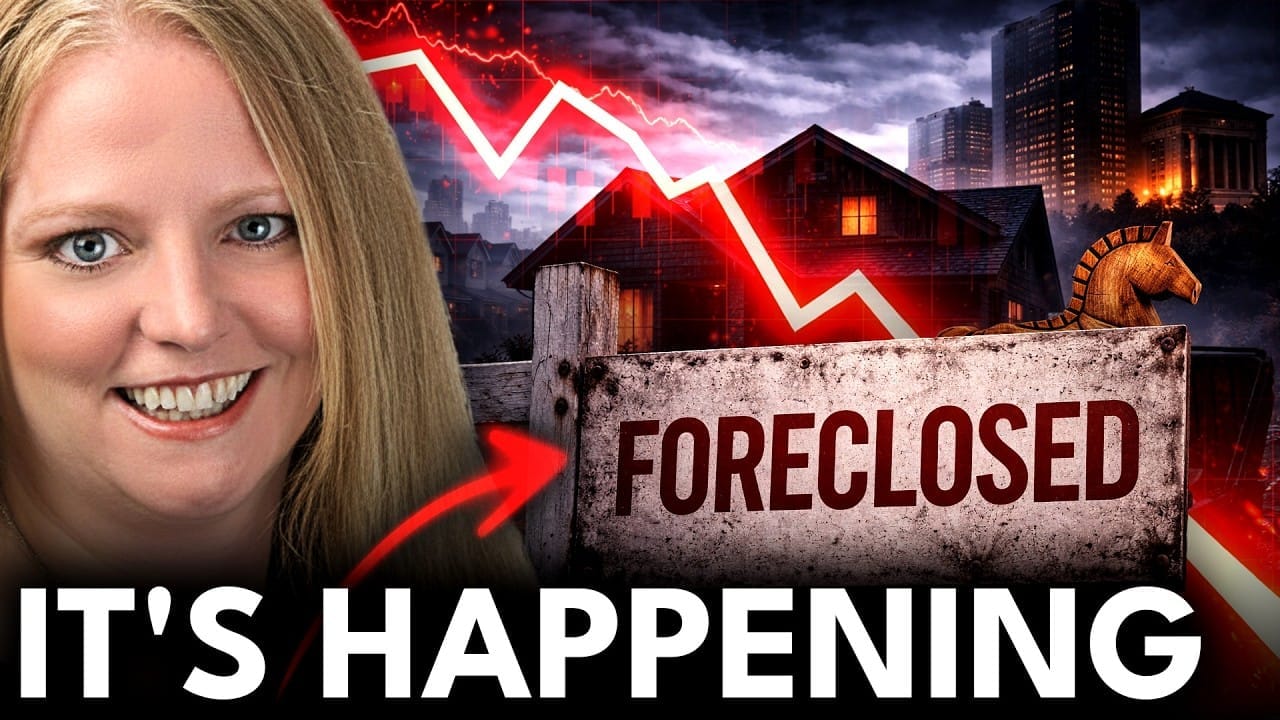
Housing analyst Melody Wright delivers a devastating ground-level assessment of the US housing market, revealing a picture far worse than official data suggests. Existing home sales hit their worst levels since 1995 despite 20% population growth, while median listing prices have gone negative year-over-year for two consecutive months. The private credit shadow market is now 2.5 times larger than during the last crisis, and the Fed's own FOMC minutes flagged it as a concern. Government loss mitigation programs that kept delinquent borrowers afloat are running out, with one borrower going back six times over two years without facing foreclosure. Institutional investors like Blackstone are underwater on single-family rentals, and Trump's ban on institutional homebuying is characterized as a disguised bailout. Meanwhile, cities from Dallas to Nashville to Phoenix are filled with empty luxury builds nobody can afford, and municipalities face potential bankruptcy from the fallout.
"Existing home sales last year were the worst since 1995, and we've increased population by over 20%."
"That's the highest percent of workers holding two part-time jobs ever right now. Ever. In the series since I think it goes back to the 60s."
"You don't even have to ask for their financials. I mean, this is crazy, Marty. Like, you don't even want to know if they can pay."
"The shadow market is about two and a half times bigger than it was during the last crisis."
"This is a dumpster fire and a lot of the people that are at these firms know how much trouble they're in, but they're not telling anybody."
"The Fed reported over 43% mortgage refi rejections. It's the highest in their series."
"Oh, it's a total bailout. Yeah. That's a bailout for them."
"They revised five years of history and shaved $30,000 off the new home price high. And they didn't tell us why."
"If you walk in downtown Dallas, like it's just a ghost town. It's a ghost town. And it's creepy because you're walking around it, you're seeing what looks like homeless camps in downtown Dallas."
"By year 11 of that loan, you would have paid $270,000 in interest. That is what a median home should be."
"$13 million spec house, $25 million spec house, meaning they didn't have a buyer."
Wright's field-level reporting reveals a housing market held together by extend-and-pretend policies that are rapidly expiring. The combination of inflated credit scores now deflating, private credit exposure the Fed itself is worried about, institutional investors chasing losses, and municipalities running out of money to fund programs points to a gradually-then-suddenly moment. The data revisions, hidden inventory, and off-MLS transactions mean the official picture is far murkier than anyone realizes, and the true price discovery hasn't even begun.
0:00 - Intro
0:39 - The Market Is Not Well
5:23 - Liquidity Alarm Bell
11:30 - Payroll Revisions And The Jobs Mirage
14:25 - Private Credit Is A Dumpster Fire
16:11 - Subprime Delinquency
22:18 - Institutional Bailouts And Price Discovery
29:24 - Rotten Supply
34:35 - Creepy Downtowns
39:34 - Kayfabe And Ignorance
44:49 - Century Long Loans
46:52 - Data Centers & AI
1:00:28 - Seller Advice & AirBNB
(00:00) You don't even have to ask for their financials. I mean, this is crazy. Like, you don't even want to know if they can pay. The shadow market is about two and a half times bigger than it was during the last crisis. Existing home sales last year were the worst since 1995, and we've increased population by over 20%.
(00:21) What's up, freaks? Before we get into the show, I just want to send a heartfelt thank you. Thank you for joining us and ask for one quick thing. Could you like this episode? Subscribe to the channel and if you like the conversation, join us in the comment section. All right, take two. Melody, welcome back to the show.
(00:35) >> Thank you so much. Thank you for having me. It's my pleasure to be here. >> Well, like I said, it's timely talking to you as somebody who's settling on a house next week. May not be the best market to do it, but I got to get my forever house. Um, and for anybody who didn't catch the first interview with Melody, uh, in Q3, beginning of Q4 last year, just a little background, Melody's a housing market analyst and independent researcher.
(01:01) Uh, she's based in Tennessee. She runs the M3 Melody Substack, which is great. Uh, I highly recommend subscribing to it if you want to stay up to date on this. She's doing deep dive analysis on housing data, labor markets, and the intersection of government policy with real estate. former mortgage industry professional who now does investigative field reporting, literally visiting homeless camps, detention centers, and distressed neighborhoods to ground truth the data she studies um collaborating with other researchers and getting uh data from
(01:32) Fred and AR census and county level records and uh like I said, I think your most recent newsletter that you dropped last week talking about uh home sales in December uh the retail sort of credit situation and the stress the consumer is under is something that uh many people are not aware of because we're being told that the uh the economy is running hot. It's the best economy ever.
(02:00) But if you look under the hood, things are not all well from your perspective. So, what are you seeing out there, Melody? >> Yeah. No, I think you summed it up nicely. I mean, you know, we've been seeing this um this this under the covers trouble for some time, especially in what I'll call government subprime FHA.
(02:20) Um you know, when those student loans started reporting to credit again, it really uh impacted a lot of the people who should be forming households. And so you had people going from 750 credit scores to 550. And so very quickly, you know, credit got cut off. At the same time, you know, um in the mortgage market specifically, guardrails went on the FHA program which were being taken advantage of.
(02:47) Um a lot of fraudsters were taking advantage of it, but essentially you could just keep not paying over and over and you would go get another workout and another workout and so Guardwells went on that program. So um you could when we look at stuff in the aggregate Marty I think this is where everybody you know can have that false sense of calm because it looks okay like oh you know home equity that looks like that's great unlike the last time people will often say but there's so much going on that's new that people don't understand like today for instance
(03:20) CLA reported right and um they had a loss and they are very much some of the people that use CLA buy now pay later are the exact people that would be um that we would hope would be out there buying homes but unfortunately they have to you know basically finance their burritos. Um and so you know you look at the youth unemployment rate.
(03:46) I mean so I I guess in there are so many things so much weakness under the surface that almost no one is paying attention to. And so in all p pockets of the market, be it in mortgage where you're you're starting to see delinquency rise and we're going to see that from here. Um you're actually starting to see the prime books get impacted and they always come after the subprime.
(04:10) um you know when the layoffs happened. And the and the issue now is a lot of this lending was made on inflated credit scores um and that did not include you know the student loans and things like that or you know those eviction moratoriums um and now those inflated credit scores are coming down with student loans reporting. So it's just a much uh murkier picture than what people and I don't know how anyone can um say uh anything positive.
(04:38) I mean, existing home sales last year were the worst since 1995, and we've increased population by over 20%. I mean, so, you know, this market is completely frozen. Um, you had a lot of raged e-listers last year, um, that couldn't get the price they wanted and so they just took it off the market.
(04:56) But what you've seen since the recent Bitcoin route, kind of what happened there and the wobbliness in the stock market is inventory is uh, flying to the markets. I had had been coming off, but now it's flying on non-seasonally. This isn't the time of year you would typically typically your inventory bottoms in February. So, >> well, I thought it was interesting that you covered uh the Bitcoin price drop in gold and silver in this newsletter because I'm not sure if you caught on to this meme, but I think Bitcoin is a leading indicator of liquidity, right?
(05:29) Like it trades 24/7, 365. uh it's very easy to sell and get cash. And so if a liquidity crisis is pending, it's one of the first assets to go. And so that's what um we've been talking about in the Bitcoin space with this this price drop of 36% 48% since the highs of uh late October, early November last year is that something's got to be wonky in the back of the system from a liquidity perspective.
(06:00) And >> I think a lot of the data that you highlighted in your newsletter last week points to this. I mean, looking at um credit card spending in December alone, uh looks like people were tapped out of cash and really >> pulling out the plastic to to do their spending around Christmas time. And then I I think it would also be important to really dive into the um the new home listings and and home sales in December because those are some pretty historic lows in terms of what's coming to market, what's actually being sold.
(06:31) >> Mhm. >> Yeah. So, uh specifically, uh on the new home side, we're going to get uh results tomorrow for both November and December. and and we you know we've been going off we only got October cuz this is the one who prepares that but on the existing home side I mean yes a lot of people wanted to blame the storm Marty but California is our biggest h housing market out there and the storm came very late in the month um it was just I mean these were just really bad sales like worse than 20 January 2007 worse than
(07:08) January 2008 and you you know, again, the population is is much higher. Um, I think there's some things going on though that a lot of people don't understand, which is I think that uh the National Association of Realtors, these listing sites, the MLS, they're losing relevance. And so, I think that we're actually having there are quite a few transactions that aren't being captured uh in their statistics.
(07:35) Um because you had a lot of people, they did this back in the 80s too when rates rose is you had a lot of seller financing because you know uh people couldn't get approved at the higher interest rates and so the seller would say I'll finance this for you. Um those and and selling homes. So some of those some of the transactions are just not being captured a lot of them by the investors as well.
(07:59) And so, you know, we're just the housing market has always taken it. The uh indicators are very lagged. Uh the data is not real time because a lot of it to really get accuracy is pulled from county records and uh that is that can be there's over 3,000 counties in the country and some of them, believe it or not, are not on any kind of e-record platform.
(08:21) They're still mailing stuff in. So, you know, I I just say that because although sales are horrible, I mean, they're just absolutely horrible. I think we are missing um a component of the housing market right now with these private note actors um that are out there transacting not on the MLS. So, I just kind of wanted to state that um because I think people are going to be surprised when they realize um how much inventory is out there and because I talk to them all the time.
(08:54) They say, "Well, look, look at what was on the MLS in 2008. There were 4 million homes and now we only have a million." And I'm like, "Um, yeah, but there have been studies that 50% of transactions aren't like let's say in Austin weren't handled through the MLS." So I we have we're just it's a very murky muddy picture um that I hopefully I haven't lost everyone with those details but uh what we are starting to see is median listing price.
(09:23) Uh so that's the idea the median of whatever the listing price was um that has now come in negative year-over-year uh for two months in a row. Um it's now under 400,000 for the first time since 2022. You know, while the builders on the other hand, for their prices, uh, they have been, uh, selling under the existing home price for almost a full year.
(09:48) In the last cycle, we saw that one month, one month in June, I think, of 2006. And so, you've got this these crazy uh fundamentals where the new homes um are selling below 400,000, a median price, and then that's not even including the 50,000 of incentives they're putting on top of that. And so we just got builder sentiment and uh it went down again as well.
(10:11) So I'm really looking forward to new home sale results tomorrow because it'll give me a clearer picture. But at this moment, last year was the worst we've had in, you know, over 30 years, which is insane. >> Yeah. Just anecdotally to confirm one of your thesis there. I mean, the house that I'm buying, we did offm market, so it didn't hit.
(10:31) Um, we're in a neighborhood where you have a bunch of aging out boomers who want to hand it off to younger families and so we're able to do that transaction directly and I think there's a lot of that going on at least where I am. >> I do too. And and then, you know, if you're not pulling from public record, then no one really knows what the median price is out there.
(10:51) You know, if homes aren't selling that are, you know, uh, or they're selling but not being captured in the MLS, then we really have no idea what is going on out there. But what you can get a sense of, you know, cuz I track 85 markets, is there's price cuts everywhere. They're just not selling those houses. They're just continuing to do price cuts.
(11:11) And so, it's going to be one of those gradually than suddenly things, you know, when you actually can get someone in the market to buy. But that's the thing. There's just nobody left to buy. And the institutionals are not interested at these uh price levels. Well, this comes back to something else you covered in last week's newsletter, which is non-farm payrolls and the revisions.
(11:30) And I think that's um one thing that always makes me chuckle is you get the the headline number and then 9 months, a year later, you get the revisions and nothing's as rosy as it was originally reported. >> No. And that just seems to be happening on every front, right? And so I I think you know just take the new home uh sales price for a minute.
(11:58) They they shaved almost they revised five years of history through the co and shaved $30,000 off of the new home price high. Okay. Peak they it was at 496. They revised and said no. Then they didn't tell us why. They really tell us why. But now it was at the peak was 460,000 on the new homes and just 5 years of what we thought was reality just got wiped out.
(12:23) And so I that that's the limitation I think of the data and that's why I think you have to go look for yourself and you also have to you know track non-traditional uh metrics because um there's just we're not getting the full picture out there in any way. >> Yeah. Well sticking on the jobs market too.
(12:42) I mean, you highlight that there's a bit of a jobs mirage with education and health services carrying the entire labor market and we've come to find uh with health services specifically, it's a lot of that's driven by overt fraud. >> Exactly. That's where a lot of those Somali's uh jobs were. You know, that's where they sit.
(13:01) And so what happened after the American Rescue Plan is all this money went out to the municipalities and they they created all these programs like housing affordable daycare programs whatever and they employed a lot of people theoretically although I think a lot of it was fraud and so that's why you've seen that job growth but what's happening now Marty is these municipalities have run out of money and it's not coming I mean California is a great example of um they are in so much trouble Um Chicago, another example, they don't have any
(13:33) more money to fund these programs and they're not going to get it from federal. Um they might get a little but they're not going to get enough to sustain them. And so, you know, we're we're looking at a bunch of municipalities in crisis, which will impact those education and health services jobs, which is the only jobs that were created last year.
(13:55) Really? >> Yeah. And if you're not getting a health service or education job, you're getting a second job, which is >> Well, Right. Right. >> You That's the highest percent of workers holding two part-time jobs ever right now. >> Yes. Ever. In the series since I think it goes back to the 60s. So, yeah, that's nuts.
(14:14) It's So, two two part-time jobs just to make ends meet. I mean, that's insane. >> Yeah. And then I mean, we don't want to be too dimmerish here, but we're trying to distill exactly what's going on. You also mentioned like private credit in in last week's newsletter and that was actually >> funny enough the FOMC me uh meeting minutes from last month came out earlier this week and private credit was an area that the the board highlighted as something to pay attention to and that is wearing them.
(14:43) And this is another thing that's not tracked in this space like so so what you know you have your old traditional hard money lenders which would like you you don't it's like a personal loan um but they were very they're they were usually regional and they uh would make you pay a huge down payment or um an exorbitant interest rate to kind of cover their risk.
(15:06) What private credit did is they came in and what they thought their sophisticated underwriting models, they weren't that sophisticated. They just went off the credit score basically. And so I've talked to people in this space that are freaking out because they know those credit scores were inflated. I mean, look at CLA today like that that is we knew this was coming uh uh because we knew that the numbers they were reporting for delinquency could did not add up.
(15:36) But yeah, and so you've got a ton of private credit out there and the banks have lent to um you know people like Tricolor and and those actors who have gone out and lent money and they're not recording deeds. Uh so we don't know if there's many money lent against the house and they're also many of them aren't reporting to credit you know and so it's it's just a big and and we know that the shadow market is about two and a half times bigger than it was during the last crisis.
(16:04) >> Yeah. And I saw the headline yesterday about subprime auto loan delinquency rates skyrocketing and obviously 90 plus day delinquency rates on uh real estate are rising as well. And I'm just wondering how much of that is due to the uh immigration policy the last year like how many um immigrants that were here illegally but were able to get FHA loans and subprime auto loans um simply had to leave the country which is driving that up.
(16:33) But regardless, there's still >> no one can really track that. You know, I've been trying to get good data on that, but there's just not really good data. >> Yeah. Well, you're you're talking about the 90 plus day delinquency rates um in real estate specifically, and there's some sort of foreclosure game going on. >> Oh, the sub two.
(16:53) >> Oh, yeah. I'll talk about So, I'll I'll I'll talk about what's going on in delinquency. So, um, basically, uh, when the guard rails went on that FHA loss mitigation program, which was just basically an open teal to whoever wanted to come take advantage of it, um, that meant that we were going to see serious delinquency increase uh, because they are no longer eligible for some of these workouts or they have to do things like make a trial payment.
(17:22) So, let me give you I have one borrower in one of my client books who went back six times and has been delinquent for the past two years, but nowhere near foreclosure yet, Marty. And so, you know, that because all that government intervention and workout and so that that's all finally running out, believe it or not, and will run out over the next 12 months.
(17:46) Um, and so that serious delinquency is going to go up. It we'll get a little bit of improvement. uh we always do in the spring with B like bonus payouts and tax refunds and things like that. What'll be interesting to track is how much and uh because like for auto it didn't help last year.
(18:04) So we'll be watching all of that. But what you are talking about so this is something the mortgage industry has no idea is going on. um it's called sub two are subject to mortgages and what these investors did is they would when when you are in default the serer has to record something called a notice of default or a liz pendants uh saying that you're about to be uh a complaint will be filed against you um so the investors will go research those and then they'll go contact you and they'll say hey listen um I got a deal for you I could take over your mortgage payments
(18:40) for you um if you sell me this house um and I could maybe give you an equity sweetener or you could rent from me for a little while and this investor is trying to find someone u while they're doing all that they're trying to find someone to buy the home from them. What's happening now? Um, initially these investors would record those deeds.
(19:04) Um, but there's this thing called a do on sale clause that if you sell your home, your note becomes immediately due and owing. Um, so what's happening now is these investors, as we as I knew they would, cuz they always do, um, they walked away and now the borrower is on the hook cuz they're still on the note. Um, and so they're being, you know, foreclosure proceedings are going against them.
(19:27) They may not even be living in the house anymore, Marty. But this is a huge uh kind of it's part of that private note shadow market that I was talking about. And I think this is one of the things that's kept delinquency lower. Um but people can no longer when home prices aren't appreciating, you cannot get a buyer to come in and just, you know, pay ridiculous money for that house anymore.
(19:49) And so they're they're, you know, they're walking away. They can't make the payments. So there's just a ton of stuff going on in this market. >> Well, and that's sub 2 K. The the investors are walking away because they don't have the cash or are they just saying, "Hey, this isn't worth it." And >> those things. Yeah.
(20:07) Uh it's not worth it or they don't have the cash. >> What's up freaks? If you've been listening for a while, you've probably heard us talk about Bit Key. It's a Bitcoin wallet built for people who want self-custody to actually fit into their lives. key is a private multi-IG wallet that removes the biggest point of failure in traditional self-custody.
(20:20) The seed phrase, no ceremony, nothing to hide, and no single mistake that can put your Bitcoin at risk. Things get lost. Hey, we know that. Phones get replaced. Life happens. Bit key is designed so your Bitcoin stays secure and recoverable without demanding constant attention or expertise. And because it's built for the long term, inheritance is built in so your Bitcoin can move securely into the next generation.
(20:39) It's Bitcoin self- custody built for real life. And for February only, freaks, for you guys, for you guys only. Listeners can get BitKey for $99 using the code TFTC99. Go to bitkey.world. That's bit keyb.world. Use the code TFTC99 to get a bit key for $99. You can go directly to the bit.world site. If you're watching on YouTube in our store below freaks, when you take Bitcoin seriously, you start with custody.
(21:07) You want to control your keys, avoid single points of failure, and make sure your savings cannot disappear because you or someone else screwed up. That is what Unchained has been focused on since 2016. Unchained is the leader in collaborative multi-IG custody and Bitcoin financial services that keep you in control.
(21:22) They secure over 12 billion in Bitcoin for more than 12,000 clients. That means about one out of every 200 Bitcoin sits inside an Unchained Vault. Their model is simple. You hold two keys, they hold one key. It always takes two keys to move Bitcoin, meaning their single key can't access your Bitcoin on its own.
(21:36) Just resilient shared custody that gives you institutional grade security while keeping you sovereign. Onchain also lets you trade straight from your vault. Access Bitcoin backed commercial loans, open a Bitcoin IRA where you hold your own keys, and set up personal, business, trust, or retirement vaults. They even offer inheritance solutions built for long-term hodlers.
(21:50) Or opt for the highest level private client service with Unchained Signature and get a dedicated account manager, discounted trading fees, exclusive access to events and features, and much, much more. If you want a partner that helps you secure and grow your Bitcoin without giving up control, go to unchain.
(22:06) com and use the code TFTC10 at checkout to get 10% off your new Bitcoin multisig vault. That's TFTC10 at unchain.com. >> I mean, for for the private credit specifically, whether it's hard money lenders, these sub 2 investors and you get like commercial real estate, it's got to be again the Fed calling it out. >> Yeah.
(22:24) last month or the FOMC it's becoming abundantly clear that private credit is in trouble and we had what was a blue owl last night blue >> stop uh stop redemptions on one of their retail oriented uh private equity funds it seems like >> right >> all the cash that was printed and flushed into the economy in 2021 2020 it's not getting the return that those investors hope it would >> no and and you know especially there's so much private credit in real estate, you know, like 20 to 25% of the loans in private credit, I mean, of commercial real estate are private credit loans.
(23:00) And I mean, so yeah, this is a dumpster fire and it's um you know, and I guarantee you that a lot of the people that are at these firms know how much trouble they're in, but they're not telling anybody. You know, it takes a long time as we can see. I mean, Blackstone, for instance, is in a ton of trouble and um you know, and and it's but they they can keep up appearances, but they're running out of time.
(23:26) Um they're losing enough on the commercial real estate, they're losing enough on their single family rental business that I think we're going to start seeing impacts uh in in in Breit, for instance. Um you know, we'll we'll hear about them gating redemptions again as well, probably in the near future.
(23:45) That's been one of my sort of tinfoil hat theories with Trump uh announcing that these investors can't buy single family homes anymore. Uh and his $200 billion uh mortgage buying um facility. I don't know if it officially launched, but he announced it and >> they had already been doing it. They'd already been buying the NBS. Yeah.
(24:06) >> Yeah. Particularly with the former though. It's like is it just a slight bailout? You're going to say they can't buy >> Oh, it's a total bailout. Yeah. That's it's a bailout for them. cuz I was in the room with one of them in September and he's like, "We've been chasing price for a year.
(24:21) " Um, you know, they they don't get a homestead exemption. So, they their taxes are much higher, their insurance is higher, and so they can't they are as soon as these long-term rentals uh the leases expires, they're rehabbing them and selling them and which is why you're seeing um price declines in places like San Antonio and Atlanta and Tampa because you have very large institutional presences in those cities.
(24:44) So, >> yeah, it's a bailout, Marty. I mean, that's I I guarantee you this is phase one. Oh, you can't buy these homes anymore. Phase two is like, hey, you know, we'll give you a deal if you sell these homes uh you know, through one of our affordable housing programs. >> Well, that's what I was saying.
(25:01) It maybe they have like a BTFP uh BTFB facility. They're going to say, "Hey, we'll just buy we'll buy these assets of par for you." >> 100%. I I I I bet we'll get there. >> Yeah. And So where where do you think the sort of rubber meets the road and this becomes obvious to the market? >> Oh, I don't know.
(25:22) You know, the fact that we're in an election year like um you know, I I think that there is like there's a it's accumulating the awareness like you know it's no longer just Florida and Texas like California is on the board. Like it is on the board. you're starting to see a deceleration in the Midwest and Northeast on their home prices.
(25:46) And I think pretty soon mid the Midwest will turn um because they they just I mean investors descended on them because they were the last place you could get a decently priced single family home. Um but I think it's going to take till the Northeast has some sort of awareness for there to be national awareness.
(26:05) Um, and the Northeast has a ton of problems around their demographics. And, you know, those census updates are huge. Uh, showing everybody they didn't quite get the population gain that they thought. And um you know the northeast very low owner occupancy which means um you got a lot of mom and pop investors uh most of which are boomers who are aging out and will be um I mean what is what's really interesting Marty I'm seeing in uh the cities I track is that the the rate of folks who are deceased property owners like so you can track who's deceased is
(26:42) I mean in some cities up 25% year-over-year and so you know th this is going and and Charles Schwab did a study and said 70% of the time people who inherit property sell them. And so all these things take a little bit of time. It takes time to get through probate. Um but I think the demographics are going to uh really start to uh become obvious in places like the Northeast and and Boston and actually Philly and Pittsburgh both have been showing price weakness.
(27:14) And so um but I think until the northeast falls there probably won't be large scale awareness but with the price cuts I'm seeing um you know once we can get activity in the market we are definitely going to see that uh suddenly you know hit the gradually then suddenly um but it we could skate for another another selling season uh based on you know and promises Um, but I I have a feeling we're going to see uh some uh disorder in this selling season, especially in places like Texas and California.
(27:52) >> Do you think this is necessary? >> Oh, yeah. I mean, yes. >> I mean, if they'll let it happen. um they're going to try everything, but everything there's just there's a point where everything doesn't work anymore, you know, like everything they've tried like like I love to talk about they bought mortgage back securities back, you know, in 2009 and uh you know, prices just kept plummeting.
(28:16) Um and it didn't do anything like it it created a little refi boomlet in 2010. Um, but now we've got people like the Fed reported over 43% mortgage refi rejections and so people can't even uh, you know, they can't qualify for a refinance. It's the highest in their series, you know. So, it's just um, it's just a slow burn that is it's gaining speed and gaining traction, but if we could get transactions, we would see true price discovery.
(28:48) And yes, it's absolutely necessary because, you know, household median income is not even in the same ballpark as, you know, median homes prices. And so, who's going to buy these? It's not going to be the institutionals. It's not going to be uh your millenn your your, you know, your cohorts coming of age. I mean, the unemployment rate in the 18 to 24 is insane.
(29:11) Um, so like we're not going to form households until the affordability problem is fixed. And so, yeah, I think this is necessary. >> Yeah. Then you have the AI boom happening which is telling the uh Gen Z and Gen Alpha, don't even try to get a job, >> right? As if their lives couldn't be more depressing, you know, like it's just it's it's kind of Yeah, it's really it's really not good for that cohort right now.
(29:35) >> No. Well, you have the whole K-shaped economy meme becoming more prominent. I think it's becoming more confirmed. It is uh >> Oh, yeah. >> It's not easy out there. uh particularly for the younger generations and and again going back to the demographics and push coming to shove with boomers aging out and um just factually dying out as well like the the flood >> of supply that just if you're just looking at the math that is due to hit the market uh is going to be pretty significant and this goes back I mean this is something I've always been
(30:08) curious about with new home builds too when you consider the quality of new new builds compared to older builds builds, particularly if they were built like 50 years uh or longer ago. They're actually sturdier. Like the house we're buying is >> is very old and I feel more comfortable in that than some of the new builds coming up.
(30:28) And this whole supply >> um meme that's been going out there, you have podcasters like the all-in guys and the president um this administration saying we just need more supply to bring um to bring prices down. I I I don't think that's the case. And on top of that, the new supply >> is not a quality quality build at the end of the day.
(30:46) >> No, because who was building it? And you know, it was subcontractors of subcontractors, but they were illegal immigrants. That's who and often I you know, on these new build sites, Marty, it's it's it's uh it's a little scary. Like you're you're see like we did one video where we just went around got the Jack Daniels bottle, the Medela cases, empty cases, like the empty beer bottles that were just all over.
(31:13) I think it was LAR job site and so you know the quality is horrendous. There just wasn't I mean all these uh thousands of new home communities I went to, you didn't have um these did not look like professionals building these homes. >> Yeah. and nor were they managed by professionals on site. So >> yeah, so how much of like the lack of new home sales does being driven by people looking at these be I'm not buying this papermâché box, >> right? >> And then what is >> I think that's part of it.
(31:44) >> What is the exposure to these? >> No. Yeah. And not only that, they built luxury. It's like who are you building for? Like, you know, I know in 21 we saw wages rise, but not like something crazy, but that's what happened is all the builders went out there and built for the California and New Yorker that was coming to their town and built luxury apartments and all luxury homes like these gigant some of the speck homes I've seen out there just blow my mind.
(32:15) Like $13 million speck house, $25 million speck house, meaning they didn't have a buyer. They just built that house and it's like this massive luxury structure that you can go in all the 85 markets I track and you can see this luxury sitting empty. There are not enough people to buy those homes. And so I think you're going to have um there's going to be a lot of bulldozing when people really finally start to deal with the problem.
(32:39) But we're we're we're far from that right now unfortunately. Like people people are still believing that it's an inventory shortage. the I mean, we talked about this last time around, but when I was in Austin, uh there was one of these luxury builds around the corner from us. We moved in 2021. It finished construction, I believe, at the beginning of 2022, and we left June of last year.
(33:02) Was still sitting there up for sale. >> Yeah. And and what's crazy is a lot of these cities are still building them. Like Phoenix, I'm just like, you people are nuts. I mean, and and they're everywhere. And it's so weird. It's like these developers, they never just drive around the town. They never just even go two blocks over.
(33:21) Like Nashville is another good example. If you if and when you go back, like there's a attached to downtown is just like apartment on top of apartment. I mean, if all of those if 50% of those apartments and they're all new were filled, you would never be able to leave your house because the traffic would be so bad, the congestion cuz they just built all these things on top of one another with no parking.
(33:43) And and that's the really sad thing about a lot of this is that uh people just, you know, sat new builds down in cow pastures wherever they could find, you know, they could build and they didn't think about infrastructure. And so, you know, and I've seen some really uh sad small towns be destroyed across the country due to like, okay, you're outside of Raleigh.
(34:03) Oh, that's going to be the new Apple um headquarters. Oh, no, not so much. Maybe not, you know, or whatever. So, um, and so they went to these little towns and just like destroyed them. They like bought up all these older homes and fixed and flipped them or just, you know, put those new build communities, but there's no way to get in and out of these towns like it's all, you know, two lane.
(34:27) It's just it's so it's so sad. >> Very high time preference. The describe it as the high velocity trash economy where you're just building to build to hit your uh your quarterly. >> Absolutely. What do you think the knock on effects of all this will be? Um, >> well, we're going to see crime increase a bit.
(34:48) I mean, if if that I mean, that's that's an effect because the vacancy out there is a massive problem that nobody's talking about. Um, and you know, it's only a matter of time when all the homeless in Austin figure out, you know, 10 miles uh south there's an empty new build that nobody's policing. It's like, why don't we just go set up shop down there? Um, you know, but I think you're seeing it already in cities like Dallas in the downtowns.
(35:14) Uh, they're they're just they're they're terrifying. I wrote a an article for Unicus Research last week which was called Creepy is not cool because um these downtowns are creepy. I mean, they're just creepy. You don't want to be in them, which means they're never going to be able to get, you know, they're not going to be able to attract new business down there either.
(35:34) And so I think you're going to have an increase in crime. Um, you know, we're already seeing an increase in homelessness. Um, and so, but later down the line, if you're not in debt, uh, and this is really important, don't get into stupid debt, um, and you have a a job, like you have a job, maybe you're a plumber, maybe you, you know, instead of going to school, you went and did a trade.
(36:02) um then you're going to be in a good position to get a home. And so that that's the the long, you know, after a few years that's the effect. And in some of these markets, it'll be before then um as well. But yeah, I mean, we're looking at I I I think we're going to be looking a lot of m municipalities like filing bankruptcy.
(36:21) And I think they'll probably be begging for help from the federal government to deal with these vacant homes. Um, so and cuz a lot of these homes were bought with all cash during this last cycle, which means they're not sitting on a bank's balance sheet, which means you're not the grass isn't getting cut. Uh, the pipes aren't getting winterized, the mold's not getting removed.
(36:46) Uh, so that means all kinds of issues. I mean, I saw it when I managed a fault during the last crisis. I mean, these homes get into the worst shape. Um, and you almost can't even recover them because, you know, they're just in such a state of disrepair. >> Yeah. When you say downtown Dallas is great. Like, so what do you mean specifically? What are some examples? >> So, so uh what's crazy about Dallas uh is they've got these massive um you know, highrises, uh commercial real estate, completely empty.
(37:17) And on the back of it, uh, you see a stroller and evidence of homeless that have been living there. Um, and then right next door, they have this massive high-rise that's being completed, office building. But if you walk in downtown uh, Dallas, like it's just it's a ghost town. It's a ghost town.
(37:39) Um, and and it's creepy because you're walking around it uh, you know, you're seeing these what looks like homeless camps in downtown Dallas. So, uh, you know, that's that's and but this is every I mean it's every like San Antonio, you know, uh, very similar situation. I when I was in San Antonio, I saw somebody OD right in in front of us.
(38:01) Like we were in the truck like filming downtown right next to us, just OD. I mean, it it feels as if most people haven't been to their downtown in a very long time cuz they just are unaware with how how creepy these places have become because they're just empty. Sup, freaks. This is brought to you by our good friends at Silent Silent Trades.
(38:21) Everyday Faraday gear that protects your hardware. We're in Bitcoin. We have a lot of hardware that we need to secure your wallet emits signals that can leave you vulnerable. You want to pick up Silence gear, put your hardware in that. I have a tap signer right here. I got the silent card holder. Replace my wallet. I was using Ridge wallet because it secured against RFID signal jacking.
(38:39) Uh silent the card holder does the same thing. It's much sleeker. Fits in my pocket much easier. I also have the Faraday phone sleeve which you can put a hardware wallet in. We're actually using it for our keys at the house too. There's been a lot of robberies. They have essential Faraday slings, Faraday backpacks. It's a Bitcoin company.
(38:54) They're running on a Bitcoin standard. They have a Bitcoin treasury. They accept Bitcoin via Strike. So, go to slt.com/tc to get 15% off anything or simply just use the code TFTC when shopping at slt.com. Patented technology, special operations approved. It has free shipping as well. So, go check it out. Sup freaks.
(39:11) This rep is brought to you by our good friends at Ligos Finance Celsius BlockFi FTX. They took your Bitcoin and gambled it away. Ligos can't because they never hold it. Non-custodial lending on Bitcoin's base layer. Your keys, your collateral, it's verifiable onchain. Go to logos.inance. tell them that TFTC sent you. >> Do you think despite the your positioning by this administration that everything's all good, economy's hot, they understand these these problems exists and they're just I think you described the saber rattling between uh President Trump and the Federal
(39:43) Reserve is Kay Fob. Um, do you think similarly the projection of everything is >> is all well and great is K fob 2 and they know things are not all well under the hood and they're just trying to narrative craft until they can uh find an excuse to actually flood the system with more liquidity. >> Yeah.
(40:07) So, you know, this is a question I just I I obsess over. I can't, you know, it's like um they have to know some of it. Um, and and if you know, but I have a feeling they don't know all of it because I talk to people in government now and about their cities and say, "Did you know this? Do you know that?" They don't know, you know, um because that's what's happening now is I'm getting contacted by more policy focused people who want um to talk to me about maybe solutions.
(40:39) Finally, that's happening. um but they aren't aware of how much inventory they have and and in places like Texas and in some unincorporated areas across the country you didn't even have to file permits and so a lot of the local leaders don't even know and so um I think it's funny like PY followed me for years uh before he got and you know he would share my stuff and all I ever do is talk about the inventory shortage myth and you But the day one into the administration, he uh you know sang a different tone tune and and I actually
(41:18) know uh the CFO of Freddy, he was one of the last people standing cuz they went in and gutted the executives at Freddy. I mean he was my boss during the GFC for a certain he has to know. I haven't spoken to him but there are just so many clear telltale signs if you are in the know.
(41:41) Um and and and so it's weird in mortgage specifically like people who originate the loans never talk to people who service the loans and so the originators never realize what's happening on the back end. And so I think we're still in that part of the cycle where the origination narrative is kind of driving the narrative. But in servicing when I talk to the big servicesers they know what's what's happening.
(42:04) So I think it's probably a combination of they know but they don't know the scale. But if if if it were me, um, and I would never do this. I don't want to be a politician, but if if I were a politician, I would I would do probably what they were doing. Like just say whatever. Like what is it? You know, you're just he's speaking to whatever interest group in that moment.
(42:27) And but you have to look at what the policy is. And when they put those guardrails on FHA, um, that was a real action and that's going to have real consequences. and and they have to know uh that delinquency on FHA is is unbelievable. And so there have got to be people on that side of the house that understand that this is really really bad.
(42:49) >> Yeah. Is there anything similar going on to sort of just vanilla bank loans? I've been reading um uh Bill Morland's bank rag data and he he was saying that that they're just disguising sort of their exposure to these delinquent loans by some sort of 12-month window that they're able to push it off the balance sheet and looks like >> it's better than it actually is.
(43:12) >> Yeah. Yeah. And and Fanny and Freddy in uh and FHA hasn't done as much of this recently, but they do these things called non-performing loan sales. And so they'll literally take their delinquent book and sell it and then turn around to you and say, "Hey, our delinquency is only 67%." Well, where'd those loans go? Okay.
(43:31) Well, they went to private hedge funds who then turn around and sell it to individuals who don't report to credit. And so, you know, like we just we just don't have a very uh clear view of what's really but yes the the the you know I try to help people understand that what they did is instead of waiting for the crisis they took these they took the old loss mitigation programs from the GFC and they put them on steroids and they took away all the requirements and things you had to do cuz back then you had to virtually reunder to write the
(44:08) loan. Well, they said you don't have to do that anymore. You don't even have to ask for their financials. I mean, this is crazy, Marty. I mean, that's crazy. Like, you don't even want to know if they can pay. Like, what? Like, why would you? It's all a game of extend and pretend.
(44:25) And so, we've had, if you think about it, we've had enough like the same amount of workouts that we had after the last cycle times about two or three. And that's what's kept us skating for this long. And now that stuff's running out. So, it's just like what uh Bill talks about. >> Yeah. And it's funny, too. I mean, talking about extend and pretend, and I don't know if this went anywhere, but you were mentioning Bill Py uh the the 50-year mortgage that was floated in December.
(44:54) Where's your reaction to that? Because we we haven't. >> Yeah. I didn't want to talk about it, but like literally everybody I I got so blown up. I mean, my life went crazy for a couple weeks, but I was just like, "This is so stupid. I can't even talk about it." Because, you know, by year 11, if anyone in this country like knew what an emergencyization schedule actually looked like, they would not borrow money.
(45:16) I mean, but we're not taught that in school. But by year 11 of that loan, you would have paid $270,000 in interest. That is what a median home should be. our our median home prices should be around that 250 mark, you know, and so that's that's just nuts. That's nuts, you know. Um, and it it's just debt slavery.
(45:41) It's just another form of debt slavery. And and believe it or not, they had them back during the last crisis as well, like some people do. You can do them in California. Um, and they're doing what's called a 40-year modification right now. And it's not helping anybody because basically your payment goes down by like $20 and then you add 10 10 more years to your loan.
(46:01) I mean, I just hope people understand. Please don't do this. Like, just please. It's just you're going to be a slave forever. >> Well, you see this extend and pretend, not only the 50-year mortgage, but I'm not sure if you caught Google wanted to issue a 100red-year bond. >> Yeah. To fund their >> Yeah, sorry. Yeah, I did.
(46:18) to fund their uh their data center expansion. And people look at that like, oh, look, long-term financing. It's like, no, that's we need to get suckers at the table to give us cash so we can do this and push our >> Exactly. >> push our payments out a century. >> It's just so nuts. Some of the things you see going on right now just make your head hurt.
(46:41) I mean, you know, but a lot of it is just, you know, it's just a lot of delusion still. Well, what are your thoughts on this data center expansion and how does it affect I guess commercial real estate? Um, >> yeah, I mean industrial is already uh they their vacancy is increasing. I mean what I saw across the country was a lot of new data centers for sale and for lease and you know although I you know um I forget how to say his name Torstston Sluck or whatever from Apollo like he has this chart out there that shows that kind of data center
(47:16) construction peaked in 2023. So I mean Marty I I think we might be at a point where it like it's already happened. we're just not aware like like the slowdown is already happening even though they're all out there talking about building you know data centers on the moon and blah blah blah blah I think that's just the somebody give us some money for ridiculous idea kind of thing um but I think that so two things one um social media use peaked in 2022 you know I think the numbers from open AI you know they're going down like I think I
(47:53) think this is all peaked already and we're just we're still dealing with you know kind of the delusion. And then the second thing that's um going on is uh you know the public is they they're pushing back on this massively all over the country. Moratoriums, people showing up furious at um at city council meetings because their electricity bills are going up.
(48:18) And this is I mean you know uh D Santis has gotten on this early uh and then Bernie Sanders kind of got in and now the Democrats are this is going to be a huge midterm issue in my opinion. Um and so I think we're not going to have all that construction. I think that we're just still running through the uh uh the you know the mania mode right now.
(48:41) Um but that in reality I think they all know that that that doesn't even make any sense. We should be focused on if we believe um in this technology uh we should be focused on how to to scale it, you know, like how to how to get the kind of power that wouldn't just take down the entire grid or whatever. Um, but I have a conspira conspiracy theory on this one that I actually believe a lot of what was written into the BBB is about fortifying the grid versus uh, you know, maybe construction because I mean uh, construction for private sector because
(49:18) I you know the remember when they did that big infrastructure bill during co like what happened like nothing you know and it's like our grid is not in good shape and so I don't know if you saw the uh, tweet by Trump before the storms that he was going to tap data centers for power um to shore up the grid.
(49:37) And I so I think that some of this might actually be a way to sell infrastructure improvements um wrapped in a AI mania narrative um just to >> Yeah, >> I actually wouldn't be mad at that. Like I think it's critically necessary. We need energy generation, capacity expansion. We need transmission expansion.
(49:57) To your point, the grid is not in a great spot right now. could certainly be better. And we've seen this in Bitcoin. Like that's I've been in Bitcoin mining for almost a decade now. And that's one thing we do very well is demand response. And so like in UROT, the TVA where you are and mining operations that um we're in certain uh certain um price programs uh that we get were we get a good deal because when and this happened 3 weeks ago when the storm hit when demand spikes like we get we get asked to shut down.
(50:32) We're able to send that electricity back um to residential consumers. >> Yeah, that's kind of cool. I mean, you know, um, >> but that's that's specific to Bitcoin. You can do that with Bitcoin miners because Bitcoin is a distributed system and so shutting down mining operations in Tennessee because it's cold doesn't disrupt the Bitcoin network.
(50:55) It may slow down >> block um block production by a few seconds to a few minutes, but that's not going to >> stop transactions from ultimately being processed. And so you have a unique use case within Bitcoin mining where uh you have this sort of responsive controllable load that can turn off in a moment's notice.
(51:16) But when it comes to the AI particularly if you're if you're um training models and running inference like those operations can't be disrupted. Um Bitcoin it's called disruptible load. um yeah >> that that exist. And so like if we are going to build out >> these data centers and this infrastructure like I think the Bitcoin mines need to be or the AI data centers need to be paired with Bitcoin mines that that pro provide that disruptible load to send electricity back to residents when they need it when demand spikes.
(51:46) >> Great. Yeah. And I'm actually going to be doing a trip here soon to uh Stargate in um a bunch of the different data centers in the south. um you know I cuz I want to see what's really going on there. I'm you know we can't trust what we're being told. That's that's what you know uh my conclusion and the way that I really understood what was happening in housing was I went out and looked and so that's what we're going to do is go go look at some of these big sites and see you know the ones in uh Memphis. Uh I mean that
(52:17) that that's going to be a very interesting case. It looks uh you know uh they're getting sued. Um, so you know, I I just think this is there's going to be a ton of push back on these. I saw Ed Dow tweet something funny that I actually believe in that I think what they're doing is spurring this anti-technology movement.
(52:39) Like people are are saying, I mean, I don't want smart technology in my house. I don't, you know, I don't want to be woken up in the middle of the night when Amazon uh AWS goes down and my bed like bolts me out of bed by raising up or or suddenly it's 150° on my bed like and and these are the types of things that you know I just we don't need that.
(53:00) That's just stupid. Like what does that do? And then you know these these appliances that they're all smart uh they die in like 2 years. the software dies like whatever and you know so there's no quality. So, I think actually what we're probably going to see is kind of the rise of a um you know, I don't no more I don't want this stuff.
(53:21) You know, >> there's a bunch of Uncle Ted acolytes coming out of the woodwork to say, "Hey, >> right." Right. >> Right. >> Yeah. It's uh I'm I'm very big anti-smart guy, but again, >> so I've been using AI at TFTC to help just automate some stuff on the back end. It's been extremely helpful. But to your point, it's sort of threading the needle and figuring out what the what the appropriate trade-offs are, like how to use this appropriately.
(53:48) And then I'm sure you saw yesterday that sort of white hat hacker research group um found out that the company doing KYC AML for OpenAI is just automatically piping all the information to the government. And you have this surveillance panopticon that is being erected behind the scenes alongside this AI technology. And >> yeah, >> there's a right way and a wrong way um to do everything including AI um right >> in and all layers of it from the energy like to the data center >> um discussion and the push back against it like we've learned this in Bitcoin
(54:26) mining >> too and I think Bitcoin miners actually have it worse because the machines create so much noise. You have to be very specific with where you plop these data centers down. They should be like in rural areas where >> you're not going to disrupt um >> uh residential neighborhoods because the sound's too loud or it's just ugly and eyes sore, >> right? >> Um and I I saw earlier this morning, New Brunswick, I'm not sure which state, um the the citizens there were successfully able to convince >> their city council that um to deny a
(54:58) data center uh construction. But the point being is like there's trade-offs. There's a right way and a wrong way to do it. I think AI is figuring that out. Bitcoin miners figured it out. Uh uh beginning of 2020, 2021. Um you got to be very strategic where you plop these down.
(55:15) And absolutely unfortunately due to >> the state of the grid and generation capacity uh your options are limited. But I think we need to >> get to the base >> of this industry, which is generation capacity and smartly plop down generation in areas where it's not going to disrupt residential consumers. >> Yeah. I wish we were having conversations about what we want this to be.
(55:42) You know, it just it feels like it's so much hype. There's not really any like, okay, what what what do we really want here? And you know there the technoculta group I can't uh you know the technocracy um but I put cult in the middle of it. Uh you know they have very things that I don't think any of us really know and understand as their end goals.
(56:08) Um you know like the vi what is it vitalism movement or whatever >> transhumanism. >> Yeah transhumanism. um we you know our biggest problem is that we die you know the these things and very tower babel type stuff um so we're not really sitting down and talking about what we want this to be like the larger society like the tech bros have a very specific idea and I I just wish we'd have that conversation but I'm just going to give you a funny example for you know for people to like how much of this is narrative how much is reality like you
(56:40) know when that software route happened last week or a couple weeks ago So time is just I don't even know anymore. Um you know it was because theoretically Anthropic came out with this legal and marketing service. On the same day I was talking to someone at a conference, a builder conference where the attorneys uh are now making bank because they're suing people that used AI for contracts and they're incorrect.
(57:06) And in fact I was a expert witness on a case where the guy um called me in to review. He filed a complaint. He used AI to file the complaint. And I had to go to him and say, "This is all patently false. There's not a single iod of evidence of what you claim in this complaint." Well, no. The letter said, and I'm like, "Bring up the letter.
(57:29) What did the letter actually say?" And so, there was this moment where his brain is just, you know, and he he he's told me, cuz I I'm a skeptic. I believe in certain aspects of the technology, but I think the hype is crazy. And so he's like, you're wrong on AI. This was two weeks before. And then, you know, basically his entire case was it was not a single uh fact was correct in the complaint.
(57:56) >> Um, so I I just, you know, we're just not there yet. And and and I say all the time, you can believe in the technology, not the hype, but we're not being we're not having real conversations about it in my opinion. And what I saw in corporate America is they don't have the the gumption.
(58:13) They don't have the stick tuitiveness like the, you know, um perseverance to actually see any of this through. They give up and they send it offshore. They send it to India. Like they just give up. >> Yeah. >> Because it's hard work. It's really hard work. >> Yeah. You have to It's not out of the box like some Jarvis like wizard that can do everything for you.
(58:33) You have to know what you're doing. You have to know what models >> do what specific task the best and then you have to check the work too. >> Yeah, you got to check it out. Yeah. >> Well, that's what I mean my biggest worry talking about tinfoil hat like conspiracy like I tying the Epstein files into this.
(58:51) I worry about like a Hegelian dialectic situation being put forth where everybody's like look it's all corrupt. The Epstein files are proving this. We need a solution. And then the transhumanist tech bros come in and be like AI and >> we get to minority report you now and that's the solution. Everybody welcomes it with open arms because they point at the Epstein files and say this is a poring which obviously objectively >> it is but they they get um >> that's how you get the antichrist and >> right >> the uh the fake solution.
(59:21) >> Yeah. Yeah. I know I mean I worry about that too and I worry that you know we are the noise out there is so massive right now you know it's just like dialogue conspiracy and I and I don't mean like conspiracy like that it's I think we can all realize now that the people that were called conspiracy theorists were just the ones paying attention you know right yeah exactly um and so I I but just the amount of information we're getting like the I mean it's just It's like it it's it's there's a good theory out there for
(59:55) everybody right now to kind of keep them distracted. And I I honestly think that's to keep them distracted from what's going on in the economy. >> Yeah. Sovereign individual predicted this in the '9s. The noise to signal ratio is going to go so out of sync. It's impossible to >> discern unless you have your facilities about you and are your faculties about you and are able to actually take the time to to filter the signal through the noise.
(1:00:20) >> Yeah. what um bringing this back to housing before we get too far down the uh transhumanist techno >> rabbit hole. I mean the demo of this podcast is interesting. It's a bunch of people older than me. Our core demo is older than me. Um and so basically with what you're seeing in the real estate market, our demo is like older millennials, Gen X and boomers.
(1:00:45) What would your advice to them be? particularly the older generations that are sitting on a bunch of real estate and trying to think about what to do. >> I think you have to list it. I mean, just go ahead and list it and just, you know, if you think that you're going to be selling in the next couple years or want to sell, I think you should go ahead and get it listed because I think all of a sudden at once, uh, you're going to be in the middle of a fire sale.
(1:01:13) And, um, you know, it it'll come later to certain places and sooner to other places. And that's what I really try to to talk about. But um you know, just list it and get a more realistic expectation of what your house is probably worth. I And to people that can afford it, I say go get an independent appraisal. Not to do with any loan or anything like that, but just pay for an actual independent appraisal.
(1:01:37) Um cuz that estimate is lying to you. It's not based in reality. it's not a uh a a a helpful comp um comparison and so it's just it's done a lot of disservice for people, you know. Um so if you have real estate you're you think you're going to sell in the next you know 2 to 5 years you may want to consider listing it or getting a real appraisal.
(1:02:00) Um and then you know I would say for those that want to buy like um you know if you're aggressive there are deals uh even now out there but it takes homework and I think that you know during co we all got used to uh you know um not doing a lot of work uh for things and so you have to be aggressive.
(1:02:23) Um but yeah, you know, to me what's going to happen here because of the silver tsunami is housing is going to become boring again and it's going to correct to a point where uh it is it correlates to the median uh income, you know, and they've subsidized this market to death. Like they have literally, you know, so people talk about, oh, what about this new bill that just got passed? It's like it's just more of the same.
(1:02:50) And most people could get $25,000 in assistance for down payment in their city, like all over the country already. And so they've brought in everybody they can into the mortgage market. I mean, it's just dead. It's dead. Like rates went down massively last week, Marty. I mean, a week and a half ago, purchase applications went down this week.
(1:03:13) I mean, refi went up, but not purchase. So rates aren't going to do it. we are certainly not seeing rising wages. Um so really there's one option out of this, you know, and that's home prices have to correct. And so if you're banking on that equity for your retirement, you know, don't be the last one out of the door.
(1:03:35) Like it just, you know, but if you're this is your first home and you think you're going to be here for the next 20 years and you don't have to worry as much about this kind of stuff, you know, you want to have reserves on hand for sure in case you lose your job. Uh but you know, you've got a different goal.
(1:03:51) Uh unfortunately, probably about 40% of the housing market though is speculation and their goal is, you know, uh yield and rising home prices and and cashing out that equity um to keep the party going. So, >> I mean, on that last note there, like how how's the Airbnb economy? All those uh Airbnb wizards who emerged in 2021 and 2022, are they tapped out? Have they fires sold yet or are they still holding on? >> They're so a lot of them are fireelling.
(1:04:24) You know what was funny is they made a transition for a little while to like the whole narrative would be get out of real estate, get into Bitcoin before, you know, we kind of saw that route in April or whatever. Um but yeah, so uh that they're coming to market and like in some of the more crazy markets like Seirville, Tennessee, like you can see the distress is bad and they just built these homes that make no sense, you know, for families of 15, you know, that that is it's just not and then places like San Diego, you know, it's
(1:05:03) just a full-on infestation. and so and Austin and all. So they're coming to market and I think they'll start, you know, as we cons continue to see kind of uh persistent downturns in travel and that kind of thing that I that's just going to accelerate. Um because these things aren't making money and they're a headache.
(1:05:25) I mean, being a landlord is a headache. Um and so and Airbnb doesn't care about you at all. Like they treat you like dirt. So the they're they're coming and you're seeing these like motivated seller and I mean and you're just seeing crazy crazy homes that should have never been built come to market in these in these uh in these vacation spots.
(1:05:46) So >> yeah, I'm thinking of the uh Airbnb we stayed in when we visited Austin when we were looking for a house in 2021. And I don't think you could ever sell that to somebody who would actually like want to live in that as their their residential property. >> Did it have a theme? >> It did. It did. >> My favorite is the bananas theme in Nashville.
(1:06:10) That property that like there's so many of them though. Like there's the Barbie castle. I mean there's so many themed Airbnbs. I mean, it's it's just I think it's all this is just an indictment of the federal government, the central banks just printing money. Like, you become deluded into believing that a banana themed Airbnb is a good idea, >> right? >> Something sustainable as a business.
(1:06:33) >> Right. Right. And and I agree. I totally agree. And I just what's crazy is and you know the other thing though I try to remind myself is when I just go out into the world and I interview people on the road or Uber driver or what they are way more aware than uh finit of what's going on and so I just kind of try to tell myself okay you know we're dealing with a certain group select group out there in financial media that is you know a lot of them are are uh in the ivory tower of some sort and they don't really
(1:07:08) understand what's going on. Um but the regular Americans do. >> Yeah. Yeah. In two years of like, oh, it was completely obvious. Uh I just didn't tell you about it. >> Mhm. >> Yeah. >> Oh, exactly. Yeah. We could have never seen this coming. >> Okie dokie. I mean, it's just math at the end of the day.
(1:07:27) I mean, the problem is, you know, most of our data is corrupt, so we can't even get to the real math. Um >> Yeah. How do we is there a fix to that or is it something we just had to deal with? >> I don't I mean surely right like you know this company Placer AI can tell you how many cell phones are in one any one city at any time.
(1:07:48) Are you telling me we can't really figure out how many houses we have in this country? I mean I just don't I don't get that. Like and so this a woman I met in Australia did a really interesting study. She used the utilities. shoes like the water company to really get true inventory. Um, and I try I've I've gone to a couple different water boards to try to do that and it it's harder over here than I think over there.
(1:08:15) Um, but you know that it's just we need real data. Um, but no, I think that we are in full they are just shoveling it right now. Just shoveling it like none of this is is true, accurate at all. And so I hope there is a I mean I hope that we um I hope that more people start standing up and showing up at their city council meetings and saying they're sick of this and that and you know but it's it's going to be us having to take responsibility in my opinion.
(1:08:44) >> Yeah. No, it's funny to uh just recognize this and Bitcoin obviously focused heavily on CPI and um I'm guilty of it. I'll put my hand up. I'm guilty of it myself to a certain extent, but like during Biden, you're looking at the inflation rates. You're like, "Ah, they're under reporting uh because they're trying to mask inflation.
(1:09:08) " And now with Trump, inflation rates coming down. Everybody's like, "Look, look, it's working. It's working." It's like, "Well, if the metric was manipulated under the prior administration, what's to make you believe that's not manipulated under this one?" >> Right. Right. >> What can you believe? What can we believe these days? I think what you see, you know, um, and even then, like that's kind of funny.
(1:09:31) I remember after Helen, people would argue with me about something I'm reporting on that I'm that was I saw it right in front of my face and they're telling me I didn't see that, you know, like, but I did, you know, and I have a picture of it, but it's still So, I mean, I think that we're at a point where it's just um, it's what we can see and then sort of triangulate the data.
(1:09:52) I mean, I think that that's what I really try to do is like, okay, this picture in front of us doesn't make sense. So, how can we put one together like from the outside, like frame a picture of what's actually happening? Um, and I think when you can do that, when you can kind of triangulate the data and then you can verify it by what you see with your own eyes, I think that's how we, you know, can sort of believe something's true.
(1:10:17) >> Yeah. Yeah. Look out for the BTFP program for the uh >> I know >> for the uh private equity guys in their houses. I think that'll be a I think it's a sly round about bailout. >> I 100% I think the same about the Trump homes. That's a builder bailout right there. >> Yeah. >> I mean they're going to buy them at a certain percent of you know median like adjusted gross income.
(1:10:43) Like they'll say okay you need it this to come I'll buy it from you 25% less. They'll put some price floor on it actually for these builders and that is a bailout. But you know these things tend to uh once they get going there's you know they can try and stop them. Um but the market force just takes over. >> Yeah. Well, we'll be observing.
(1:11:06) We'll be watching. We'll be reading your newsletter to follow along and hopefully um >> we can catch up on this at some point later this year. >> Absolutely. It's going to be an interesting spring. >> It really is. Melody, thank you so much. Everybody, make sure you go subscribe. M3_Melody on Substack.
(1:11:26) Uh, we'll link to that in the show notes and we'll uh we'll do this again at some point later this year. >> Thank you so much, Marty. Thank you. >> Thank you. Peace and love, freaks. Thank you for listening to this episode of TFTC. If you've made it this far, I imagine you got some value out of the episode.
(1:11:42) If so, please share it far and wide with your friends and family. We're looking to get the word out there. Also, wherever you're listening, whether that's YouTube, Apple, Spotify, make sure you like and subscribe to the show. And if you can leave a rating on the podcasting platforms, that goes a long way. Last but not least, if you want to get these episodes a day early and add free, make sure you download the Fountain podcasting app.
(1:12:07) You can go to fountain.fm to find that. $5 a month get you every episode a day early ad free helps the show gives you incredible value. So please consider subscribing via fountain as well. Thank you for your time and until next time.