Coinbase Is Quietly Trying to Kill Bitcoin's De Minimis Tax Exemption
Coinbase is quietly lobbying Congress to limit the de minimis tax exemption to stablecoins only, cutting bitcoin out of the picture. Three independent sources on Capitol Hill confirmed it. Here's why they're doing it and why it matters.

Marty's Bent
Sup, freaks? Lots to talk about today. I'm going to focus on Coinbase and what's going on behind the scenes on Capitol Hill. They are attempting to stifle the momentum behind a de minimis tax exemption for bitcoin payments. Senator Cynthia Lummis and others have been working on this for years. It's gotten a lot of momentum over that period with many recognizing that is a common-sense-low-hanging-fruit opportunity for DC to do something that shows the United States is serious about being innovative when it comes to bitcoin. Unfortunately, Coinbase and their lobbyists are going behind the backs of others in the industry and saying, no, we don't need a bitcoin de minimis tax exemption, we just need one for stablecoins.
Hearing that despite all the efforts and lobbying for bitcoin de minimis tax exemption, it’s none other than @coinbase trying to nuke it behind the scenes to push stablecoins only.
— Marty Bent (@MartyBent) March 11, 2026
Apparently they are telling legislators that, “No one is using bitcoin as money. A de-minimis…
I've been hearing about this for a couple of weeks now. I felt comfortable reporting it today because I had a third independent source confirm it. Coinbase is telling legislators that nobody uses bitcoin as money, that a bitcoin de minimis tax exemption would be dead on arrival, and that the exemption should only apply to stablecoins. Specifically regulated dollar pegged stablecoins like USDC.
Coinbase is quietly lobbying to kill Bitcoin's de minimis tax exemption.
— TFTC (@TFTC21) March 11, 2026
The company reportedly told legislators that "no one is using Bitcoin as money" and that a Bitcoin de minimis exemption would be "DOA." Meanwhile, they're pushing for the exemption to apply only to… pic.twitter.com/0iZkgdA4m0
As we all know, bitcoin is money. I literally paid my electrician with bitcoin last night. Square launched bitcoin payments on their point of sale terminals last year. People are using bitcoin as money all across the world every single day. There are people living on a bitcoin standard. I am, but one of many.
So why is Coinbase doing this? Incentives. Coinbase made $1.35 billion in stablecoin revenue in 2025, up 48% year over year, almost entirely from interest earned on US Treasuries held in Coinbase USDC reserves. Bloomberg estimates that number could surge 7x under the Genius Act. Every person who uses USDC for payments instead of bitcoin is a person whose dollars are sitting in Coinbase's reserve pool generating risk-free yield for Coinbase. A de minimis tax exemption for bitcoin would let people spend it freely for everyday purchases without triggering a taxable event. That makes bitcoin a direct competitor to USDC as a payment method, which could eat into Coinbase's treasury yield revenue. Coinbase doesn't want that competition and would prefer to pigeon hole bitcoin as the "digital gold" in a world of a myriad of "cryptos" that serve different purposes. Again, bitcoin is money and "cryptos" are affinity scams that have bamboozled tens of millions of people.
The ultimate irony is a de minimis tax exemption for stablecoins doesn't even make sense. Why would you need a capital gains tax exemption on something that's supposed to be stable at a dollar into perpetuity? It would be almost humiliating as a law.
This is a total lie @MartyBent. We have never and will never lobby against Bitcoin. Ever. https://t.co/qy2yo6vzZM
— Faryar Shirzad 🛡️ (@faryarshirzad) March 11, 2026
Coinbase didn't seem to like my tweet. They sent out their employees to combat the reporting. Faryar Shirzad said, "This is a total lie, Marty Bent. We have never and will never lobby against Bitcoin ever." Kara Calvert said, "This is categorically false. Don't take the bait." I hear you. But I've had multiple sources on the Hill independently verify this over the last few weeks.
Very thankful to hear that, Kara.
— Conner Brown (@BitcoinConner) March 11, 2026
Will Coinbase join @bitcoinpolicy in hosting a public roundtable with lawmakers this month to erase any confusion on this issue and make clear how important a Bitcoin de minimis is for the future of payments infrastructure in America?
Our good friend Connor Brown at Bitcoin Policy Institute confirmed the shift. Over the past three months, there's been a strong push on the Hill to limit the de minimis tax exemption to stablecoins only. BPI continues to meet with lawmakers to explain what a strategic blunder this would be for the US. Jack Dorsey retweeted Connor's post, co-signing the concern.
Here's what I'll say to Coinbase. You can save face. I'll put my hand up and say I was wrong if you take Connor up on his offer. Coinbase and Bitcoin Policy Institute should host a public roundtable with lawmakers this month. Clear the air. Make the strong case for a bitcoin de minimis tax exemption for the future of payments infrastructure in America. It's a very easy case to make.
We live during a fourth turning. We live in an age of debasement. The US dollar does not preserve purchasing power over time. We're at war right now. We have massive supply chain constraints in the Middle East. Oil, gas, fertilizer, food, all of it is going to be affected. Inflation is going to run rampant. Americans need the peace of mind to know that if they choose to use a better money in bitcoin, the government won't tax them out the ass for it.
I'll end with a warning on stablecoins. They have their place. They're certainly more useful than traditional fiat rails. But to think that by using stablecoins you're using better money from a censorship resistance perspective is entirely wrong. Stablecoins are centrally issued. Their reserves are held by a trusted third party regulated by the government. You can end up with a CBDC world via stablecoins very easily. They are not censorship resistant. They are not distributed. They are not decentralized. And they are in no way better than bitcoin as money.
The "ban CBDCs" bill is back on the table, which is good, but the provision sunsets in 2030. So we have a temporary ban on the Federal Reserve issuing a central bank digital currency. Don't let them fool you though. Just because the Fed isn't issuing the CBDC directly doesn't mean it can't exist in another form. And I think that form could be stablecoins.
Coinbase, shame on you. But you can always save face. Take up the offer from the Bitcoin Policy Institute to host a round table event that explains to legislators why a de minimis exemption on bitcoin payments makes sense and make it public. Let's get this right. We need a solid win in these trying times.
Bitcoin's Path Forward Through Fragmented Adoption
The notion of a unified Bitcoin movement may be more myth than reality, according to guest Fernando Nikolic. Rather than expecting widespread adoption through a single narrative, Nikolic argues that Bitcoin will gain traction through fragmented adoption across diverse groups who embrace it for entirely different reasons. Some may value Bitcoin's monetary properties, others its censorship resistance, while still others see it as a hedge against inflation or government overreach.
"We need to stop thinking about Bitcoin adoption as one monolithic movement and start recognizing that different communities will adopt it for completely different reasons" - Fernando Nikolic
This fragmented approach requires Bitcoin advocates to abandon one-size-fits-all messaging in favor of targeted communication strategies. Each cohort responds to different value propositions, meaning effective outreach must speak to specific community concerns rather than relying on universal Bitcoin talking points. The host emphasized that this strategy acknowledges the reality that Bitcoin's diverse utility naturally attracts various groups with distinct motivations.
Check out the full podcast here for more on messaging strategies, community building, and Bitcoin education.
Headlines of the Day
SEC and CFTC Sign Historic Agreement to Align US Financial Regulation
Gov Newsom Confirms FBI Warning Iran May Launch Drone Strikes on CA
Perplexity Launches Personal Computer AI Running 24/7 on Mac Mini
US Inflation Remains at 2.4%
Mastercard Launches New Crypto Partner Program for Cross Border
Binance Sues Wall Street Journal for Defamation
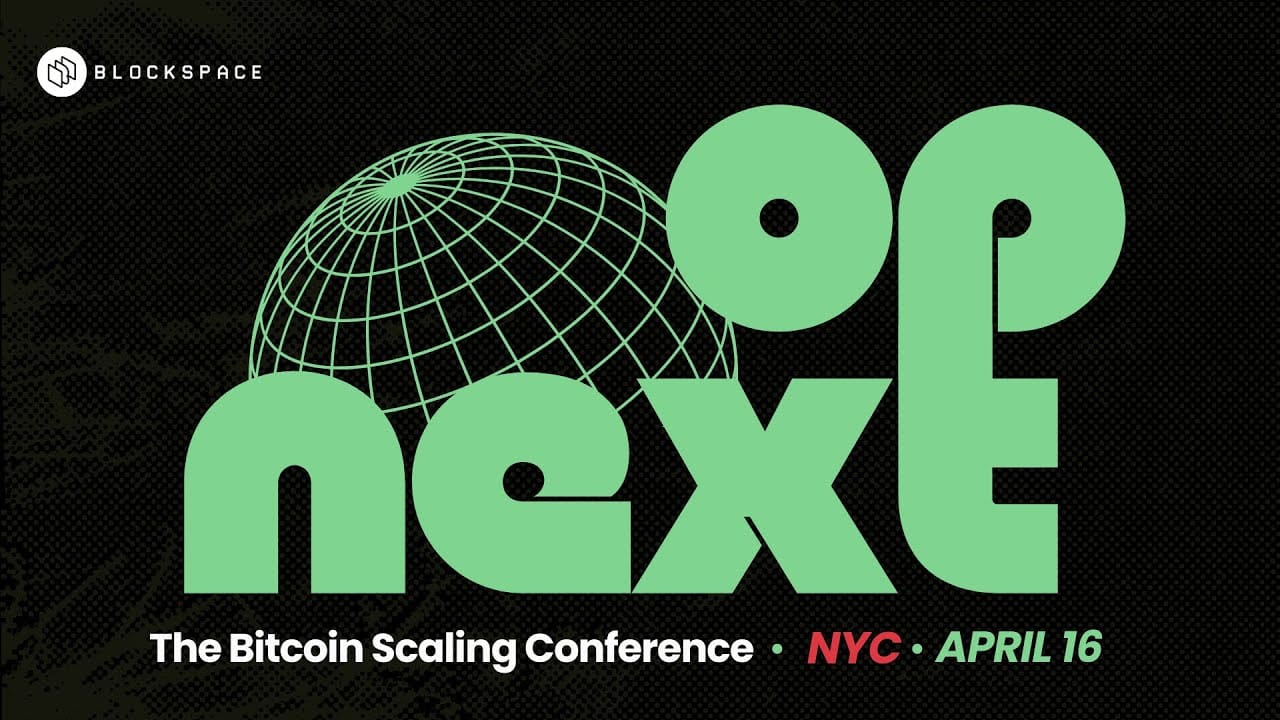
The bitcoin scaling conference where developers meet institutional capital.
Join 200 of the sharpest minds in bitcoin on April 16, 2026 at the Times Center in NYC for a full day of bitcoin scaling discussion featuring talks from leading developers like Jonas Nick, Antoine Poinsot, Mike Schmidt, and more.
Institutions like BlackRock and H.C. Wainwright will be in the room too, making this a can't-miss event for founders and startups seeking funding. Your ticket includes curated programming covering everything from BitVM to Bitchat, catered lunch, and access to the Pubkey after party.
Spots are limited and selling fast.
Go to OPNEXT.DEV for tickets and use code TFTC to get 25% off a GA or VIP ticket.
Bitcoiners: Don’t let nefarious actors steal your sats.
SLNT's patented Faraday backpacks, sleeves, and dry bags secure your hardware wallet or electronics against hackers and solar flares.
Block WiFi, GPS, RFID, and EMPs with our MIL-STD compliant tech. Made in the USA, trusted by 8 military contracts. Protect your wealth, stay untraceable.
Add Faraday protection to your stack here: https://slnt.com/tftc & use code TFTC for 15% off

Ten31, the largest bitcoin-focused investor, has deployed $200M across 30+ companies through three funds. I am a Managing Partner at Ten31 and am very proud of the work we are doing. Learn more at ten31.vc/invest.
Final thought...
Feels good to get 20,000 steps in before noon.
Download our free browser extension, Opportunity Cost:
https://www.opportunitycost.app/ start thinking in SATS today.
Get this newsletter sent to your inbox daily: https://www.tftc.io/bitcoin-brief/
Subscribe to our YouTube channels and follow us on Nostr and X:
|