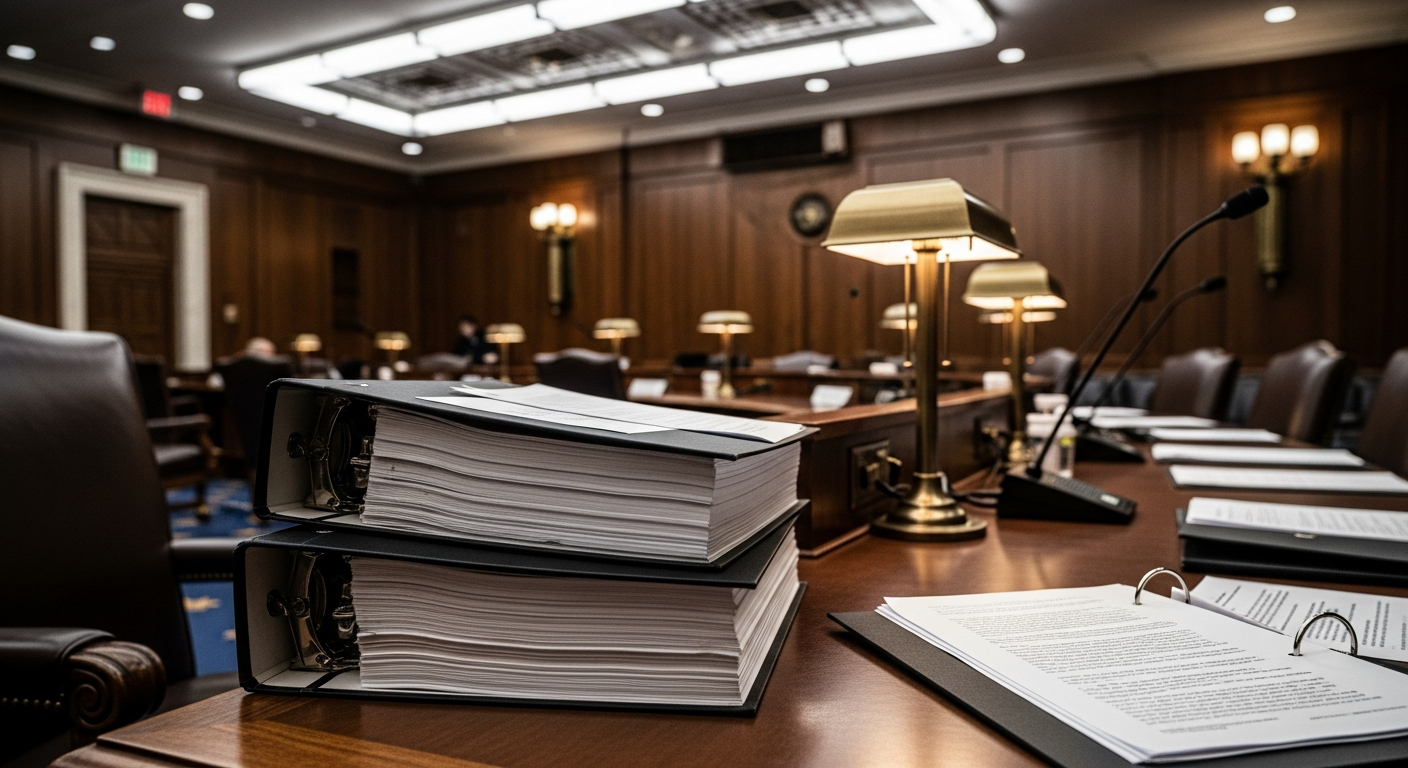
The bill is on the Senate calendar and the hearings are scheduled. Whether it actually clears 60 votes before August comes down to one unresolved deal.
Key takeaways
The House Financial Services Committee confirmed a July 14 hearing on the Federal Reserve's semi-annual Monetary Policy Report, where new Fed Chair Kevin Warsh will deliver his first Humphrey-Hawkins testimony. Back-to-back with a planned July 17 session in New York spotlighting the CLARITY Act and digital-asset innovation, the schedule hands the bill's supporters the highest-profile legislative window they've had. The question is whether hearings translate into votes.
Sen. Cynthia Lummis (R-WY) has been direct. On June 2, when the bill landed on the Senate Legislative Calendar as General Orders No. 423, she posted: "We are closer to a functioning digital asset market structure than we have ever been. Now is not the time to flinch." The August recess, in her framing, is the forcing function. Everything after it belongs to the midterm cycle.
H.R. 3633 grants the CFTC exclusive jurisdiction over digital commodity spot markets and exempts mature blockchain assets from SEC registration requirements. For Bitcoin specifically, that means open-source developers and infrastructure operators get a defined legal lane instead of the current default: SEC enforcement-by-ambiguity that treats every adjacent software project as a potential unregistered securities offering.
The House passed this 294-134. The Senate Banking Committee advanced it 15-9 on May 14, 2026, with 13 Republicans and 2 Democrats crossing over. Those two Democratic votes are the central tension: both senators reserved their floor votes pending further negotiations. They're not a yes. They're a conditional.
That conditionality has a name: the ethics provision. Democrats won't clear 60 without language restricting government officials from profiting on crypto while in office. The White House, per statements from adviser Patrick Witt at Consensus Miami 2026, won't accept language that singles out the President specifically. That standoff hasn't moved.
The July 14 and July 17 hearings are important for optics and momentum. They are not the mechanism that closes the ethics deal. What actually moves the needle is a negotiation between the White House and the Democratic holdouts that nobody is televising.
The math is simple and unforgiving. The bill needs 60 Senate votes to clear the filibuster threshold. Republicans hold 53 seats. That means Lummis needs 7 Democrats. The Senate floor count was already tight coming out of committee. Two votes that looked like yes are conditional. Seven is the floor, and it's not in the bag.
If the ethics provision deal doesn't close before August, the bill slides into a midterm environment where the legislative calculus shifts entirely. Historically, the sitting president's party loses ground in midterms. A Republican Senate majority that shrinks or flips means the entire framework resets. The realistic alternative to passing this in July is not "pass it later." The realistic alternative is another two-plus years of developers making jurisdiction decisions based on regulatory ambiguity, with Singapore and Abu Dhabi as the default exits.
For Bitcoiners, the stakes are concrete. CFTC jurisdiction over Bitcoin as a digital commodity and statutory exemption from SEC registration are worth having. The developer protection provisions in the bill have their own complications worth watching, but the baseline protection they'd replace (none, enforced by SEC discretion) is worse. A missed window doesn't return to neutral. It returns to enforcement-first.
The hearings run July 14 and 17. Any floor vote would need to be scheduled by Senate Majority Leadership after that window closes. Watch whether the White House softens its position on the ethics provision language, and whether the two conditional Democratic committee votes move to firm yes or firm no. Those signals, not the hearing transcripts, determine whether this clears before August.
The falsifiable version: if the Senate schedules and holds a floor vote before the recess and clears 60 votes without the ethics provision being resolved, the deal was never actually the gating factor. That outcome would mean enough Democrats crossed on policy grounds alone. Nothing in the current posture suggests that's where this is headed.
The bill grants the CFTC exclusive jurisdiction over digital commodity spot markets and exempts mature blockchain assets from SEC registration requirements. Bitcoin, as the most established digital commodity, gets the clearest legal lane: infrastructure builders and open-source developers operating around it would no longer be subject to SEC enforcement discretion as their primary regulatory risk.
Senate rules require 60 votes to end debate and proceed to a floor vote on most legislation. The ethics provision would restrict government officials, including the President, from holding or profiting on crypto while in office. Democrats view it as a non-negotiable floor condition. The White House has resisted any language it reads as targeting the President specifically. That gap has not closed.
The November 2026 midterms historically shift against the sitting president's party. If Republicans lose Senate seats, the legislative math on a 60-vote threshold gets harder, not easier. A missed August window likely means no comprehensive digital-asset market-structure law until 2027 at the earliest, with no guarantee the next attempt looks anything like the current bill.