Search on TFTC
Bitcoin Devs Have Been Building Quantum Defenses for Years. The Critics Just Aren't Paying Attention.

Bitcoin Devs Have Been Building Quantum Defenses for Years. The Critics Just Aren't Paying Attention.

Apr 1, 2026
Bitcoin Brief

Bitcoin Devs Have Been Building Quantum Defenses for Years. The Critics Just Aren't Paying Attention.

TFTC – Truth for the Commoner

Bitcoin Brief

Sup, freaks.

Yesterday we broke down Google Quantum AI's paper claiming they can cut the qubit requirement to break elliptic curve cryptography from 20 million to 1,200. Today we go deeper. Not on the threat, but on what Bitcoin developers have actually been building in response, and why the "nobody is working on this" narrative is provably false. The answer involves 324-byte quantum-proof signatures, a scheme called SHRIMPS, and a healthy dose of caution about why rushing this could be worse than the threat itself.


LEAD STORY

Bitcoin Devs Have Been Building Quantum Defenses for Years. Here's What They've Got.

Let's start with what's real. Google Quantum AI published a paper showing theoretical progress toward breaking ECDSA, the digital signature scheme Bitcoin uses. They claim a reduction in qubit requirements from roughly 20 million to 1,200. That is genuine progress on the theoretical side, and pointing it out is not FUD. What is irresponsible is claiming that elliptic curve cryptography will be broken in X years, because nobody can honestly predict the rate of breakthroughs required to get from theoretical math to a functioning quantum computer with the persistent uptime necessary to wage these attacks. The chasm between a paper and a machine is enormous.

Now, here's what the critics aren't telling you: Jonas Nick and Mikhail Kudinov at Blockstream Research have been publishing open, peer-reviewed work on post-quantum signature schemes specifically optimized for Bitcoin. Their research stack is now three layers deep. First, in December 2025, they published a comprehensive paper showing that by applying recent optimizations to SPHINCS+ (a NIST-standardized hash-based signature scheme), signature sizes for Bitcoin can be reduced from nearly 8 KB to approximately 3 to 4 KB, comparable to lattice-based alternatives. Then Nick proposed SHRINCS, a hybrid scheme that achieves 324-byte quantum-proof signatures on a primary device, with a stateless fallback for backups. That's only about 5x larger than today's Schnorr signatures.

Five days ago, Nick published the next evolution: SHRIMPS, which solves the multi-device problem. With SHRINCS, restoring a backup or using a second hardware wallet meant falling back to large stateless signatures. SHRIMPS fixes this by combining two SPHINCS+ instances under a single public key: a compact path for normal use (2,564 bytes at 128-bit security) and a fallback for edge cases. That's three times smaller than the NIST standard. Combined with SHRINCS, a primary device still gets 324-byte signatures while any backup device produces signatures under 3 KB. The security relies only on hash functions, the same mathematical foundation Bitcoin already trusts through SHA-256.

Separately, Nick and Kudinov are also exploring lattice-based cryptography as a potential alternative path, evaluating ML-DSA (formerly CRYSTALS-Dilithium), which NIST selected as its primary post-quantum recommendation. Lattice-based schemes offer advantages in verification speed and signature aggregation, but they carry a tradeoff: they rely on newer mathematical assumptions that haven't been battle-tested as long as hash functions. In fact, NIST tested 69 post-quantum candidate algorithms during its standardization process, and two of them, Rainbow and SIKE, were broken with classical computers during testing. The fact that Blockstream Research is exploring multiple approaches simultaneously, hash-based and lattice-based, publishing everything openly, and inviting cryptanalysis is exactly what responsible preparation looks like.

Meanwhile, Hunter Beast and Ethan Heilman are leading BIP-360, which creates the P2QRH (Pay to Quantum Resistant Hash) address format. This removes Taproot's quantum-vulnerable key-spend path and lays the groundwork for future post-quantum signature opcodes. Nick is presenting OP_SHRINCSVERIFY, the actual Bitcoin opcode proposal for verifying these signatures on-chain, at OPNEXT on April 16 in New York.

Here's the part that matters most: the people demanding that "Bitcoin developers" move faster are being disingenuous in several ways. First, the Bitcoin Improvement Proposal process is open to anyone. If critics have a viable post-quantum solution, nothing stops them from submitting it. That is literally how Bitcoin works. Second, not every Bitcoin protocol developer is a hardcore cryptographer versed in quantum-resistant signature schemes. The protocol has many layers, from P2P networking to mempool policy to wallet standards, and post-quantum cryptography requires deep specialization. The relatively small group of cryptographers who are equipped to push this forward, people like Jonas Nick, Mikhail Kudinov, Ethan Heilman, and Hunter Beast, are doing exactly that. Wagging your finger at the entire Bitcoin developer community and telling them to "do something" is unproductive and overlooks these realities.

There's also a circular logic at play that deserves to be called out. Some critics claim Bitcoin Core is a "cabal" of five or six developers who would never accept a quantum-resistant proposal. So the argument becomes: Bitcoin developers need to do something, but when developers say "we're working on it, and if you have a better solution, propose it through the BIP process," the response is "we won't propose anything because the cabal will just shoot it down." Call it Schrödinger's BIP: it must exist, but the people most worried about quantum won't bring it forth because they've already decided it will be rejected. How do you know that unless you actually try? This gives critics rhetorical leverage to fear monger on all sides without ever putting skin in the game. It is bike-shedding and hand-waving, nothing more. The BIP process is open. The mailing list is public. If you have a solution, submit it.

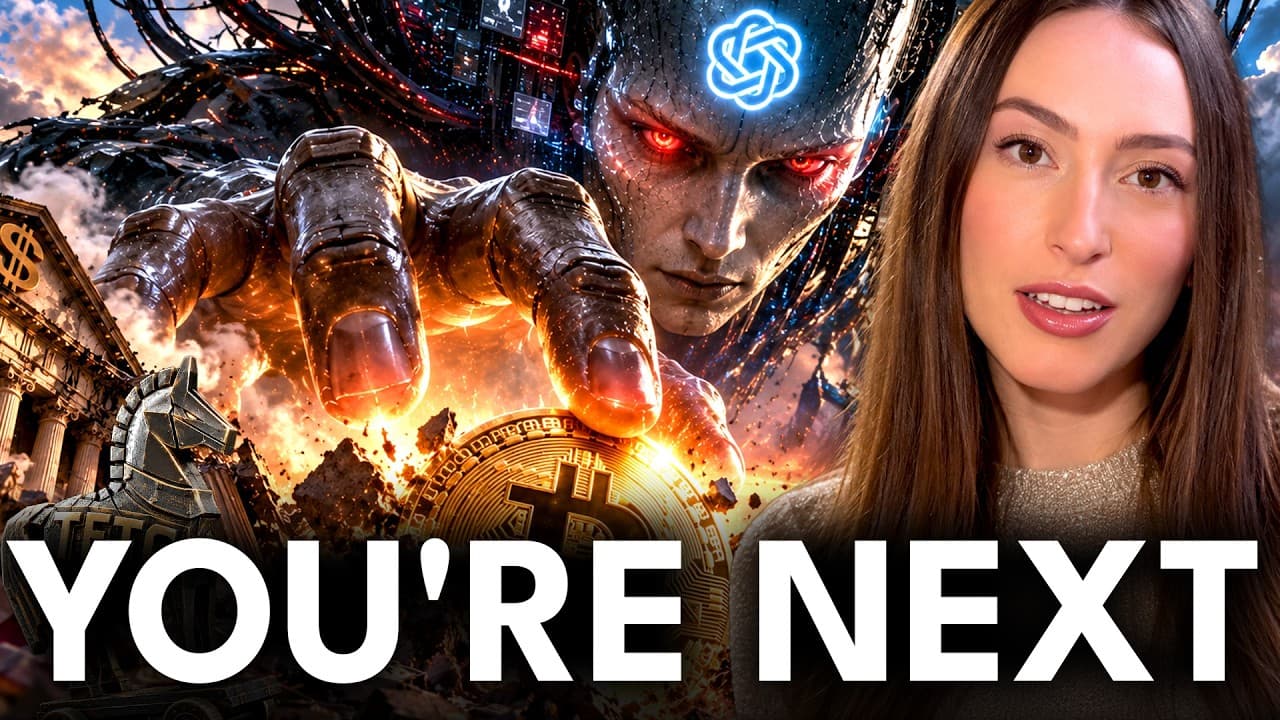
Finally, and this is critical: there is a real danger in rushing this. Post-quantum cryptography could itself be a Trojan horse. New digital signature schemes could contain backdoors, whether intentional or as yet undiscovered vulnerabilities. This is not an accusation against anyone working on these proposals, but it is a statement of fact about the risks. NIST's own testing process proved that "quantum-resistant" does not mean "proven secure." A rush to change Bitcoin's signature scheme haphazardly could introduce more damage than the quantum threat itself. Bitcoin development should be cautious, methodical, and adversarial in its review process, because there remains a real possibility that quantum computers capable of breaking ECDSA are years out, or may never arrive at all. You do not want to create a real problem in an attempt to solve a hypothetical one.

As we covered yesterday, the theoretical threat is advancing. But so is the defense. The work is happening in public, it is being done by the right people, and the deliberate pace is a feature, not a bug.


SIGNAL

What the Banks Are Saying: Inflation, Energy Shock, and Credit Stress

Why it matters: The macro picture from Wall Street's research desks is getting ugly across the board.

Bank of America revised its PCE inflation forecast sharply higher, projecting headline inflation surging to nearly 4% year-over-year this quarter. The driver is energy. Strait of Hormuz flows have collapsed from roughly 20 million barrels per day to under 2 million. BofA's baseline assumes the war ends in 2 to 4 weeks with a 4 million barrel per day deficit in Q2 and Brent averaging $92.50 for the year. If it extends beyond that, the world faces a "forced contraction in global energy demand of 4 to 5% year-over-year." Even after oil retraces, BofA expects price levels at the end of 2027 to remain 50 basis points above prior forecasts due to sticky supply chain disruptions and fertilizer shortages.

Rabobank is projecting US inflation peaking at 3.3% in April, falling only gradually to 2.5% by the second half of 2028. Their 2027 inflation forecast of 2.8% is barely below 2026's 2.9% average. GDP growth has been cut to 1.8% for both years. WTI forecasts: $98 in Q2, $88 in Q3, $83 in Q4. Stagflation is no longer a tail risk; it is the base case.

Societe Generale is flagging growing stress in private credit markets. Low transparency on asset quality is making it harder to detect early warning signs. There has been a notable rise in PIK (payment-in-kind) loans, which delay cash interest payments and potentially mask borrower distress, with software and services firms the largest users. SocGen specifically calls out Anthropic's AI tools as capable of performing tasks sold by traditional software providers, raising questions about those business models. Meanwhile, hyperscaler capex from Oracle, Microsoft, Amazon, Alphabet, and Meta, partly financed by jumbo bond issues, is drawing scrutiny over long-term returns on AI spending.

Powell at Harvard: "Tariffs Have a One-Time Impact on Inflation"

Why it matters: The Fed Chair is quietly telling you rate hikes are off the table.

Fed Chair Jerome Powell spoke at Harvard and his refusal to doomspeak on inflation was the message. He noted that "tariffs have a one-time impact on inflation" and that "there are risks to both sides of the mandate," language that signals he is not looking to tighten further. Rabobank noted that Powell also announced he will remain on the Board of Governors even after his term as Chair ends, specifically to prevent Trump from appointing a third Governor. The Fed independence drama is escalating alongside an ongoing DOJ investigation. Meanwhile, the OIS curve swung from pricing 6 basis points of hikes to 8 basis points of cuts by year-end in a single session. As we covered Sunday, the math increasingly favors cuts regardless of what the Fed says publicly.

The Squeeze: $184 Billion in Equity Selling Triggers Violent Bounce

Why it matters: Markets are being driven by positioning mechanics, not fundamentals.

The Market Ear reports that CTAs have sold approximately $184 billion of global equities over the past month and are now running a net short of roughly $47 billion, near Liberation Day panic levels. Goldman Sachs estimates dealers are short approximately $7 billion of S&P gamma, the second most negative reading on record, meaning they are amplifying volatility by selling into weakness and buying into strength. Mag7 names have been sold in 12 of the past 13 sessions, industrials are tracking their largest percentage net selling on record for March, and the Russell 2000 short is "absolutely huge" per UBS. JPMorgan's desk color was blunt: "$20 billion in pension demand, CTA de-risk, and short gamma pushing indices higher. Nothing in our flows would suggest this is more than an oversold tactical bounce yet." This is mechanics, not fundamentals, and it rarely resolves cleanly.

Block and Sequoia: AI Isn't Coming for Workers, It's Coming for the Org Chart

Why it matters: The real disruption from AI isn't replacing individual workers. It's replacing the layers of management that exist to route information.

Block published an essay with Sequoia that traces the history of corporate hierarchy from the Roman Army to the modern org chart and arrives at a striking conclusion: the entire structure of middle management exists because humans are limited information routing machines. A leader can manage three to eight people. That constraint forces layers. Layers slow decisions. For two thousand years, every organizational experiment, from the Prussian General Staff to Spotify squads to Zappos's Holacracy, has tried and failed to break this tradeoff. Block's argument is that AI changes the equation by replacing the coordination function itself. Not giving everyone a copilot, but replacing what the hierarchy does: aggregating information, pre-computing decisions, maintaining alignment across a complex organization. If they're right, the most vulnerable job in America isn't the factory worker or the coder. It's the middle manager whose primary function is moving information up and down the chain. Pair this with Oracle's 30,000 layoffs and the pattern becomes clear: AI is giving companies the justification to flatten org charts that should have been flattened years ago.

Oracle Cuts Up to 30,000 Jobs. AI Is the Excuse. Bloat Is the Reason.

Why it matters: AI is giving cover for the corporate restructuring that should have happened years ago.

Oracle began firing between 20,000 and 30,000 employees yesterday via 6 a.m. termination emails across the US, India, Canada, and Mexico, roughly 18% of their global workforce. The company cited "current business needs" and is redirecting capital toward AI data center spending. Shares rose 2%. Oracle's headcount swelled from 132,000 in 2021 to 164,000 in 2023, largely through its $28 billion Cerner healthcare acquisition. Now, with AI data center commitments exceeding $100 billion, the company is trimming the workforce it absorbed and redirecting capital. Here is the broader pattern worth watching: AI is becoming the socially acceptable justification for corporate restructuring. The technology is real, but these layoffs are often less about replacing workers with AI and more about cutting costs under a narrative that Wall Street will reward with a higher stock price. Oracle's shares rose 2% on the news. Expect this playbook to spread across every large enterprise looking for cover to right-size.

Germany Is Debasing Its Silver Coins. Yes, Literally.

Why it matters: Currency debasement isn't ancient history. It's happening right now, in a G7 country, with physical coins.

The German finance ministry announced it is cutting the silver content in its 35-euro and 50-euro commemorative coins by 46%, dropping from 18 grams to 17 grams and replacing the removed silver with copper. Officials say the move is meant to prevent the coins from "tracking metal prices" and to "curb speculation." Read that again: a government is diluting the precious metal content of its currency because the metal became too valuable relative to the face value. This is the exact playbook Rome ran for over 200 years. Nero started cutting the silver content of the denarius around 60 AD, from near-pure to 90%, then 50%, eventually near zero by the third century. Silver is surging because of real demand: industrial use, safe-haven buying, and a global flight to hard assets amid war and inflation. Germany's response is not to acknowledge that reality but to make the coins cheaper to produce and keep the face value the same. These are collector coins, not circulating euros, but the principle is identical. When the intrinsic value of money rises above what the state wants to pay, the state dilutes the money. This is why bitcoin exists. You cannot debase 21 million coins with a fixed supply, no central authority, and a monetary policy enforced by math rather than a finance ministry press release.


PRESENTED BY

OPNEXT

The Bitcoin scaling conference. April 16 in NYC. Jonas Nick is presenting OP_SHRINCSVERIFY, the actual post-quantum opcode proposal, live on stage. If you care about Bitcoin's future, this is where the builders will be.

Get 25% Off with Code TFTC

Sponsor


DATA SNAPSHOT

Bitcoin Price$68,061
Sats per Dollar1,469
Block Height943,223
Network Hashrate1,008 EH/s
Priority Fee1 sat/vB

On-Chain Metrics
MVRV Ratio1.26 Fair value range, not overheated
SOPR0.995 Coins moving at slight loss on average
Realized Price$54,163 Aggregate cost basis, strong support
STH Realized Price$82,731 Short-term holders deeply underwater
LTH Realized Price$44,124 Long-term holders sitting on gains
NUPL0.205 Hope/Fear zone
Realized Cap$1.08T Market Cap: $1.36T
Net Realized P/L-$150M Net losses being realized on-chain

⚡ Looking for the best Bitcoin-only products and services?
Browse BitcoinProducts.com


If this landed, forward it to someone who could use more signal and less noise. Marty's Bent is free, always will be.

See you tomorrow,

Marty Bent


Follow: @MartyBent · @TFTC21

Nostr: primal.net/marty

YouTube: TFTC · Podcast: tftc.io/podcast

Spread the signal,
earn Bitcoin.

Get your unique referral link when you subscribe.

Current
Price

Current Block Height

Current Mempool Size

Current Difficulty

Subscribe